A single mistimed cut on a mature gum tree can do more than just ruin your garden's aesthetic; it can permanently compromise the tree's structural integrity and potentially land you a significant fine from your local council. While the temptation to handle backyard maintenance yourself is strong, the risks of DIY accidents and the complexity of Australian Standards make professional tree pruning a necessity rather than a luxury. You aren't alone if you feel frustrated by scrubby growth or anxious about overhanging branches during a coastal storm.
It's completely understandable to feel overwhelmed by the specific requirements set by local councils across the Illawarra region, including those in Wollongong and Shellharbour, where rules regarding trunk diameter and height determine whether you need an authorised permit. At Arborcare Tree Maintenance Pty Ltd, we promise to clear up this confusion by providing expert advice on seasonal timing and safety protocols that protect both your home and your landscape's health. This guide provides a thorough look at how to navigate local regulations, avoid the dangers of "lopping," and organise your maintenance to ensure your property meets the highest standards of arboricultural care. By the end, you'll know exactly how to transform an overgrown hazard into a safe, flourishing asset for your property.
Key Takeaways
- Understand why professional tree pruning is a strategic investment in your property's safety rather than just a cosmetic backyard chore.
- Learn the critical difference between high-quality structural pruning and dangerous "lopping" to protect your trees from permanent damage.
- Discover the ideal timing for maintenance in the Illawarra climate, including why local Australian natives require a different approach to deciduous species.
- Identify common techniques like deadwooding that proactively reduce the risk of property damage during South Coast storm seasons.
- Ensure your property remains compliant with Australian Standard AS 4373 and local council regulations to avoid legal complications and safety hazards.
Why Professional Tree Pruning is Essential for Your Illawarra Property
Professional tree pruning is a precise arboricultural practice that involves the strategic removal of specific branches to enhance a tree's health, safety, and structural integrity. It is distinct from simple aesthetic trimming, which focuses primarily on the outer shape or 'haircut' of the plant. While trimming might keep your hedges looking neat, structural pruning addresses the internal architecture of the tree. This process is vital for property owners across the Illawarra, especially when preparing for the high winds associated with NSW East Coast Lows. By thinning the canopy and removing high-drag branches, we reduce wind resistance and lower the risk of catastrophic failure during a storm. For those interested in the science behind these methods, this comprehensive guide to pruning explains the biological principles that govern how plants respond to various cuts.
The Core Benefits: Health, Safety, and Aesthetics
A proactive maintenance programme offers several immediate advantages for your landscape. Safety is the primary driver for most residential calls. Dead or dying branches can fail without warning, posing a significant risk to your family and assets. By identifying these hazards early, we can remove 'widow-makers' before they have the chance to fall on your roof, fence, or ute. This level of dedicated care is often seen in professional property upkeep, such as the exterior services provided by Maintenance Time Inc. Beyond safety, strategic cuts direct the tree's energy toward healthy limbs, which can improve fruit yields or flower production in ornamental species. Thinning the canopy also allows sunlight to reach your lawn and garden beds while improving airflow, which reduces the likelihood of fungal diseases taking hold in the damp coastal climate.
Understanding Australian Standard AS 4373
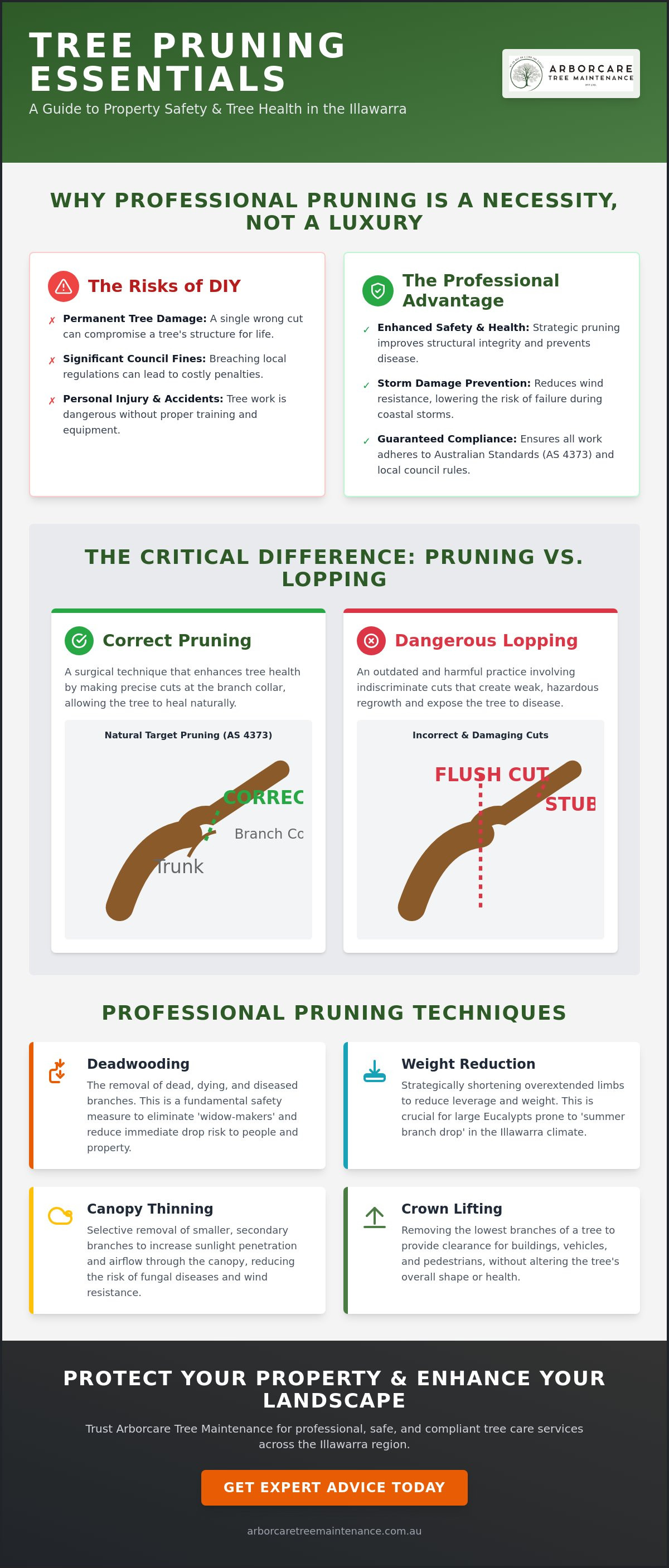
In Australia, the benchmark for all professional tree care is AS 4373 (Pruning of Amenity Trees). This document provides the technical framework that ensures every cut made is beneficial to the tree's long-term survival. Professional arborists adhere to these guidelines to prevent permanent damage to the vascular system, which often occurs when untrained individuals attempt DIY work. A central part of this standard is 'natural target pruning.' This technique involves making cuts at the branch collar rather than flush against the trunk. This specific placement allows the tree to form a protective callous, ensuring quick wound healing and preventing the entry of decay-causing pathogens. Adhering to these safety protocols and equipment standards is the only way to ensure your trees remain healthy and your property stays compliant with local council regulations.
Common Pruning Techniques: More Than Just a Quick Trim
Effective tree pruning is never a random act. It requires a high-level technical understanding of how a specific species will respond to a cut. Whether we are managing a heritage fig or a coastal Banksia, the approach must be surgical. We don't just "cut back" a tree; we select specific branches based on their health, attachment strength, and contribution to the overall canopy structure. Using the wrong technique can lead to "epicormic growth," which results in weak, spindly branches that are more likely to fail in the future.
Deadwooding and Weight Reduction
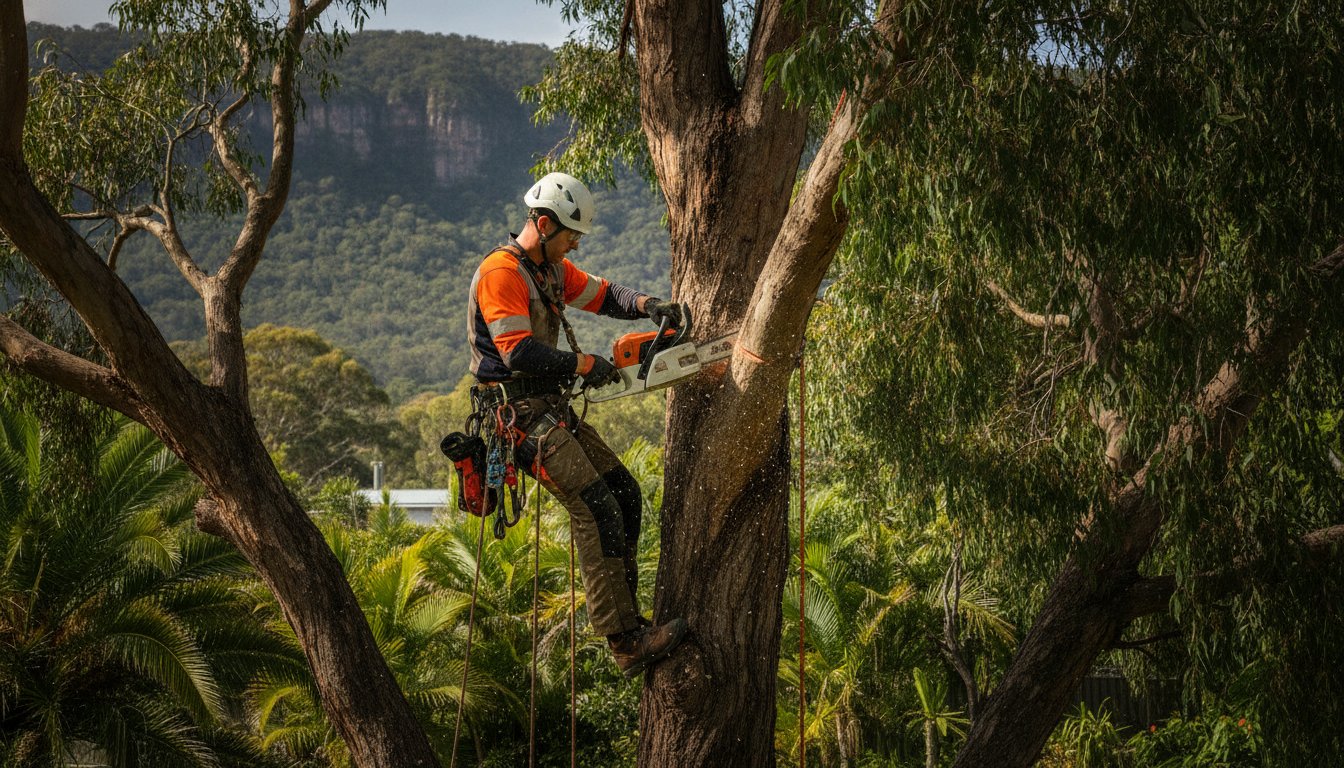
Deadwooding is the most fundamental safety-first technique. It involves identifying and removing dead, dying, or diseased limbs that pose an immediate "drop risk" to people or property below. This is particularly critical for large Eucalypts on residential blocks in the Illawarra. These species are susceptible to "summer branch drop," where seemingly healthy, overextended limbs fail under their own weight during periods of high heat or sudden temperature shifts. By reducing the weight of these heavy limbs and removing hazardous deadwood, we significantly lower the risk of property damage. All our on-site procedures strictly follow national workplace safety guidelines to ensure the protection of our crew and your home.
Canopy Management: Thinning vs. Lifting
Managing the density and height of a canopy requires a delicate balance. Crown thinning is the process of removing a small portion of secondary branches to increase airflow and sunlight penetration. This is achieved without changing the tree's natural shape or height. We strictly adhere to the "25% rule," which dictates that no more than a quarter of the live canopy should be removed in a single season. Removing too much foliage at once can shock the tree and lead to decline. Thinning is an excellent way to allow more light into your garden beds while maintaining the privacy and shade your trees provide.
Conversely, crown lifting involves the removal of lower branches to provide clearance for driveways, fences, and powerlines. It is an essential service for maintaining visibility and accessibility on your property. For young trees, we recommend formative pruning. This involves making small, corrective cuts early in the tree's life to prevent major structural defects, such as co-dominant stems, from developing as it matures. Taking these proactive steps now can save significant costs on hedging, pruning and trimming services as the tree grows. Professional intervention ensures these cuts are made at the right time to promote a strong, resilient structure.
Timing Matters: When to Prune in the NSW South Coast Climate
Timing is a critical factor in the success of any arboricultural intervention. Many property owners fall for the 'dormancy myth,' assuming that all trees must be pruned in the dead of winter. While this is a reliable rule for European deciduous species, many Australian natives follow entirely different biological cycles. In the unique climate of the Illawarra, where frost is rare in coastal suburbs like Fairy Meadow but more common in the foothills of Dombarton, your pruning schedule must be tailored to the specific species on your land. According to the peak industry body, Arboriculture Australia, understanding these growth phases is the only way to ensure long-term health and minimise the risk of disease or pest infestation.
For deciduous trees like Maples, Oaks, or ornamental Pears, late winter remains the gold standard. Without a thick canopy of leaves, our team can clearly see the tree's skeleton, making it much easier to identify structural defects or crossing branches. Completing tree pruning just before the spring growth flush ensures that the tree has a surge of energy ready to seal the wounds quickly. However, this window is narrow. If you wait until the sap is already rising and buds are bursting, you risk 'bleeding' the tree, which can attract wood-boring insects and cause unnecessary stress.
Seasonal Guide for Illawarra Gardens
Winter is the season for structural visibility and heavy maintenance on deciduous species. As we move into spring, the focus shifts toward managing rapid growth and shaping flowering species after their initial bloom. This prevents them from becoming leggy or unmanageable. Autumn is perhaps the most vital time for safety-conscious property owners in areas like Dapto and Shellharbour. This is when we recommend preparing for the winter storm season by removing weak, overextended, or diseased limbs that are likely to fail during a South Coast gale. Emergency pruning is the only exception to these seasonal rules. If a tree has been damaged by a storm or is interfering with powerlines, it requires immediate professional attention regardless of the time of year.
Species-Specific Advice: Eucalypts and Palms
Eucalypts require a highly specialised approach. If these trees are pruned too aggressively or at the wrong time, they respond by producing 'epicormic growth.' These are the clusters of small, weak shoots you often see sprouting from the trunk or main limbs after a tree has been topped. These shoots are weakly attached and become extremely dangerous as they grow larger. Palms also require specific seasonal care. We recommend 'palm skinning' to remove dead fronds and seed pods before they drop and create a mess or a fire hazard. If a palm has become too difficult to maintain or is damaging your foundations, you might consider our expert Palm Tree Removal Illawarra services to clear the space safely.
Pruning vs. Lopping: Why Your Choice of Arborist Matters
While we have discussed the strategic benefits of thinning and lifting, it's vital to address a dangerous practice often mistaken for maintenance: lopping. Lopping is the indiscriminate cutting of branches between nodes or the removal of the tree's top (topping) without regard for its biological health. Unlike professional tree pruning, which follows the natural boundaries of the branch collar, lopping leaves raw stubs that the tree cannot effectively seal. Arborists frequently refer to this practice as "tree butchery" because it permanently disfigures the specimen and initiates a cycle of decay and structural instability.
The Dangers of DIY Tree Lopping
When a tree is lopped, its vascular system is left exposed to fungal infections and wood rot. The tree responds to this trauma by entering a stress-induced survival mode, triggering the "epicormic growth" trap. This results in the rapid production of "water sprouts"-long, spindly shoots that grow from the surface of the cut. While these might look like the tree is recovering, these shoots are only weakly attached to the outer layer of bark. As they grow larger and heavier, they become significant hazards that are highly likely to snap during a typical South Coast storm. You can find more detailed information on these biological risks in our article on the Dangers of DIY Tree Lopping. Furthermore, property owners should be aware that councils in Wollongong, Shellharbour, and Kiama often prohibit lopping in their Tree Preservation Orders (TPOs), and unauthorised work can lead to substantial fines.
Why Hire a Licensed Arborist?
Engaging a qualified professional is about more than just getting the job done; it is about comprehensive risk management. A licensed arborist performs a detailed risk assessment before the first cut is made, identifying hidden structural defects that a layperson would likely miss. We utilise specialised equipment, such as cherry pickers for high-access work and commercial-grade wood chippers, to ensure the task is completed safely and efficiently. This professional approach is backed by full public liability insurance and formal training in Australian Standards. This level of expertise ensures your property is protected and your trees remain an asset rather than a liability. To maintain the health of your landscape, we recommend you organise a professional tree assessment with a local specialist who understands the specific needs of Illawarra species.
Professional Tree Maintenance with Arborcare: Safety First
Arborcare Tree Maintenance Pty Ltd operates as the Qualified Local Expert for residential and commercial property owners throughout Dapto and Wollongong. Our team is serious about safety and professional reliability, ensuring every project is handled with technical authority and a commitment to excellence. We don't view tree pruning as a simple gardening task; we treat it as a disciplined arboricultural intervention. Every cut we make is grounded in a strict adherence to the national standards we've discussed, ensuring the long-term health of your trees while protecting your property from avoidable hazards.
Our methodical process is designed to provide complete peace of mind. It begins with a thorough initial site visit where we identify specific hazards, such as overhanging limbs near powerlines or structural weaknesses in the trunk. Following this assessment, we execute the work using industry-leading equipment and safety protocols. Once the technical work is complete, we provide a full cleanup service, including the final mulching of debris. This logical flow ensures that your property is left in a safer, more beautiful state than we found it. Our capabilities are extensive, ranging from fine hedging, pruning & trimming to large-scale land clearing and stump grinding.
Our Local Expertise in the Illawarra
We take pride in our deep community presence, serving property owners from Wonoona in the north to Jamberoo and down through the Shellharbour region. This local focus means we have a comprehensive understanding of the specific environmental challenges on the South Coast, from salt-heavy winds to rapid growth cycles. Arborcare Tree Maintenance Pty Ltd is well-versed in local council regulations and permit requirements for Wollongong and Shellharbour, helping you avoid the stress of navigating complex Tree Preservation Orders. When coastal storms strike, we provide a 24/7 emergency tree service to clear dangerous blockages and secure your home against further damage.
Ready to Organise Your Tree Care?
The best time to manage a potential hazard is before it becomes a crisis. We encourage all property owners to book a professional assessment to identify deadwood, structural imbalances, or diseased limbs that could fail during high winds. A proactive approach to tree pruning not only improves the aesthetics of your landscape but also increases the safety of your family and assets. During our visit, we can also discuss the benefits of on-site mulching, which allows us to recycle green waste directly back into your garden beds to improve soil health and moisture retention. Don't leave your property maintenance to chance or risk a DIY accident. You can get a free quote from our expert arborists today to ensure your trees receive the specialised care they deserve.
Protect Your Property with Professional Arboriculture
Maintaining a safe and vibrant landscape in the Illawarra requires more than just occasional maintenance; it demands a technical understanding of how our local species react to environmental stressors. By choosing precision pruning over destructive lopping and timing your work to suit the specific needs of your trees, you ensure they remain a long-term asset to your home or business. Following Australian Standard AS 4373 isn't just a recommendation; it's a vital safety protocol that protects your property and maintains compliance with local council regulations.
Arborcare Tree Maintenance Pty Ltd has been serving the Illawarra for years, providing the technical expertise needed for high-risk tasks. Our licensed and insured arborists are specialists in both residential and commercial maintenance, bringing safety-conscious care to every site from Wonoona to Shellharbour. When you're ready to secure your landscape against the next storm season, Request a Professional Tree Pruning Quote from Arborcare Tree Maintenance Pty Ltd. We look forward to helping you keep your property safe, healthy, and beautiful for years to come.
Frequently Asked Questions
Do I need a council permit for tree pruning in Wollongong?
Yes, you generally need a permit if the tree exceeds specific size thresholds defined by the Wollongong City Council. This typically applies to trees over 5 metres in height, those with a trunk diameter of 30 centimetres or more at ground level, or branches with a diameter exceeding 10 centimetres. It's best to check your specific property's zoning and the local Tree Preservation Order before starting any work.
How much does professional tree pruning cost in the Illawarra?
The cost of professional care depends on the size of the tree, its species, and how accessible it is for our equipment. Large trees that require specialised climbing techniques or cherry pickers involve more time and safety protocols than smaller garden specimens. Because every property has unique safety requirements, we provide site-specific assessments to ensure you receive an accurate quote for the work required.
What is the difference between tree pruning and tree lopping?
Tree pruning is a surgical, health-focused practice that follows Australian Standard AS 4373, while lopping is the indiscriminate cutting of branches between growth nodes. Lopping is often referred to as "tree butchery" because it leaves stubs that cannot heal, leading to wood rot and dangerous, weak regrowth. Most councils in the Illawarra actually prohibit lopping because of the long-term risks it creates for property safety.
Can I prune a tree that is touching powerlines?
No, you should never attempt to prune a tree near powerlines yourself as the risk of electrocution is extremely high. This task requires an arborist with specific electrical hazard accreditation and specialised insulated tools. If a tree on your property is interfering with service lines, it's a high-priority safety issue that requires immediate professional intervention to clear the hazard safely.
How often should my trees be professionally pruned?
Most mature trees benefit from a professional health check and maintenance every two to three years. Younger trees might need more frequent formative work to ensure they develop a stable structure, while fast-growing species in coastal areas often require annual thinning. Regular maintenance helps identify structural defects early, preventing them from becoming expensive hazards during the South Coast storm season.
What happens if I prune a tree without a permit in NSW?
Unauthorised pruning of protected trees can lead to significant fines and legal action from your local council. These regulations are strictly enforced to protect the local canopy and urban forest. If you're unsure whether your tree is protected, a qualified arborist can help identify the species and determine if a permit application is necessary for your specific project.
Is winter really the best time to prune Australian natives?
Winter is the ideal time for deciduous species like Maples or Oaks, but many Australian natives don't follow the same dormancy cycles. While some natives are best handled in the cooler months, others should be pruned after their flowering period or during active growth phases to ensure they seal their wounds effectively. We tailor our pruning schedules to the specific biological needs of your local species.
What should I do with the branches after they are pruned?
The most effective way to manage green waste is through on-site mulching. We use commercial-grade wood chippers to turn your pruned branches into nutrient-rich mulch that can be spread directly back onto your garden beds. This process recycles the organic matter, helps your soil retain moisture, and eliminates the need for skip bins or multiple trips to the local tip.


