

Good mulching is more than spreading a fresh layer over the garden. Professional mulching services in Dapto typically include preparing garden beds and applying mulch evenly, with care taken to keep it clear of plant stems and trunks. A layer of around 50-100 mm can help suppress weeds, retain soil moisture and moderate soil temperature, with the right depth depending on the bed and its purpose.
It makes sense to expect mulch to protect your soil, but timing and application matter too. Too little can leave gaps, while piling it against stems can harm plants. This guide explains what mulching services in Dapto can involve, when to refresh garden mulch and how it is applied. You’ll also learn how mulch supports moisture retention, temperature regulation and weed control, helping you make a practical choice for your garden.
Key Takeaways
- Plan a fresh mulch layer before warmer weather, then assess whether an autumn top-up is needed.
- Use the garden-bed area and chosen depth to estimate how much mulch the job will require.
- Choose mulch with the bed’s purpose in mind, as material type affects how long it lasts and how it breaks down.
- Keep mulch clear of plant stems and tree trunks so it protects the soil without sitting against growing plants.
- Professional application can combine bed preparation and even spreading, helping make the finished garden easier to maintain.
What do mulching services include?
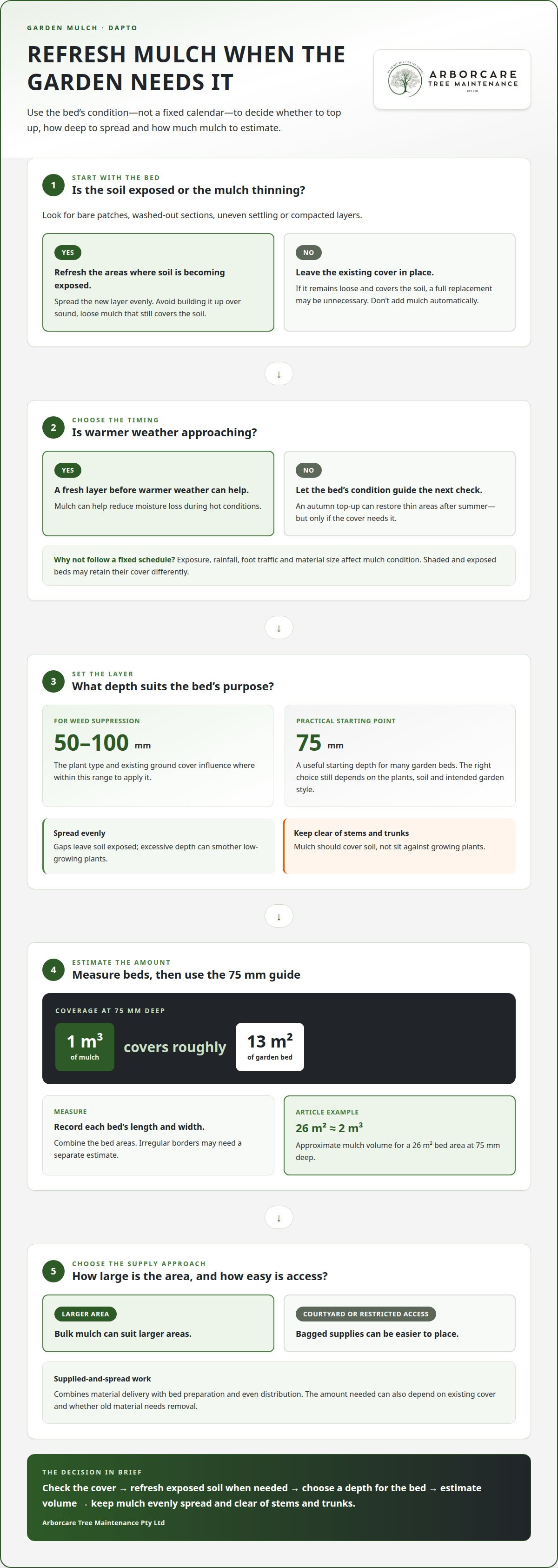
A garden mulching service generally prepares garden beds, selects suitable material and spreads it evenly. The aim is to cover exposed soil without burying plant stems or tree trunks. For many beds, a layer around 75 mm deep provides a practical starting point. The best choice still depends on the plants, soil and intended garden style.
Mulch can help reduce moisture loss, moderate soil temperature and suppress weeds. As organic material breaks down, it can add nutrients and improve soil structure. Even coverage matters: gaps leave soil exposed, while excessive depth can smother low-growing plants. Keep mulch clear of stems and trunks, and spread it evenly across the bed.
- Native gardens: Select a mulch that suits the plants and their drainage needs. A coarse, open texture can leave more air movement around the soil than a tightly packed layer.
- Vegetable gardens: Use clean organic mulch that can break down into the soil over time. Keep it away from seedlings’ stems, and leave room to water around young plants.
- Cottage gardens: A finer or softer-looking material can complement mixed flowers and shrubs. Apply it carefully around established plants, where dense growth can make even spreading difficult.
- Formal gardens: Consistent material and an even finish help maintain clear edges around clipped hedges, paths and feature plants.
Mulch type affects appearance, coverage and how quickly the material breaks down. Coarse hardwood chips suit many established garden beds and may last longer than finer material. Leaf-based mulch can blend into informal planting, while composted material may suit beds where improving soil is a priority. In vegetable gardens, avoid covering delicate seedlings or placing fresh material directly against edible plant stems.
Choose by bed function, not colour alone. A native garden, for example, may need a more open layer than a closely planted cottage bed. For weed suppression, a layer between 50 and 100 mm is recommended; plant type and existing ground cover influence where within that range to apply it. Mulch can also improve soil aeration and minimise salt build-up.
Are permits or council rules relevant to tree mulching, green-waste disposal or mulch use in Wollongong? Requirements can depend on the work, site and how green waste is handled. Garden-bed mulching is different from tree work or waste disposal, so don’t assume a permit is or isn’t required based on the word “mulching” alone. Arborcare can provide guidance on permits for tree pruning or removal.
Garden-bed mulching and processing green waste are different tasks. Arborcare Tree Maintenance provides mulching, alongside tree maintenance services such as pruning and tree removal. The right work depends on what you need, such as spreading mulch across garden beds or turning green waste into mulch.
What areas near Dapto do local mulching businesses service? Coverage is centred on Dapto and the wider Illawarra region. The relevant service area depends on the business and the job location.
How often should I mulch my garden?
Mulch doesn’t need replacing on a fixed calendar. Chunky hardwood chip mulch is estimated to last 12-18 months, but exposure, rainfall, foot traffic and material size affect its condition. Check garden beds for thinning, bare patches or compacted layers. Refresh them when the soil becomes exposed, rather than adding mulch automatically.
Seasonal timing matters in the Illawarra. Applying fresh mulch before warmer weather can help reduce moisture loss during hot conditions. An autumn top-up can restore thin areas after summer. Let the garden’s condition guide the decision: shaded beds may retain their cover differently from exposed beds or areas with regular foot traffic.
Work out the volume before arranging bulk supplies. One cubic metre covers roughly 13 m² at a depth of 75 mm. Measure each bed’s length and width, then combine the areas. For example, a 26 m² garden-bed area needs about 2 m³ at that depth. Irregular borders may need a separate estimate.
Bulk mulch can suit larger areas, while bagged supplies can be easier to place in a courtyard or a bed with restricted access. Supplied-and-spread work combines material delivery with preparation and even distribution. The amount needed depends on bed area, chosen depth, existing cover and whether old material needs removal.
The price is determined on site through a free quote, based on the job and property conditions. Access, preparation, garden area and any related work can all affect the scope. For example, a narrow side passage may change how material reaches a rear garden. Describe the access route and the areas needing attention when requesting a quote.
- Check coverage: Look for exposed soil, washed-out sections and uneven settling before topping up.
- Measure beds: Add each garden bed’s area to estimate volume using the 13 m² coverage guide.
- Choose delivery: Match bulk or bagged supplies to the area and access route.
- Plan the finish: Spread new mulch evenly, without burying plants or building up over sound existing cover.
Mulch should form a consistent surface, not a mound around plants. If the existing layer remains loose and covers the soil, a full replacement may be unnecessary. For help planning a refresh, explore garden mulching services for your beds.
What happens to the mulched material?
Mulch is selected for the garden bed, delivered, then spread across exposed soil. Its job continues after application. Organic material gradually breaks down, adding nutrients and contributing to soil structure. The surface layer also helps cover bare ground while plants establish. A fantastic finish depends on matching the material to the bed, not simply choosing a colour.
Start with the garden’s purpose. A vegetable patch has different needs from native planting or a formal border. Coarse hardwood chips suit many established beds, while finer organic material can sit neatly around smaller plants. In native gardens, consider drainage and airflow. In vegetable beds, keep mulch clear of seedlings and stems.
Material size affects appearance and handling. Larger chips create a coarser surface and are easier to distinguish from soil. Finer mulch can sit closely around plants, but may compact if spread too thickly. Leaf-based or other organic mulch blends into informal planting as it breaks down. Choose a material that suits the plants and the garden’s maintenance needs.
Before spreading, identify plants, tree trunks and irrigation points. Remove weeds and loose debris so the mulch reaches the soil surface. If existing mulch is loose and clean, new material can be applied over it as a top-up. Keep the finished layer even. For many garden beds, around 75 mm is a useful application depth.
- Check the existing layer: Look for bare soil, compacted patches and material that no longer spreads evenly.
- Clear problem material: Remove old mulch when it is matted, mouldy or termite-prone, then take it away with green waste.
- Protect plants: Pull mulch away from stems and trunks rather than piling it against them.
- Spread consistently: Work material across the bed, filling exposed areas without burying low-growing plants.
Mulch changes with weather and time. Organic material gradually decomposes and returns nutrients to the soil. As the layer settles, exposed patches may appear between plants or along bed edges. These areas can be topped up without disturbing established plants. A quick visual check after heavy rain can show where material has shifted.
Plan mulch work with access in mind. A front garden beside a driveway may be straightforward to reach, while a narrow path to a rear bed needs more careful handling. When requesting a quote, explain where the beds are and which areas need coverage. This helps clarify the work before it begins.
In a vegetable garden, apply mulch around established plants and leave space around new seedlings. In a formal bed, maintain a clean edge beside paths. In native planting, avoid compacting the surface around shallow-rooted plants. These adjustments help the material suit each garden rather than creating the same finish everywhere.
Once spread, mulch stays in the bed and breaks down over time, unless old material needs removing. Keep it clear of plant crowns and trunks, and top up only where soil shows through. This provides protective ground cover while keeping garden beds tidy.
Professional mulch application process
A suitable mulch application starts with understanding the garden beds. Bed area, plant types, existing mulch and access all affect the work. For example, a narrow side passage may change how material reaches a rear garden. Sharing these details when requesting a free on-site quote helps establish the scope.
Before the work, decide which beds need attention and what finish suits them. Note whether existing material should be retained, topped up or removed. A clear description helps distinguish a simple surface refresh from work involving matted or mouldy mulch. Mention nearby paths, garden edges and house walls so these areas can be considered during placement.
The work starts with assessing the bed surface. Weeds and loose debris are cleared before spreading, so they don’t become trapped beneath fresh organic mulch. Matted, mouldy or termite-prone material is removed rather than covered. Where old mulch is suitable, it can remain beneath a lighter top-up.
- Prepare the beds: Hand-weed the area and clear loose debris before application.
- Set the coverage: Spread mulch evenly, using the bed’s plants and purpose to guide depth.
- Protect structures: Keep mulch clear of stems, trunks and house weep holes.
- Finish the surface: Check edges and exposed patches, then leave paths and work areas tidy.
Consistent coverage takes more than tipping material onto a garden bed. Mulch is distributed across the surface, with attention to low spots and edges. Around shrubs, it is pulled back from stems and trunks. Against a house, it stays clear of weep holes. These details help avoid burying plants or obstructing drainage openings.
The required depth depends on the bed and its existing cover. A fresh layer around 75 mm deep is a common guide for garden beds. A top-up over existing mulch can use a shallower layer, around 50 mm. The goal is an even cover, not a mound around each plant.
After application, the mulched ground can be used immediately. A completed job should leave no holes or mess behind. That means paths remain clear, mulch stays within the intended beds, and the surface is ready for ordinary garden use. The material will settle naturally as it meets rainfall and regular watering.
To arrange the work, provide the Dapto property location, bed areas, access details and any preferences about the mulch. Photos can help show the layout, such as a front bed beside a driveway or a rear bed reached through a side gate. Note any areas where old material needs removing. These details help clarify the scope for a free on-site quote.
Soil moisture, temperature and weed control
A layer of mulch changes how garden soil responds to sun and rain. It shades exposed ground, slows moisture loss and helps keep soil temperature more consistent. In Dapto, this can support garden beds through changing weather, although results depend on mulch depth, material and exposure.
For moisture retention and temperature regulation, a layer between 50 and 100 mm is recommended. A thinner, patchy cover leaves more soil exposed; a deeper layer can help suppress weeds where they are the main concern. Avoid piling mulch against stems or trunks, as contact can affect plant health.
Mulch limits light reaching the soil surface, which helps suppress weed growth. It won’t remove established weeds already growing through a bed, so clear them before application. For a bed with persistent weeds, a deeper layer can improve coverage, but keep low-growing plants clear.
Organic mulch also changes the soil over time. As leaves or wood chips decompose, they add nutrients and contribute to soil structure. Microbial activity breaks down the material, while improved structure can support drainage. Decomposition varies with material, moisture and exposure, so some beds need refreshing sooner than others.
- Check soil coverage: Look for bare patches where rain or foot traffic has shifted mulch.
- Inspect plant bases: Pull material back from stems and tree trunks.
- Assess weeds: Remove existing growth before restoring the mulch layer.
- Review drainage: Check that mulch hasn’t covered drains or house weep holes.
Mulch choice also matters for fire and general garden safety. Keep organic material away from ignition sources such as outdoor cooking areas, and don’t let it block access or drainage. For tree health, keep the root flare and trunk base visible rather than burying them beneath a mound. A clear gap also makes routine inspections easier.
Moisture and airflow need balancing. A compacted layer can hold damp material against plant bases, while a thin, scattered cover may leave soil exposed. Check the surface after rain, then correct displaced or matted areas. Remove old mulch if it becomes matted, mouldy or termite-prone rather than covering the problem with fresh material.
For weed suppression, the recommended layer is 50-100 mm, with up to 100 mm advised where weeds are the main concern. Match the depth to the plants and existing cover, then keep stems and trunks clear. Arrange professional mulch application to help protect garden soil and maintain an even layer.
Arborcare Tree Maintenance: Mulching
Arborcare Tree Maintenance provides mulching to help Dapto property owners care for garden soil and maintain tidy beds. Turn to the team when mulch needs spreading, existing material needs attention or garden beds need a refresh. Suitable application can support moisture retention, moderate soil temperature and help reduce weed growth.
Mulching can complement other outdoor maintenance. Tree removals or hedging, pruning and trimming may leave garden areas needing fresh ground cover. Coordinating these tasks can help restore a neat finish after vegetation work.
Share the bed locations, access details and areas needing coverage when discussing the job. This helps establish the scope and practical approach for your garden. To arrange mulching in Dapto, request a free on-site quote from Arborcare Tree Maintenance.
Make your next garden refresh count
Your next step is to decide which beds need attention and what you want them to support. New planting, a garden redesign or a change in how you use an outdoor space can affect the timing and type of mulch that suits it. Planning around those changes helps keep the garden practical as it grows.
For Dapto property owners, mulching services in Dapto can form part of a broader outdoor maintenance plan. If a garden refresh also involves managing trees or overgrown vegetation, tree removals, palm tree removals, and hedging, pruning and trimming can address those needs alongside the garden work.
Arborcare Tree Maintenance Pty Ltd can help with mulching as you plan your property’s next stage. Share what you’d like to improve and where the work is needed. Contact Arborcare Tree Maintenance Pty Ltd to discuss the next step and move towards a garden that works well for you.
Frequently Asked Questions
When can you come?
Emergency tree service is available 24 hours, 7 days on 1300 673 407. For planned mulching, timing is arranged as part of the service request. Share your Dapto property location, the garden areas involved and whether the work relates to recent tree maintenance. If a tree presents an immediate danger, keep well away from the tree and do not try to tackle dangerous conditions yourself.
Will mulching damage my existing vegetation?
Careful placement helps protect established plants, but mulch piled against stems or trunks can cause problems. Tell the team which plants or garden areas need particular care, especially young seedlings, shallow-rooted plants and recently established beds. Mulching can be combined with vegetation work where appropriate, but the application should suit each bed. Keeping plant bases visible also makes it easier to inspect growth after the work.
What mulching services are available in Dapto, NSW?
Mulching services in Dapto are available alongside tree and vegetation work for the same property. Arborcare Tree Maintenance serves Dapto, Wollongong, Shellharbour and the wider Illawarra, including Wonoona, Jamberoo, Fairy Meadow and Dombarton. For example, a property needing garden mulch after tree work can discuss both requirements together. The specific work depends on the garden and material involved.
What is the cost of mulching services in Dapto, including hourly rates and minimum call-out fees?
Mulching services in Dapto are priced through a free on-site quote from Arborcare Tree Maintenance Pty Ltd. There is no hourly rate or minimum call-out figure to rely on here. The quote considers the job itself, including the garden area, access, material and any related work requested. For a more useful assessment, describe whether the job involves existing green waste, garden beds or vegetation work.
Do Dapto mulching providers charge by the hour, by the cubic metre, or by the job?
Arborcare Tree Maintenance determines the price on site through a free quote rather than publishing an hourly or per-cubic-metre rate. The work is assessed as a job, with its scope and property conditions informing the quote. For example, a straightforward garden-bed task differs from work involving green waste from tree maintenance. Describe the areas and material involved when requesting an assessment.
What types of mulch can be supplied and spread in Dapto, and how do they compare?
Mulching can turn green waste into garden mulch. The practical choice depends on the source material and the garden’s purpose, such as covering established shrubs or working around new plantings. Material size and texture affect the finish and how it sits among plants. Explain which beds need attention and what vegetation is available, so the mulch plan suits the property rather than assuming every garden needs the same material.
Do mulching services in Dapto include on-site chipping, mulch delivery, spreading, and green-waste removal?
Green waste from tree work can be taken away or turned into mulch. Arborcare provides mulching, with the work arranged to suit the job scope. Explain whether branches are already on site, where the garden beds are and whether you want the resulting material used in the garden. These details help define how the green waste and mulching fit into the requested work.
How do I prepare my garden or property for a mulching service?
Before work begins, identify the garden beds, access route and any plants needing particular care. Move loose items such as pots or garden tools away from work areas, and keep pets and people clear during the task. If branches or other green waste are present, note where they are. For dangerous tree conditions, keep well away from the tree and do not try to tackle them yourself.


