

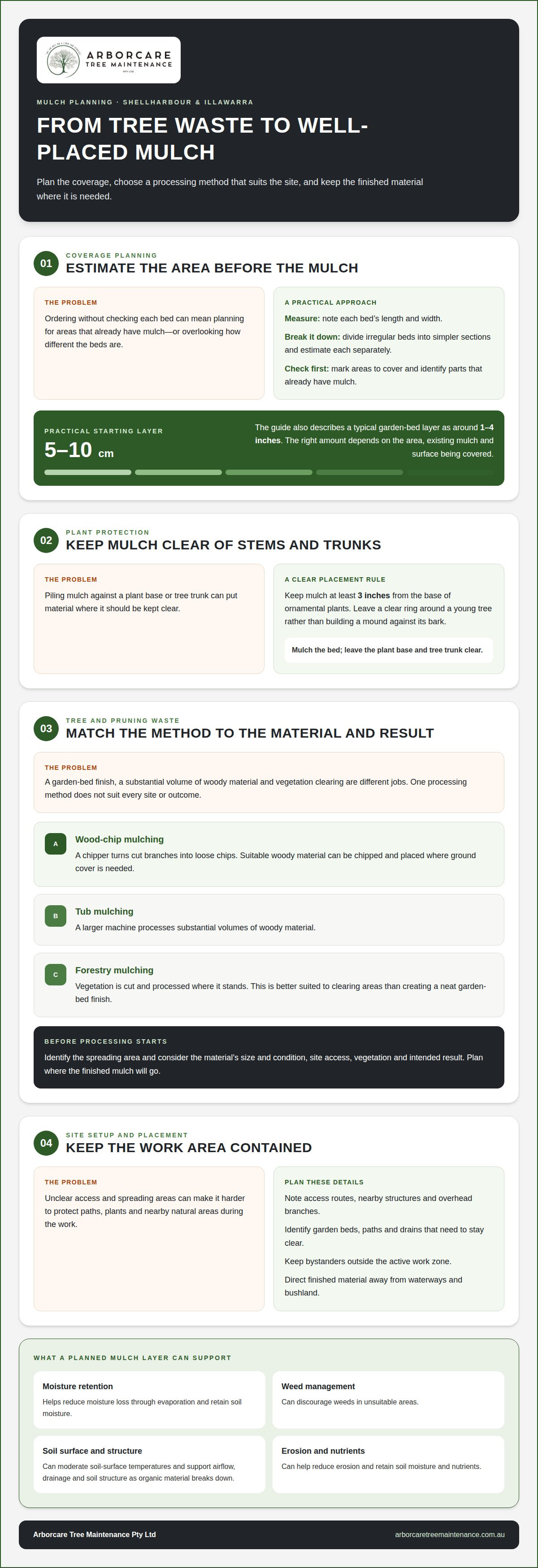
A 5 to 10 centimetre layer is a practical starting point for garden mulch. For mulching services in Shellharbour, the amount needed depends on the area to cover and the depth you want to achieve. Keep mulch clear of plant stems and tree trunks rather than piling it against them.
It’s easy to focus on garden beds, but mulching can also support broader property maintenance. Tree and pruning waste can be turned into mulch, while a well-planned layer can help manage weeds and retain moisture across residential and commercial grounds.
This guide explains how to estimate the mulch your garden needs, what to consider when reusing tree waste, and what local delivery and installation can involve. You’ll also learn how mulching fits into maintaining different types of properties, so you can plan the work with a clearer idea of the materials and coverage involved.
Key Takeaways
- Estimate mulch by measuring the garden-bed area and deciding how much coverage the planting needs.
- Learn how suitable tree and pruning waste can be processed into mulch instead of left as green waste.
- Understand how local mulching contractors can help with preparing beds and spreading mulch across a property.
- Plan delivery and installation around the garden layout, access and the amount of material to be moved.
- See how mulching can support ongoing maintenance for residential and commercial grounds, including alongside pruning work.
How much mulch should I use in my garden?
A 5 to 10 centimetre layer is a practical starting point for garden beds. The right amount depends on the area, existing mulch and the surface you’re covering. Measure each bed’s length and width, then use those dimensions to estimate the material needed. For irregular beds, divide the garden into simpler sections and estimate each separately.
Mulch depth also needs to suit the planting. A typical garden-bed layer is around 1-4 inches thick, while ornamental plants should have mulch kept at least 3 inches from each base. Don’t pile it against stems or tree trunks. For example, leave a clear ring around a young tree rather than building a mound against its bark.
Plan the work bed by bed. A narrow border beside a path may need a different volume from a broad garden bed or an open area beneath trees. Mark the areas to cover, note where plants need clear space and check which parts already have mulch. This helps avoid ordering material for areas that don’t need refreshing.
Vegetation clearing and spreading mulch can raise different council considerations in Shellharbour. Whether approval applies depends on the proposed work and the site, including its location and vegetation. Treat clearing and mulching as separate steps when planning work near sensitive areas.
For garden, green-waste or acreage mulching in Shellharbour, first define the task. Garden beds need careful placement, while processing tree waste or managing a larger site may involve broader clearing and material handling. Arborcare Tree Maintenance provides mulching alongside tree care across Shellharbour and the wider Illawarra. Describe the site and work area clearly when requesting a free on-site quote.
Near bushland or waterways, keep the work contained and avoid pushing loose material into natural areas. Consider what vegetation is being processed and where the mulch will go. For example, keep garden-bed material within the maintained area rather than spreading it into nearby bushland. These steps help limit unwanted movement of material across the site.
Mulching services in Shellharbour and the wider Illawarra can be planned around the garden layout and available material. If branches or prunings are part of the job, identify the mulch area and keep plants, paths and waterways clear before work begins. A site plan helps estimate coverage and keep the finished layer away from trunks and stems.
Turning tree and pruning waste into mulch
Branches and prunings can become useful mulch rather than loose green waste. First separate suitable woody material from items that don’t belong in a garden bed. For example, clean branches from a pruning job can be chipped and placed where ground cover is needed. The material’s size and condition determine how it can be processed and used.
Wood-chip mulching turns cut branches into loose chips using a chipper. Tub mulching uses a larger machine to process substantial volumes of woody material. Forestry mulching cuts and processes vegetation where it stands, making it better suited to clearing areas than creating a neat garden-bed finish. The right method depends on access, vegetation and the result you want.
At home, pruning waste might be processed for garden beds beneath established plants or along a boundary. Commercial sites may have larger areas, varied vegetation and different access points, so the plan needs to account for equipment access and where the mulch will go. On either site, identify the spreading area before processing starts. This helps keep chips away from paths, drains and plants that need clear space.
Mulch can help reduce moisture loss through evaporation, discourage weeds in unsuitable areas and moderate soil-surface temperatures during warmer and colder months. As organic material breaks down, it can release minerals into soil and support airflow, drainage and soil structure. For example, a layer around a garden bed can protect the soil surface while leaving stems and trunks clear. Mulch can also help reduce erosion and retain soil moisture and nutrients.
Tree work and machinery require a clear work area. Before processing, identify overhead branches, nearby structures, access routes and people moving through the site. Keep bystanders outside the active work zone, and direct finished material away from waterways and bushland. These practical controls help manage risks from moving branches and operating equipment around homes and commercial grounds.
Before arranging mulching in Shellharbour, define the job’s purpose, site access, vegetation to process and where the finished material should go. A clear scope distinguishes garden-bed mulching from broad vegetation clearing and identifies whether material will be processed on site. Describe the work sequence and how the work area will be managed. These details make the expected result easier to understand.
For a site with both pruning waste and garden beds, plan processing and spreading as connected stages. Tree and pruning work can help create suitable material for mulching, while the placement plan keeps the finished layer targeted to the areas that need it.
Local mulching contractors in Illawarra
For a mulching job in the Illawarra, start by defining the result you need. Refreshing a garden bed differs from processing branches after pruning or managing vegetation across a larger site. Note the work area, material involved and where the finished mulch should go. A Shellharbour garden with narrow paths needs a different access plan from an open block. A clear scope helps match the method to the property.
Site access affects how equipment and material can be moved. A side gate, steep driveway, tight turning area or nearby structure can change the work sequence. Include these details in your job description, along with garden beds, lawns and paths that need protection. In a residential setting, a small access point may determine where branches are processed. On a commercial property, vehicle routes and public access can also shape the plan.
Residential and commercial jobs bring different priorities. A household might want prunings processed and mulch spread around selected plants. A business site may need several garden areas addressed while keeping entrances and walkways usable. List each work zone separately, then note whether the job involves existing green waste, on-site vegetation or material brought in. This gives the work scope practical detail without treating every Illawarra property as the same.
A useful work plan follows a clear sequence: assess the site, identify the material, choose a suitable processing method, then place the mulch. For example, branches gathered beside a garden bed may be processed nearby if access allows. If the spreading area is elsewhere, plan how to move the finished material. This sequence connects tree work with the final garden result.
Capability matters when a job involves tree material, machinery and restricted access. Look for a scope that explains what will be processed, how the work area will be managed and where the mulch will go. “Clear branches” leaves the outcome unclear, while specifying which branches become mulch and where it will be placed creates a more useful brief. Safety planning should account for people, buildings and nearby plants.
Material condition also affects the work. Fresh prunings, mixed green waste and established vegetation can require different handling. Separate the material to be processed from garden items that should remain, such as edging or plants. On a commercial site, mark work zones so active operations don’t overlap with areas being maintained. These steps define the job before equipment arrives.
In Shellharbour and the wider Illawarra, a good plan connects site conditions to the finished result. Include the property layout, access constraints, material type and target spreading areas. A garden-bed job may focus on neat placement, while a larger site may need staged processing. A precise description makes it easier to understand what the service covers and how each area will be handled.
Mulch delivery and installation
Delivery and installation involve more than bringing material to a property. The plan needs to connect the amount delivered, the unloading point and the garden beds receiving it. Start by identifying the areas to cover, then choose a delivery location with safe, practical access. A front driveway, for example, may be close to a street-side bed but far from a backyard garden.
Access affects how mulch moves from the delivery point to its final position. A narrow side passage, steps, sloping ground or parked vehicles can change the handling route. Note these features when describing a Shellharbour property. If the rear garden can’t be reached directly, plan how to move the material around the house without blocking paths or damaging garden edges.
An Illawarra task involved moving 3 tonnes of garden mulch into three garden beds. That example shows why the delivery and spreading plan should account for several destinations, not just the total volume. Before installation, divide the site into work areas and identify which beds receive material. This helps keep the placement organised, particularly where a property has separate front, side and rear gardens.
Installation can follow a simple sequence:
- Identify each garden bed and the amount of coverage it needs.
- Choose an accessible unloading point that suits the property layout.
- Move the material to the nominated beds, keeping paths usable.
- Spread it evenly, then inspect edges and plant clearances.
Completing one bed before moving to the next can help keep material out of adjoining lawn areas. A final inspection can also reveal thin patches or mulch placed where it isn’t wanted.
Wollongong properties can have different access arrangements from homes in Shellharbour, even when both jobs involve garden beds. A steep driveway may affect unloading, while a tight gate can restrict access to a rear yard. Include the delivery point, gate width and any steps in the site description. These details help plan a workable route for moving material.
For multi-bed installation, label the work zones clearly. A front garden, narrow boundary bed and rear courtyard may each need a different amount of mulch and placement approach. Plan a practical order of work, starting with the area farthest from the unloading point if that reduces repeated handling. Keep entrances and everyday access clear along the route.
Before work begins, identify the areas to cover and any parts of the garden that should remain untouched. For instance, mark a path edge or planting area that needs access for ongoing maintenance. A clear delivery and spreading plan links the material to its intended use, helping create a consistent finish across each bed.
Mulching residential and commercial properties
Residential and commercial grounds need plans suited to their layouts and uses. A home garden may have a front border, lawn edges and planting beneath trees. A commercial property may include entry gardens, shared paths and planted areas around buildings. Treat each area as a separate zone, with its own access needs and intended finish.
For a residential garden, start by identifying the beds that need coverage and those that should remain clear. A narrow border beside a path needs careful placement to keep the walkway usable. Around ornamental plants, leave space at each base rather than covering stems. If tree and pruning waste is available, suitable material can be processed for use in selected beds.
Commercial sites need a plan that considers how people use the grounds. A business entrance, for example, may need clear access throughout the work, while a rear garden bed can be handled separately. Marking work areas helps keep mulch away from doorways, paths and operational spaces. It also makes the finished coverage easier to assess.
Divide larger grounds into practical sections before work begins. Identify high-visibility gardens, boundary planting and less prominent areas, then decide the work order. Completing an entry bed before moving to a rear section can help keep the presentation consistent. On a residential block, working from the back garden towards the front can help organise material movement.
Mulch can help retain soil moisture and reduce weed growth in garden beds. Refreshing garden mulch once or twice a year helps maintain its effectiveness and appearance. Timing and work areas depend on the garden’s condition, existing mulch and how the grounds are used. A frequently accessed commercial entrance may need a different maintenance focus from a quiet side garden.
Before spreading, separate the areas receiving mulch from lawns, paths and plantings that need to stay exposed. On a commercial property, consider how staff, customers or visitors move through the site. At home, keep access to gates, clotheslines and outdoor seating clear. These boundaries make the result more useful, not just tidier.
A clear property plan should name each work zone, describe access and state where mulch belongs. “Front entry bed and rear boundary planting”, for example, gives a clearer scope than “mulch the garden”. This approach works for residential and commercial sites alike. It helps align the work with the property’s appearance, access and ongoing maintenance needs.
Arrange property mulching with a defined list of garden areas and their intended use. Plan mulching for your property around the layout, existing vegetation and the areas that need attention.
Arborcare Tree Maintenance: Mulching
Arborcare Tree Maintenance Pty Ltd provides mulching for Shellharbour properties, including garden-bed coverage and processing tree or pruning waste. The service suits residential gardens and commercial grounds, with the approach shaped by site access, vegetation and where the finished mulch will go.
If branches or overgrown vegetation are part of the job, tree removals or hedging, pruning and trimming can address that work alongside mulching. For urgent tree-related hazards, an emergency tree service may be the appropriate next step. Mulching isn’t a substitute for removing an unsafe tree or managing an immediate hazard.
Set out the areas you want covered and describe any access limitations. This gives the work a clear starting point, whether you’re refreshing selected garden beds or managing material from tree work. Contact Arborcare Tree Maintenance Pty Ltd to discuss your mulching requirements.
Plan the next stage of your garden
A useful next step is to decide how you want the property to function after the work. At home, that might mean clearer paths and garden beds that are easier to maintain. At a commercial site, it could mean organising work around entrances and shared outdoor areas. This purpose gives your mulching services in Shellharbour a practical direction.
Tree work may also shape the plan. Arborcare Tree Maintenance Pty Ltd offers Tree Removals, Palm Tree Removals and Hedging, Pruning & Trimming, alongside mulching. These services can address vegetation that needs attention before the garden’s next maintenance stage. The right sequence depends on the areas involved and the outcome you want.
Set out the parts of your property that need work and the result you’re aiming for. That gives the conversation a clear starting point and helps connect tree maintenance with your garden plans. Discuss your property’s mulching needs with Arborcare Tree Maintenance Pty Ltd and take the next step towards a considered outdoor space.
Frequently Asked Questions
What areas do you service?
Arborcare serves Dapto, Wollongong, Shellharbour and the wider Illawarra, including Wonoona, Jamberoo, Fairy Meadow and Dombarton. When enquiring about a property in these local areas, include its suburb and the work needed. The site location provides useful context for discussing access, vegetation and the areas requiring attention.
What do mulching services include?
Mulching can turn suitable green waste, including branches, into garden mulch. Depending on the job, the material may be taken away or processed for use on site. For example, branches from tree work can be separated from material that needs removal, then directed towards garden use. The work’s scope depends on the vegetation, property layout and whether the goal is to reuse the material or clear it from the site.
What mulching services are available in Shellharbour, NSW?
Arborcare Tree Maintenance Pty Ltd offers mulching in Shellharbour, alongside tree-related work such as tree removals, palm tree removals, pruning and land clearing. Its arborists are AQF 3 and AQF 5 qualified, licensed (AL2856), and fully insured. If your job includes several types of vegetation work, describe each task and the areas involved. This helps clarify whether the work is focused on garden mulch, tree maintenance or clearing vegetation.
What areas around Shellharbour do local mulching contractors service?
Arborcare Tree Maintenance Pty Ltd serves Shellharbour, Dapto, Wollongong and the wider Illawarra, including Jamberoo, Fairy Meadow, Wonoona and Dombarton. When enquiring, provide the suburb and site location, along with details of the work. This context helps shape a plan for access, vegetation and the areas requiring attention.
What is included in a Shellharbour mulching service quote?
Arborcare Tree Maintenance Pty Ltd provides a free on-site quote. It can cover mulching or tree work, qualified labour, equipment, safety compliance and clean-up. Optional work, such as stump grinding or mulching alongside tree removal, can also be included. The price is determined on site, with factors such as vegetation, access and the requested work shaping the scope. The quote gives you a job-specific outline before work proceeds.
Do Shellharbour contractors offer on-site mulching and green waste removal?
Arborcare Tree Maintenance Pty Ltd can take branches away or turn them into garden mulch. The right approach depends on the material and what you want done with it. Suitable pruned branches can be processed as mulch, or taken away if removal is preferred. Stumps are handled through stump grinding, a separate service from processing branches into mulch.
What machinery and access requirements are needed for residential or acreage mulching?
Equipment and access needs depend on the site, vegetation and work scope. Share practical details such as driveway access, gates, slopes, nearby buildings and where machinery can safely operate. For acreage, identify vegetation areas and vehicle routes; for a home, note narrow side access or garden features. Keep well away from the tree and do not try to tackle dangerous conditions yourself.


