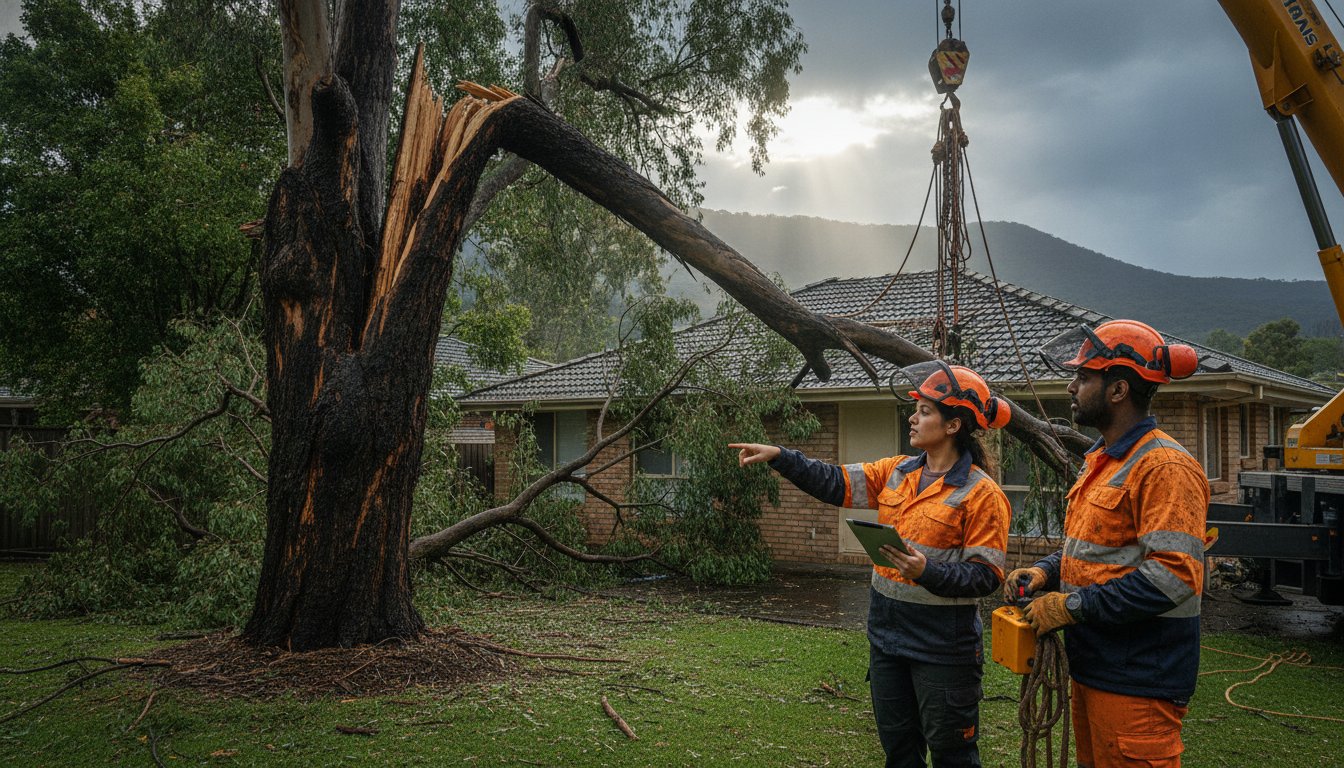
Picture this: the wind has finally died down after a fierce Illawarra storm, but as you look out the window, you see a heavy branch hanging precariously over your family's bedrooms. It's an unsettling sight that leaves many homeowners feeling completely overwhelmed and unsure of the next step. You're likely worried about the immediate danger to your roof, wondering if your insurance policy will actually cover the cleanup, and feeling confused about whether you need a council permit before calling in the experts for storm damage tree removal.
We understand that the aftermath of a severe weather event is a high-stakes situation where immediate safety and professional documentation are more critical than the removal itself. This guide provides the clarity you need to manage fallen or damaged trees while protecting your property and family. We'll walk you through the essential safety protocols, explain the latest local council regulations for emergency work, and show you how to document damage correctly to support a successful insurance claim. By following this methodical approach, you can transform a chaotic situation into a controlled, professional recovery.
Key Takeaways
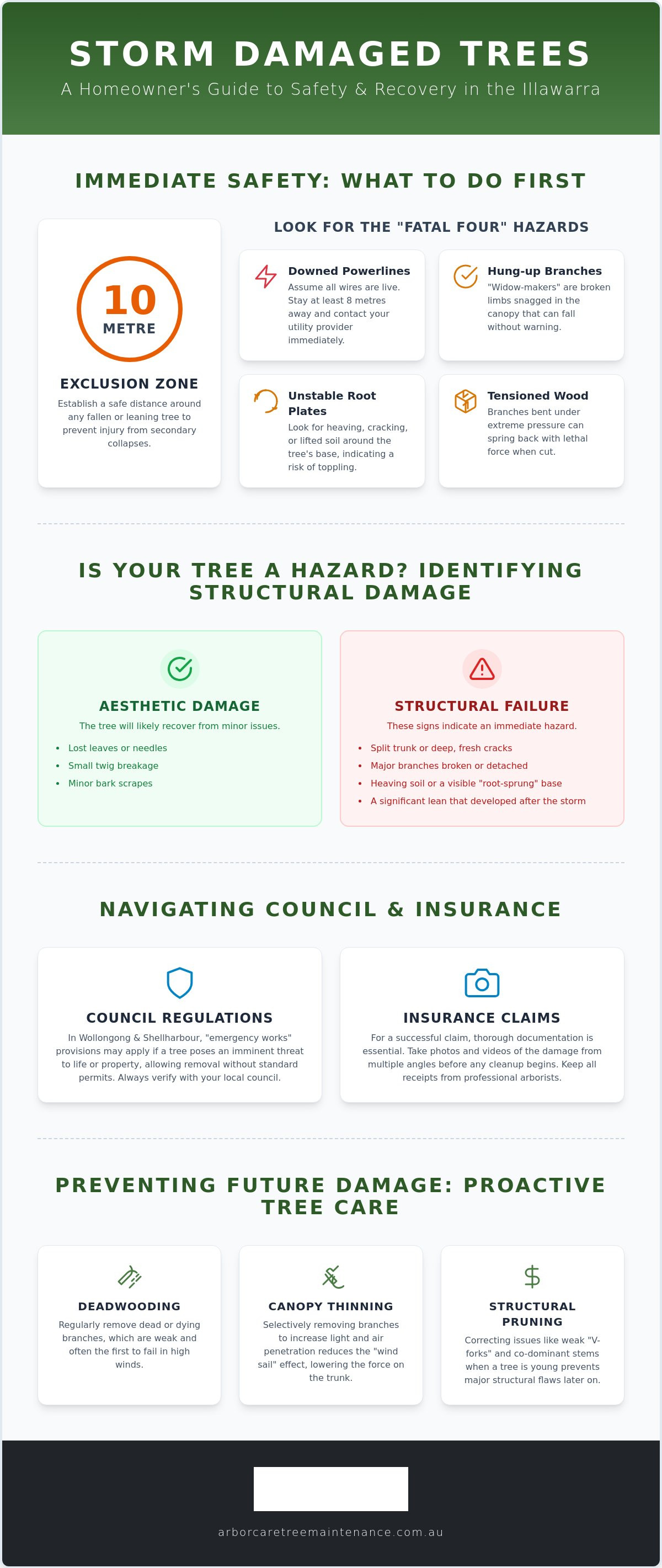
- Secure your property immediately by establishing a 10-metre exclusion zone around any fallen or leaning timber to prevent injury from secondary branch failures.
- Identify critical signs of structural instability, such as root plate lifting or trunk splitting, which indicate a tree is a high-risk hazard rather than just aesthetically damaged.
- Gain a clear understanding of the professional storm damage tree removal process, including the use of specialised cranes and high-capacity chippers for complex recovery tasks.
- Learn how to utilise the "emergency works" provisions within Wollongong and Shellharbour council regulations to address imminent threats without delaying for standard permit approvals.
- Implement proactive maintenance techniques like deadwooding and hedging to reduce the "wind sail" effect and minimise the risk of future storm-related property damage.
Immediate Safety: What to Do When a Tree Falls
The Illawarra is no stranger to the destructive force of East Coast Lows. These intense weather systems can turn a stable backyard into a hazardous environment in minutes. When we talk about storm damage tree removal, we aren't just discussing clearing away debris. It's the professional extraction of hazardous timber following severe weather. This process requires technical precision to manage the unpredictable forces at play within a damaged canopy. It is a high-risk task that should never be attempted by an untrained homeowner with a domestic chainsaw.
Your first priority is to establish a 10-metre exclusion zone around any fallen or leaning tree. This distance is vital because storm-damaged trees rarely fail in a single event. Secondary collapses are common as the wood settles or the wind continues to gust. Within this zone, you must look for the "Fatal Four" hazards:
- Downed Powerlines: Arcing or hidden wires tangled within the foliage.
- Hung-up Branches: Limbs that have snapped but remain snagged precariously in the canopy.
- Unstable Root Plates: Soil that is heaving, cracking, or lifting around the base of the tree.
- Tensioned Wood: Branches or trunks under extreme pressure that can "spring back" with lethal force when cut.
If a tree has fallen on your home or is blocking your only exit, call the State Emergency Service (SES) on 132 500 immediately. For complex removals that require expert rigging and heavy equipment, contacting a licensed arborist is the next essential step. While proactive tree care can prevent many issues, emergency situations demand immediate professional intervention to stabilise the site.
The Danger of Fallen Powerlines
Trees are excellent conductors of electricity, especially when they're wet from rain. You shouldn't assume a line is safe just because it isn't sparking or humming. Stay at least 8 metres away from any low-hanging or downed wires. Before an arborist can begin the storm damage tree removal process, the area must be declared safe by your utility provider. In the Illawarra, this usually means contacting Endeavour Energy to isolate the power before any work commences.
Once the grid is stable and power is restored, it is common for sensitive electrical systems to require a manual reset. If you notice your cooling system isn't responding correctly after a surge, Peninsula Air Conditioning (PenAir) provides a comprehensive guide on troubleshooting error codes and resetting units to get your home climate control back on track.
Securing the Site and Your Family
Keep children and pets strictly away from the "impact zone." Even if the main trunk is already on the ground, the canopy above may still be active with "widow-makers." A widow-maker is a detached limb posing an invisible, lethal threat from above. These heavy branches can drop without warning, even hours after the wind has died down. Lock all gates and use temporary fencing or hazard tape if you have it. This keeps curious neighbours and passers-by at a safe distance while you wait for the professional crew to arrive.
Identifying Storm Damage: Signs Your Tree is a Hazard
Once the immediate danger has passed, you must evaluate whether your trees remain structurally sound. Not all damage requires storm damage tree removal. Minor issues, such as lost leaves or small twig breakage, are typically "aesthetic" and the tree will recover. However, "structural" failure involves the main trunk, major scaffold branches, or the root system. In the Illawarra, our unique geography creates specific challenges. The escarpment generates powerful downdrafts and "mountain waves" that put immense lateral pressure on local species like Eucalypts. These trees are often adapted to shed limbs, but a split trunk or a shifting root plate is a different matter entirely.
A tree that looks perfectly green can still be a "root-sprung" hazard. This happens when the root system has been partially severed or loosened, but the tree remains upright for a time. If you are unsure about the stability of a large tree near your home, contacting a qualified arborist for a professional inspection is the safest way to prevent a secondary disaster.
Cracks, Splits, and Seams
Look closely at the main trunk and where large branches join. If you notice fresh, pale wood within a deep fissure, it indicates the tree's internal structure has recently been compromised. These cracks often occur at "V-forks," where two co-dominant stems have grown closely together. These junctions are naturally weak. During high winds, they act like a lever, prying the tree apart. While some minor cracks can be managed with professional cabling, a split that extends deep into the heartwood usually necessitates emergency storm damage tree removal to protect your property.
Ground Heave and Leaning Trees
The most dangerous storm hazard is often found at ground level. Walk around the base of the tree and look for "ground heave." This appears as mounding, cracked soil, or exposed roots on the side opposite the tree's lean. It suggests the root plate has begun to lift. While a tree with a natural, long-term lean is usually stable, a sudden lean following a storm is a critical emergency. The root system is no longer anchoring the weight of the canopy. For a detailed breakdown of what to monitor after the cleanup is finished, refer to our guide on Tree Risk Assessment Wollongong. Identifying these signs early allows you to act before the next gust of wind finishes what the storm started.
The Professional Storm Damage Tree Removal Process
A professional recovery is a systematic operation that prioritises site stability over speed. Unlike standard maintenance, storm damage tree removal involves managing timber that is under extreme physical stress. Our Arborcare team follows a disciplined methodology. We begin by assessing the "lay" of the tree and identifying potential pivot points. We then use specialised equipment, such as high-capacity chainsaws and wood chippers, to process the debris safely. In many cases, a crane is required to lift heavy sections of wood vertically away from structures, preventing further impact damage to your home.
It's vital to distinguish between professional arboriculture and "lopping." Lopping is the indiscriminate cutting of branches, which often leaves trees more vulnerable to future failure. A professional removal, however, is a controlled dismantling. We account for weight distribution and the biological health of the remaining stump or surrounding trees. This methodical approach ensures that the immediate hazard is gone without creating new risks for your landscape. It is a protective service designed to restore order to your property while maintaining the highest safety standards.
Dealing with Tension and Compression
The physics of a fallen tree are incredibly complex. When a branch is pinned under a trunk or bent against the ground, it creates a "spring pole" effect. This is essentially a loaded catapult. If you cut the wrong side of that branch, the stored energy releases instantly. This can cause the "barber chair" effect, where the trunk splits vertically and kicks back toward the operator. This phenomenon is frequently fatal for untrained individuals. Our arborists use technical precision to identify compression and tension wood, making strategic "relief cuts" to bleed off that energy safely before the final removal.
Complex Removals Near Structures
When a tree is resting on a roof or leaning over a fence, the removal requires advanced rigging. We use high-tensile ropes and pulleys to "lower" timber piece by piece. This prevents heavy logs from crashing into your property. Every high-risk cleanup includes a dedicated "spotter" whose only job is to monitor the site for shifting timber or encroaching hazards. For a deeper look at how we handle these high-stakes environments, see our guide on Complex Tree Removal Illawarra. This level of care ensures your home remains protected throughout the entire recovery process.
Insurance Claims and Council Regulations in the Illawarra
Navigating the administrative aftermath of a storm can be just as taxing as the physical cleanup. In the Illawarra, homeowners must balance insurance requirements with strict local government orders. Successful storm damage tree removal hinges on understanding the legal distinction between "imminent risk" and "convenient removal." If a tree poses an immediate threat of injury or property damage, you have the right to act quickly. However, if the tree is merely leaning or looks unsightly, removing it without a permit can lead to significant fines. Wollongong City Council generally requires a permit for any tree taller than 5 metres or with a trunk diameter exceeding 30 centimetres at ground level. As of the 2025-2026 fee schedule, this application typically costs $109.00 for one or two trees.
A common pitfall that leads to denied insurance claims is the lack of professional evidence. Most home and contents policies in Australia cover the removal of a fallen tree only if it has damaged an insured structure, such as your roof or fence. If a tree falls in the middle of your lawn without hitting anything, the cost of removal is usually your responsibility. Understanding these nuances before the crew arrives ensures you aren't left with an unexpected bill during an already stressful time.
Documenting Damage for Your Insurer
Adhering to the "Photo First" rule is the most effective way to protect your financial interests. Capture wide shots that show the tree's position relative to your house, alongside close-ups of the specific structural failures. You shouldn't move the debris until your insurer gives the green light, unless it represents an ongoing safety risk. An arborist’s written quote is often the primary evidence an insurer uses to validate a claim. Most policies include a sub-limit for tree removal, typically between $1,000 and $5,000, provided the tree has caused property damage. If you need an urgent assessment for your provider, our licensed arborists can provide professional quotes to support your claim.
Local Council Permits for Emergency Work
Most Illawarra councils allow for the emergency removal of imminently dangerous trees without prior approval. This provision is vital during severe weather events. In the Wollongong area, you must lodge a Tree Management Application within 72 hours of the emergency work being completed. You are required to provide "after-the-fact" evidence, including clear photos and a letter from a qualified arborist, to prove the tree was a genuine threat. For trees that aren't an immediate danger, you must follow the standard application process. You can find more details on these requirements in our guide to Tree Removal Permits Wollongong. Always verify if your property falls within a 10/50 vegetation clearing zone before starting any work, as this may change your permit requirements.
Preventing Future Storm Damage: Proactive Tree Care
The best way to manage a weather event is to ensure your property is prepared before the clouds gather. While we provide 24/7 emergency support, a proactive approach to arboriculture can often eliminate the need for a reactive storm damage tree removal. One of the most effective methods is reducing the "wind sail" effect. When a canopy is too dense, it catches the wind like a sail on a boat, putting immense pressure on the trunk and root system. Strategic pruning and hedging allow air to flow through the branches, significantly lowering the risk of a total structural failure during an East Coast Low.
Deadwooding is another essential pre-storm task. This involves the systematic removal of dead, dying, or diseased branches that are likely to snap under the weight of rain or the force of a gale. On the South Coast, we recommend completing this work before the summer storm season begins. Additionally, you should monitor your soil drainage. Waterlogged soil during periods of heavy rain can lead to root rot and instability. If you notice water pooling around the base of a large tree, it's a sign that the root system's anchor may be compromised. A professional tree risk assessment serves as the ultimate insurance policy, identifying these hidden vulnerabilities before they become costly emergencies.
The Role of Mulching and Soil Health
Proper soil management is a key component of tree stability. High-quality mulching protects the root zone from the "soak and blow" effect, where saturated soil allows the root plate to shift more easily in high winds. However, you must avoid "volcano mulching." This is the practice of piling mulch high against the trunk, which traps moisture and encourages fungal decay and trunk rot. Instead, spread mulch in a wide, flat ring. We often recommend using recycled storm debris that has been processed through a wood chipper, as this provides a sustainable, nutrient-rich layer that is perfectly suited to the local Illawarra climate.
Scheduling Pre-Storm Maintenance
Timing is everything when it comes to property protection. Autumn is the ideal window to organise an inspection and prep your Illawarra property for the winter storm season. Palm trees require special attention during this period. Heavy fronds and large seed pods can become dangerous projectiles in high winds, causing significant damage to windows and vehicles. Removing these before they reach a critical weight is a simple way to improve site safety. Don't wait for the first warning from the Bureau of Meteorology to check your trees. Contact Arborcare for a professional safety audit before the next storm hits. Taking action now ensures your landscape remains an asset rather than a liability.
Restoring Safety and Order to Your Illawarra Property
Managing the aftermath of a severe weather event requires a balance of immediate caution and methodical planning. By establishing exclusion zones and identifying structural hazards early, you protect your family from the unpredictable nature of damaged timber. Remember that documenting the site thoroughly is your best defence when navigating insurance claims and local council regulations. Professional storm damage tree removal isn't just about clearing debris; it's about using technical precision to eliminate the lethal tension and compression forces that DIY attempts simply can't handle.
If you're currently facing a hazardous situation, don't take unnecessary risks. Our local Dapto-based team consists of fully licensed and insured Level 3 and 5 Arborists who specialise in high-risk removals near powerlines and residential structures. We provide a 24/7 emergency response to ensure you're never left vulnerable after a storm. Need urgent help? Call Arborcare for 24/7 Emergency Storm Damage Tree Removal in the Illawarra. With the right expert support, you can move from the chaos of a storm to a safe, restored landscape with total confidence.
Frequently Asked Questions
Is storm damage tree removal covered by home insurance in NSW?
Home insurance in NSW typically covers storm damage tree removal only if the tree has caused physical damage to an insured structure, such as your home, garage, or boundary fence. Most policies include a specific sub-limit for this service, which often ranges between $1,000 and $5,000 depending on your provider. It's important to note that if a tree falls in an open garden area without striking a building, the cost of its removal is generally not covered by standard policies.
Do I need council permission to remove a tree that fell during a storm in Wollongong?
You can legally remove a tree that poses an "imminent threat" to life or property without waiting for a prior permit, but strict documentation rules apply. Wollongong City Council requires homeowners to lodge a Tree Management Application within 72 hours of the emergency work being performed. To avoid potential fines, you must provide clear photographic evidence of the hazard and a written statement from a qualified arborist confirming the tree was structurally unsound.
Can I use a chainsaw to clear storm debris myself?
Attempting to clear storm debris yourself is extremely dangerous and is a leading cause of post-storm injuries. Fallen timber is often under intense physical pressure, creating "spring poles" that can snap back with lethal force when cut. Professional arborists use technical rigging and specific relief cuts to bleed off this stored energy safely. Without professional training and high-grade safety equipment, you risk the "barber chair" effect, where the trunk splits vertically and kicks back toward the operator.
What is the cost of emergency tree removal in the Illawarra?
The cost of an emergency response depends on the tree's size, its proximity to powerlines, and the specialised equipment required for a safe extraction. Tasks that necessitate cranes or complex rigging to protect a damaged roof involve different resource requirements than clearing a fallen trunk from a driveway. While standard maintenance is planned in advance, emergency services reflect the increased risk and immediate mobilisation of crews during or after severe weather events.
What should I do if a tree has fallen on my car or roof?
Your first priority is to evacuate the immediate area and ensure all family members and pets are safe. If there's an immediate threat to life or the building's structural integrity is compromised, contact the State Emergency Service (SES) on 132 500. Once the site is stable, you should photograph the damage from a safe distance for your insurance provider and engage a licensed arborist to perform the technical removal and provide a recovery report.
How long does it take for an emergency tree crew to arrive during a storm?
Arrival times depend on the severity of the weather event and the level of immediate danger at your property. Priority is always given to high-risk situations, such as trees resting on houses, blocking essential access, or tangling with utility lines. Our Dapto-based team at Arborcare maintains a 24/7 emergency response capability to ensure we can reach residents across the Illawarra as quickly as possible when hazardous conditions are reported.
Will the arborist take away the mulch and wood after the removal?
A professional service includes the complete processing and removal of all storm debris from your site. We utilise high-capacity wood chippers to turn foliage and branches into mulch, which can be hauled away or left for your garden beds if you prefer. For larger trunks, we can process the timber and provide stump grinding as a follow-up service to ensure your property is clear and safe for future landscaping or repairs.
What happens if a neighbour’s tree falls onto my property?
If a neighbour’s tree falls onto your land, you generally need to lodge a claim with your own insurance provider to handle the storm damage tree removal. In Australia, insurance claims for tree damage are typically settled by the insurer of the property that sustained the damage, regardless of where the tree was growing. Your insurer will manage the cleanup on your side of the boundary and may later seek to recover costs from the neighbour if negligence can be proven.


