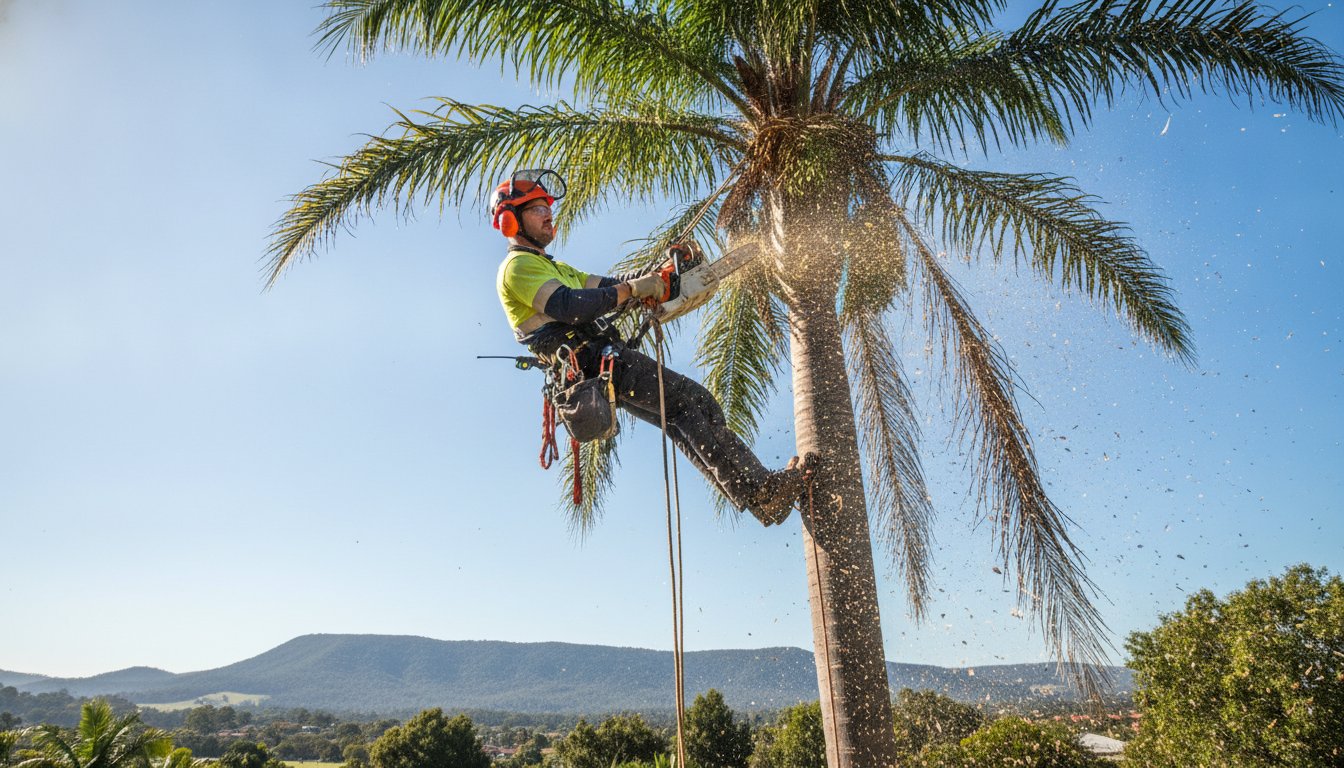
A single neglected palm tree can drop more than twenty kilograms of dead weight during a typical coastal gust, instantly transforming your driveway or roof into a high-risk hazard zone. While these iconic trees define the Illawarra landscape, the reality of managing messy fruit, heavy falling fronds, and pests like rats or wasps nesting in the dead "skirt" is a constant headache for many locals. If you've been putting off palm tree trimming Wollongong weather and safety standards suggest it's time to act before a minor nuisance becomes a costly property insurance claim.
We understand that the confusion surrounding Wollongong City Council permit rules often leads to hesitation, especially since regulations were updated in late 2025 to increase height exemptions to five metres. This guide provides the professional clarity you need to manage your palms effectively and safely. You'll learn how to spot the signs of a failing frond, understand the aesthetic and health benefits of the professional skinning process, and navigate the local legal requirements for pruning and tree replacement. It's about moving from property maintenance stress to a clean, secure, and council-compliant outdoor space.
Key Takeaways
- Learn how to identify when dead fronds and seed pods become a safety hazard for your vehicles and roof structures.
- Discover the functional difference between maintenance trimming and cosmetic skinning to achieve a clean, pest-free trunk.
- Understand the high-risk nature of palm maintenance and why specialised high-access equipment is required to manage fibrous trunks safely.
- Master the essential steps for palm tree trimming Wollongong professionals follow to ensure long-term tree health and storm resilience.
- Navigate the latest local council regulations regarding tree height exemptions and permit requirements across the Illawarra region.
Why Regular Palm Tree Trimming is Essential in Wollongong
Wollongong's coastal climate provides the perfect environment for various members of the palm family to thrive, but these fast-growing specimens require more than just occasional attention. Neglecting the palm tree trimming Wollongong properties need often results in a significant "mess factor" that impacts your daily life. Falling seed pods and heavy fronds don't just clutter your lawn; they can dent car bonnets and block residential guttering systems. Beyond the surface debris, dead fronds create a thick, dry "skirt" around the upper trunk. In the Illawarra, these skirts become high-density housing for rats, wasps, and cockroaches. Removing this dead material is a functional necessity to keep pests away from your home's foundation and roof cavity.
Preparation for the local storm season is equally critical. During East Coast Lows, a palm with a full head of dead, heavy fronds acts like a sail. This increased wind resistance puts immense pressure on the root ball and the trunk's structural integrity. Regular trimming reduces this "sail effect," allowing high-velocity winds to pass through the canopy instead of catching it. This simple maintenance step can be the difference between a standing tree and a total palm failure during a gale. From an aesthetic perspective, professionally maintained palms provide an immediate boost to kerb appeal. In coastal suburbs, a clean, well-groomed palm suggests a property that's cared for and structurally secure.
Safety Risks of Neglected Palms
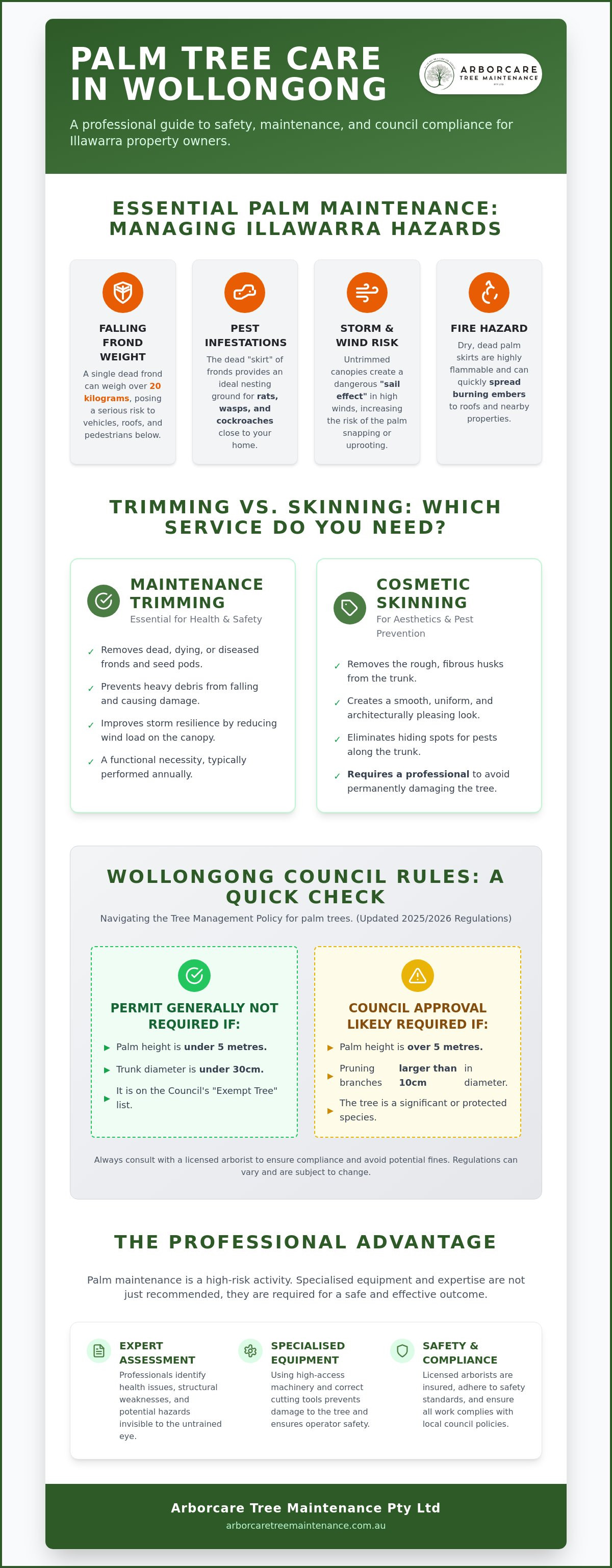
A single mature palm frond can weigh several kilograms and often features sharp, serrated edges or spikes. When these fall from heights of ten metres or more, they pose a genuine threat to pedestrians, pets, and parked vehicles. In suburban settings, dry palm skirts are also a notable fire hazard. They ignite rapidly and can carry burning embers to your roof or neighbouring properties. Additionally, top-heavy palms are a liability in high-wind areas like Shellharbour. If the crown is overloaded with dead weight, the tree's centre of gravity shifts, making it far more likely to snap or uproot during extreme weather events.
Wollongong Council Regulations and Permits
Navigating local rules is essential for any property owner. Wollongong City Council maintains an "Exempt Tree" list, and as of 2026, many palms under five metres in height or with a trunk diameter under 30cm can often be managed without a formal permit. However, if your tree exceeds these dimensions, or if you plan to prune branches larger than 10cm in diameter, you'll likely need council approval. Engaging a licensed arborist Wollongong residents trust ensures you stay compliant with the latest Tree Management Policy. This professional oversight protects you from potential fines and ensures any required replacement trees are correctly documented and planted.
Trimming vs. Palm Tree Skinning: Which Do You Need?
Understanding the difference between basic maintenance and cosmetic refinement is essential for any property owner. While standard palm tree trimming Wollongong services focus on the canopy, skinning addresses the trunk itself. Trimming involves the systematic removal of dead, dying, or diseased fronds and spent seed pods. This process adheres to proper palm pruning techniques to ensure the tree remains healthy and structurally sound. It is a functional requirement that prevents debris from falling on your driveway or clogging your drainage systems.
In contrast, palm tree skinning Wollongong is a more intensive cosmetic procedure. This method removes the rough, fibrous husks left behind after fronds are cut away, revealing a smooth and uniform trunk. Because palms are monocots rather than hardwoods, they lack the ability to heal bark wounds. If skinning is performed by an amateur using incorrect tools, it can permanently gouge the trunk and expose the vascular system to infection. Professionals use specialised knives to shave the leaf bases without compromising the tree's biological integrity. While trimming happens annually, a professionally skinned trunk stays smooth for several years, providing a sleek, architectural look that requires less frequent intervention.
Common Illawarra Palm Species Maintenance
Different species found across the Illawarra require specific care protocols. Cocos Palms, also known as Queen Palms, are notorious for producing heavy, messy seed pods that require frequent removal to maintain a tidy yard. Phoenix Palms present a higher safety risk due to the long, toxic spikes at the base of their fronds; these can cause severe skin irritation and require expert handling. For our native Bangalow and Cabbage Tree Palms, maintenance is usually lighter. We focus on preserving their natural coastal silhouette while ensuring that old fronds don't become a hazard during high-wind events. If you are unsure which species you have, a professional maintenance assessment can help identify the best care plan.
When Skinning is the Better Option
Skinning is often the preferred choice for high-end residential estates in suburbs like Jamberoo or Fairy Meadow where aesthetics are a priority. Beyond the visual appeal, this process serves a vital hygiene function by permanently removing the nooks and crannies where pests like to breed. Palm skinning is the surgical removal of old leaf bases to reveal the smooth "heartwood" below. By eliminating these habitats, you significantly reduce the risk of rodent infestations near your home. Investing in regular palm tree trimming Wollongong ensures your property remains safe, but skinning provides that final touch of professional polish and long-term pest protection.
The Risks of DIY Palm Maintenance
Many homeowners view palm tree trimming Wollongong as a straightforward weekend task. This assumption is a dangerous mistake. Standard extension ladders are effectively death traps when used on tall palms. Unlike a flat wall, a palm trunk is curved, often tapered, and prone to swaying in the coastal breeze. This lack of a stable anchor point means a ladder can slip or kick out in an instant. If you are operating a running chainsaw when this happens, the potential for catastrophic injury is extreme. Beyond the fall risk, there is the biological danger of "slumping." This occurs when a massive skirt of dead fronds suddenly detaches and slides down the trunk, potentially crushing or suffocating the person working below it. An NT WorkSafe safety alert highlights these exact risks, reminding us that palm maintenance requires specific training and equipment to avoid fatal outcomes.
The physical structure of the tree also creates unique challenges. Palms are not hardwoods; they are monocots with fibrous, moisture-heavy interiors. This makes the trunk incredibly slippery and difficult to scale with standard gardening gear. Furthermore, the legal and insurance implications of a DIY mishap are significant. Most standard home insurance policies in New South Wales won't cover property damage or personal liability claims if the work was performed by an unlicensed individual at height. You aren't just risking your physical safety; you are risking your financial security if a frond falls on a neighbour's vehicle or powerline.
Technical Challenges for Amateur Gardeners
Managing the sheer weight of palm debris is often underestimated. A single green frond can weigh upwards of 15 kilograms, and it doesn't just drop straight down; it swings unpredictably once cut. Balancing this weight while secured only by a ladder is a recipe for disaster. Disposal is another hurdle. Palm fibres are notoriously tough and will jam or destroy most domestic mulchers. This waste requires professional-grade machinery to process, making the cleanup just as difficult as the trimming itself.
Why Professional Arborists are Essential
Qualified arborists utilise Elevated Work Platforms (EWPs) to provide a stable, level base for high-access work, even in tight side-access blocks common in the Illawarra. When climbing is the only option, we use specialised spikes and flip-lines designed specifically to bite into fibrous palm trunks. These professional safety protocols ensure the job is completed without incident. If you're concerned about the state of your tree, check out our dead palm tree removal checklist to see if your tree is beyond a standard trim and has become a structural liability.
How to Trim a Palm Tree: The Professional Process
Executing the palm tree trimming Wollongong residents expect requires a methodical approach that starts long before the first cut is made. A professional arborist begins with a comprehensive pre-work inspection. We look for overhead powerlines, which are a constant factor in suburban Illawarra streets, and check for nesting native birds or protected wildlife. We also examine the trunk for structural cracks or signs of internal decay that might compromise safety during the climb. This assessment ensures the work proceeds without damaging your property or local biodiversity.
Before making any incisions, selecting the correct tools is paramount. We utilise high-reach pole saws for smaller specimens and specialised pruning shears for precision work near the crown. Every piece of safety gear, from harnesses to high-visibility clothing, is checked for compliance with Australian standards. Professional arborists also adhere to the "9 to 3" rule. This means we never prune fronds above the horizontal line of the tree's head. Over-pruning into a "pineapple" shape or "hurricane cut" removes vital photosynthetic tissue, which weakens the palm and makes it more susceptible to disease and storm damage.
Hygiene is a technical detail that many amateur gardeners overlook. We thoroughly disinfect all cutting tools before and after each job to prevent the spread of Fusarium wilt. This lethal fungal pathogen can be easily transferred between trees via contaminated blades. By maintaining sterile equipment, we protect the long-term health of your garden and the wider Wollongong urban forest. If you're concerned about the health of your palms, our team provides the professional palm maintenance required to keep your trees thriving and disease-free.
Step-by-Step Maintenance Sequence
- Removing dead fronds: We focus on brown, completely desiccated fronds. Yellowing fronds are often left in place because the tree is still extracting essential nutrients from them to support new growth in the centre.
- Cutting seed pods: Spent seed pods and flowers are removed at the base. This significantly reduces the mess on your driveway and prevents the palm from wasting energy on seed production.
- Crown cleaning: A final inspection of the crown ensures no loose debris or "hangers" remain that could fall during the next coastal gust.
Waste Management and Mulching
Palm waste is notoriously difficult to process because of its high silica content and stringy, fibrous nature. Standard domestic garden shredders won't handle this material; it requires high-powered, industrial wood chippers to break down effectively. We organise a complete site clean-up to ensure your lawn, garden beds, and pool areas are left spotless. Professional mulching turns palm waste into garden-ready organic matter. This recycled material can then be used to retain moisture in your soil, providing a functional benefit long after the trimming work is finished.
Choosing the Right Arborist in Wollongong and the Illawarra
Selecting a contractor for palm tree trimming Wollongong properties require involves more than just comparing prices. A professional arborist must possess deep local knowledge. Being based in Dapto, we understand how the unique Illawarra soil compositions and unpredictable coastal wind patterns affect palm stability. An arborist who knows the region understands that a palm in a wind-swept coastal strip near Wonoona requires a different maintenance approach than one in a sheltered valley. This local expertise ensures that your trees aren't just trimmed, but are prepared for the specific environmental pressures of the South Coast.
Verification of insurance is a non-negotiable step in the vetting process. High-risk palm work, often performed at significant heights, carries inherent dangers. You must ensure your chosen professional carries comprehensive public liability and professional indemnity insurance to protect your property and neighbouring assets. Furthermore, the quality of a company's equipment is a direct reflection of their reliability. Ask if the firm owns their own Elevated Work Platforms (EWPs) and industrial wood chippers. Companies that own their machinery are typically more efficient and less likely to experience delays caused by rental availability, ensuring your job is completed on schedule.
Always insist on a written quote and a detailed scope of work. A professional document should clearly outline which palms are being serviced, the specific methods used (such as trimming or skinning), and how the waste will be managed. This transparency eliminates the risk of "hidden costs" and ensures both parties understand the safety protocols being implemented on-site.
Arborcare's Approach to Palm Care
Our team is committed to the highest industry standards, strictly adhering to Australian Standards (AS4373-2007) for the pruning of amenity trees. This ensures that every cut we make promotes the long-term health of the specimen rather than just providing a short-term visual fix. We specialise in high-end palm skinning services for residents seeking a premium, smooth finish for their property's landscape. Serving the entire Illawarra region from Wonoona down to Shellharbour, we also provide a 24/7 emergency tree service to handle storm-damaged palms that pose an immediate threat to safety.
Get Your Custom Maintenance Plan
Proactive care is always more cost-effective than reactive removals. Regular, scheduled trimming prevents the buildup of heavy debris and reduces the likelihood of pest infestations, which is significantly cheaper than the high costs associated with emergency palm tree removals after a storm. We invite you to organise a no-obligation site assessment where we can develop a maintenance programme tailored to your specific garden needs. Ready to tidy up your property? Contact Arborcare Tree Maintenance today for professional palm trimming and expert advice.
Secure Your Property with Expert Palm Maintenance
Maintaining palms in the Illawarra is a critical balance of aesthetic appeal and rigorous safety standards. You now understand the functional importance of removing dead fronds to prevent pest infestations and the technical precision required for skinning to reveal a smooth, healthy trunk. By prioritising professional intervention over high-risk DIY methods, you ensure your property remains compliant with local council regulations while protecting your home from the hazards of the next East Coast Low. Effective palm tree trimming Wollongong residents can rely on requires the right equipment and local expertise to handle our unique coastal conditions safely.
As a locally owned and operated firm in Dapto, Arborcare Tree Maintenance provides fully insured and licensed arborists equipped with specialised palm skinning equipment. We manage the technical challenges of fibrous trunks and high-access blocks so you don't have to risk a ladder fall or property damage. Our team is dedicated to keeping the Illawarra's urban forest healthy and your backyard secure. Request a Professional Palm Trimming Quote from Arborcare today to organise a comprehensive site assessment for your trees. We look forward to helping you maintain a beautiful and hazard-free property.
Frequently Asked Questions
Do I need Wollongong Council permission to trim my palm tree?
You generally need a permit if your palm tree is more than five metres in height or has a trunk diameter exceeding 30cm at ground level. According to the 2025 policy review, these specific measurements determine whether a formal application is mandatory. Pruning branches that are more than 10cm in diameter also requires council approval, a process that typically takes 28 working days. It's always best to consult the latest Wollongong City Council customer guide to confirm if your specific species falls under the exempt tree list.
How much does palm tree trimming cost in the Illawarra?
The cost for palm tree trimming Wollongong property owners pay depends on several technical variables. Height is the most significant factor, followed by the ease of access for specialised equipment like Elevated Work Platforms. Species like the Phoenix palm often require more time due to their toxic spikes and dense frond structures, which demand higher safety protocols. Because every site in the Illawarra has different soil stability and wind exposure, we provide individualised quotes based on a physical site assessment.
What is the best time of year to trim palms in Wollongong?
Late spring or early summer is the most effective time for palm maintenance in our region. This window allows for the removal of seed pods and flowers before they mature and create a mess on your driveway or in your pool. Performing this work before the peak of the summer storm season also helps reduce wind resistance, protecting your property from falling debris during coastal gusts and East Coast Lows.
Can I skin my palm tree myself?
You shouldn't attempt to skin a palm tree yourself due to the high risk of permanent trunk damage. Unlike hardwood trees, palms don't have bark to protect their vascular systems; a single deep gouge from an amateur's tool can invite lethal infections or fungal rot. Professional arborists use specialised knives and high-access safety gear to shave the trunk accurately. Attempting this from a standard ladder is extremely dangerous and often results in a compromised tree structure.
Are Cocos palms illegal in the Wollongong area?
Cocos palms are not illegal to own, but they are widely recognised as an environmental weed across New South Wales. Wollongong City Council often allows for their removal without a permit if they meet certain criteria because they displace native species and attract pests. Many residents choose to remove them entirely and take advantage of council programmes that provide free native replacement trees through the Botanic Garden's Greenplan sales.
How often should palm trees be trimmed?
Most palms in the Illawarra require professional trimming once or twice per year. The frequency depends largely on the species; for example, Queen palms produce seed pods rapidly and may need bi-annual attention to stay tidy. Regular maintenance prevents the "skirt" of dead fronds from becoming too heavy, which reduces the risk of sudden slumping and makes the eventual cleanup much faster and more affordable.
What happens if I don't remove the seed pods from my palm?
Neglected seed pods become a major liability as they grow and gain weight. When they eventually drop, they can dent vehicles, block guttering, and create a significant trip hazard on footpaths. These pods are also a primary attractant for fruit bats, rats, and wasps. Removing them while they are still small prevents these pests from nesting near your home and keeps your outdoor entertaining areas clean.
Will trimming the top of a palm tree make it grow shorter?
Cutting the top off a palm tree will not reduce its height; it will kill the tree. Palms have a single growth point called the apical meristem, or the "heart." If this point is removed or severely damaged during pruning, the tree loses its ability to produce new fronds and will slowly die. If a palm has grown too tall for its location, the only safe professional resolution is a complete removal followed by the planting of a more suitable species.


