
The cheapest quote for land clearing often becomes the most expensive mistake a property owner can make in the Illawarra. It's a common frustration to see a project budget spiral because of hidden terrain challenges or unexpected council fines that weren't factored into the initial handshake. We recognise that calculating the true cost of land clearing Illawarra involves much more than a simple per-hectare rate; it requires a professional understanding of our unique escarpment conditions and the shifting 2026 regulatory landscape.
This guide provides a realistic framework for your site preparation budget while clarifying the latest Wollongong and Shellharbour permit requirements. You'll discover how to manage green waste responsibly, navigate the 10/50 bushfire clearing scheme, and ensure your project remains compliant with the newest National EPA standards. We'll break down the technical factors that influence professional pricing, from slope stability to biodiversity overlays, so you can engage a qualified local team with total confidence. By the end of this article, you'll have a clear roadmap to prepare your land safely, legally, and within a predictable financial plan.
Key Takeaways
- Identify how the Illawarra’s unique escarpment terrain and slope stability requirements dictate the specific machinery and technical expertise needed for your site.
- Gain a realistic understanding of the cost of land clearing Illawarra by comparing residential garden removals with broad-acreage development projects.
- Ensure legal compliance by mastering the latest 2026 NSW 10/50 Vegetation Clearing Scheme and local council permit triggers for Wollongong and Shellharbour.
- Learn how end-to-end professional management—combining clearing, stump grinding, and mulching—protects your property and provides high-quality organic materials for future landscaping.
Understanding the Basics of Land Clearing in the Illawarra
Understanding the true cost of land clearing Illawarra starts with recognising that this isn't a one-size-fits-all service. Land clearing is the systematic removal of vegetation, debris, and obstacles from a specific parcel of land. While many property owners view it as simply "cutting down trees," the reality involves complex logistics and environmental compliance. In our region, the land clearing in Australia context is particularly relevant due to strict NSW biodiversity laws. Whether you're preparing a suburban block in Wollongong or managing broad-acreage in Jamberoo, the process must transform an overgrown site into a stable, build-ready foundation.
Residential lot clearing typically focuses on precision. It involves working within tight boundaries while protecting neighbouring structures and existing utilities. Broad-acreage management, on the other hand, requires heavy machinery to tackle large-scale vegetation over hectares. The Illawarra's high rainfall and temperate climate create a unique challenge: rapid regrowth. A block left unattended for even six months can quickly become scrubby, filled with opportunistic weeds and dense understorey. This biological reality directly impacts the cost of land clearing Illawarra residents face, as the density of the scrub determines the machinery hours and labour required for a thorough job.
Why Professional Site Preparation Matters
Construction requires more than just a clear view. Professional site preparation ensures the ground is level and structurally sound for foundations. We focus on removing root systems entirely to prevent future intrusion into plumbing or concrete slabs. Additionally, for properties bordering the escarpment, clearing is a vital safety measure. Creating defensible spaces as per NSW Rural Fire Service guidelines helps protect assets from bushfire risks. It's a critical consideration for our local geography that requires a disciplined, methodical approach to vegetation management. The transition from a raw, tangled block to a clean slate is the most important step in any development. It allows surveyors to work accurately and ensures that civil works can begin without the delay of discovering hidden stumps or buried debris.
Common Vegetation Challenges for Local Owners
Local owners often struggle with specific species that require specialised handling. Invasive species like Lantana and Privet are rampant across the Illawarra. These woody weeds require thorough removal and responsible waste disposal to prevent them from choking out new landscaping. Managing large native Eucalypts or coastal Banksias requires arborist expertise to ensure compliance with local tree preservation orders. Palm trees are also common in Wollongong backyards. Their fibrous trunks and heavy fronds are notoriously difficult for standard equipment to process. We use specialised machinery to manage these effectively, ensuring the waste is mulched or removed without leaving a mess for the next stage of your build.
Key Factors that Drive Land Clearing Quotes in the Illawarra
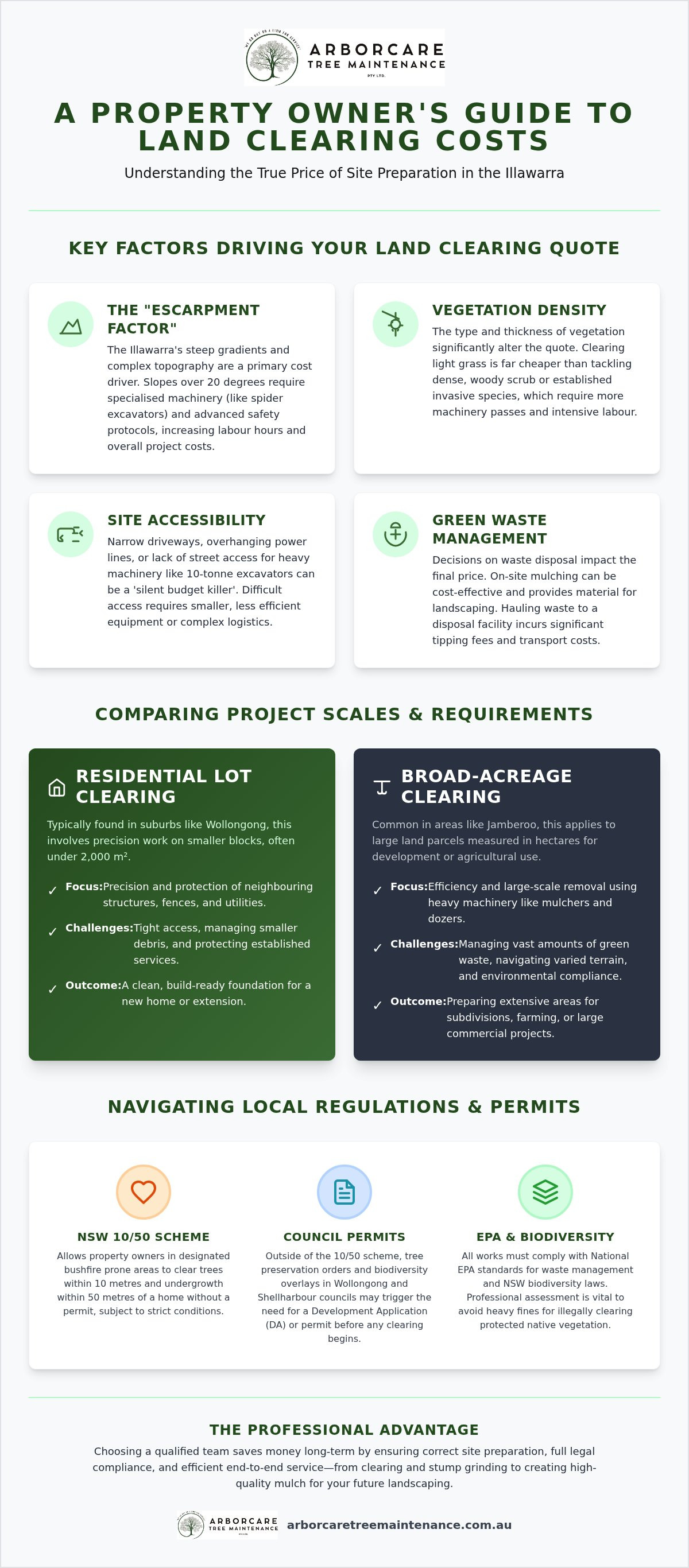
The cost of land clearing Illawarra property owners expect is heavily influenced by what we call the "Escarpment Factor." Unlike the flat plains of Western Sydney, our region is defined by steep gradients and complex topography. A block with a 20-degree slope requires specialised machinery, such as spider excavators or high-stability loaders, rather than standard earthmoving equipment. These technical requirements increase labour hours and safety protocols, which can significantly impact the overall cost of land clearing Illawarra. When we assess a site, we look at how the machinery will navigate these inclines without compromising soil stability or operator safety.
Vegetation density is the next major variable. There's a vast difference between clearing a block covered in light grass and weeds versus one choked with thick, woody undergrowth. Dense scrub requires more passes with a mulcher and more time spent sorting materials. It's also vital to ensure that any removal aligns with NSW native vegetation laws. If your site contains protected native species or significant canopy trees, the process becomes more methodical to ensure environmental compliance. We often find that blocks left dormant for several years require more intensive clearing because invasive species have had time to establish deep root systems.
Site access is often the silent budget killer. We need to determine if a 10-tonne excavator can actually reach the back of the block. Narrow driveways, low-hanging power lines, or existing structures can limit the size of equipment we use. If we're forced to use smaller machines, the job takes longer, which reflects in the final quote. Additionally, the volume of green waste generated is often underestimated. Processing this waste on-site through high-capacity mulching is usually the most cost-effective method, as it avoids the heavy tipping fees associated with transporting tons of debris to a waste facility.
Terrain and Soil Conditions
The northern Illawarra suburbs, from Bulli to Thirroul, are known for rocky outcrops that can damage standard clearing blades. These conditions require heavy-duty attachments and a slower, more cautious pace. High rainfall also plays a role; wet weather can turn a stable site into a bog, making it unsafe for heavy machinery. We monitor local weather patterns closely to ensure we don't cause unnecessary soil compaction or erosion during the clearing process. If you're unsure about your site's specific challenges, a professional site assessment is the best way to identify these hidden variables before work begins.
The 'Hidden' Cost of Stump Removal
Many owners make the mistake of thinking clearing is finished once the trees are down. However, felling a tree to ground level leaves the stump and root ball intact, which will obstruct foundations or future landscaping. Full root extraction or professional Stump Grinding Wollongong is a separate but necessary step for a build-ready site. Grinding stumps below the surface ensures that you won't face sinkage or fungal issues later on, providing a clean slate for your construction team.
Estimated Pricing: From Residential Blocks to Large Acreage
Determining the cost of land clearing Illawarra requires a detailed assessment of the project's scale and the specific requirements of the site. While every block presents unique challenges, pricing structures generally fall into two categories: residential lot clearing and broad-acreage management. For smaller suburban projects, we often see a "per tree" or "per item" pricing model. This is frequently more cost-effective for homeowners who only need a few specific trees or a small patch of scrub removed to make way for a granny flat or an extension. It allows for a precise quote based on the exact volume of work rather than a broad estimate that might overcharge for a simple job.
Larger development sites or acreage properties typically operate on an economy of scale. Although the total project price is higher, the cost per square metre often decreases because machinery can operate continuously without the logistical delays of working in confined suburban spaces. When budgeting, it's essential to account for "the extras" that complete a site. This includes mulching, chipping, and light soil levelling to ensure the ground is ready for the next trade. A significant factor in these larger quotes is the 16% annual increase in vegetation clearing across NSW recorded between 2023 and 2024, which has led to higher demand for specialised equipment and qualified operators who understand the latest NSW native vegetation regulations.
Residential Lot Clearing Estimates
Typical quotes for a standard 600-800sqm Illawarra block are influenced by the density of the undergrowth and the presence of specific species. In coastal zones, palm tree removal often incurs specific surcharges because their fibrous trunks require more maintenance on mulching equipment. The lower end of residential quotes usually applies to "clean" blocks with mostly grass and small shrubs. Conversely, blocks with significant canopy cover or those requiring complex tree removals near power lines will sit at the higher end of the scale. We always recommend on-site mulching as it eliminates the high cost of haul-away tip fees and provides you with free, high-quality organic material for your future garden beds.
Commercial and Acreage Management
For larger blocks in areas like Jamberoo or Dombarton, pricing shifts toward day rates or fixed-price contracts for the entire scope of works. These projects must factor in "float fees," which cover the cost of transporting heavy excavators and mulchers to the site. Because these properties often border sensitive environmental zones or bushfire-prone areas, the clearing must be methodical and compliant with state safety standards. Using a single team for clearing, stump grinding, and mulching is the most efficient way to manage these large-scale projects, as it reduces the downtime between different stages of site preparation.
Navigating NSW Regulations and Council Permits
Compliance is the most critical stage of site preparation. Ignorance of local legislation doesn't just delay your project; it can result in catastrophic financial penalties. Under the Biodiversity Conservation Act 2016, individuals can face fines of up to $1.1 million for illegal land clearing in NSW. Understanding these legal frameworks is just as vital as budgeting for the physical cost of land clearing Illawarra. Every project must balance the need for a build-ready site with the preservation of our region's unique ecological landscape.
For many residents, the first step is determining whether their property requires a Biodiversity Development Assessment Report (BDAR). This report is mandatory if your clearing exceeds certain thresholds or impacts land mapped on the Biodiversity Values Map. We've seen a 16% annual increase in vegetation clearing across NSW recently, which has led to stricter oversight from the NSW Department of Planning and Environment. Engaging a professional team that understands these triggers ensures you don't inadvertently trigger a legal investigation before your first brick is laid.
The 10/50 Rule: What You Can and Can't Do
The 10/50 Vegetation Clearing Scheme is a specific NSW policy designed to manage bushfire risks. It allows property owners in designated bushfire-prone areas to clear trees within 10 metres of a home and understorey vegetation within 50 metres without a formal permit. However, this isn't a blanket approval for all sites. Significant limitations apply, particularly regarding the Illawarra escarpment. You cannot use this scheme to clear on slopes greater than 18 degrees, nor does it apply to riparian zones, wetlands, or items of Aboriginal or European heritage. Always verify your property's status on the RFS online tool before starting any work.
Working with Local Illawarra Councils
Wollongong City Council has specific Tree Preservation Orders (TPOs) that differ from neighbouring Shellharbour. In Wollongong, you generally need a permit to prune or remove trees over 5 metres in height or with a trunk diameter exceeding 30 centimetres at ground level. The application processing time is approximately 28 working days, so early planning is essential. Shellharbour Council maintains its own set of requirements for site preparation that prioritise the retention of native canopy where possible. A professional arborist report is your best tool for permit approval. It provides the technical justification council officers need to see, often turning a potential rejection into a successful application. To ensure your project meets all local and state requirements, contact our expert team for a comprehensive site assessment.
Why Professional Site Preparation Saves Money Long-Term
Cutting corners on site preparation often leads to expensive delays during the construction phase. While hiring an uncertified operator might seem like a way to reduce the initial cost of land clearing Illawarra, the risks of property damage or underground utility strikes are substantial. A "cowboy" operator without proper insurance or technical training can leave behind buried stumps or unstable soil, forcing you to pay for remediation work once your builders arrive. We prioritise a methodical approach that uses high-capacity machinery to do in hours what would take days by hand. This efficiency doesn't just save time; it ensures the foundation of your project is structurally sound and compliant with all local safety standards.
Our local commitment across the region, from our base in Dapto to the northern coastal suburbs, means we understand the specific soil profiles and access challenges of each neighbourhood. We don't just clear the land; we prepare it for its future use. By integrating stump grinding and debris management into a single professional service, we eliminate the coordination headache of hiring multiple contractors. This streamlined process reduces the overall cost of land clearing Illawarra by minimising machinery transport fees and ensuring that no stage of the preparation is overlooked.
Mulching and Recycling: Turning Waste into Value
One of the smartest ways to offset the project budget is through on-site mulching. Instead of paying significant sums in haul-away fees and landfill tipping costs, we process green waste into high-quality organic mulch. This material is invaluable for future landscaping, as it helps with moisture retention and weed suppression on your newly cleared block. Keeping this resource on-site reduces the carbon footprint of your project and provides an immediate return on investment. For a deeper look at how we manage these complex projects, read our Land Clearing Illawarra Pillar guide.
Choosing the Right Partner for Your Illawarra Project
Selecting a contractor requires more than just looking at the bottom line of a quote. You need a team with the right qualifications and a proven track record in the local area. Use this checklist when evaluating your options:
- Current Insurance: Verify both public liability and professional indemnity coverage to protect your assets.
- Arborist Qualifications: Ensure the team includes licensed professionals who understand tree physiology and NSW environmental laws.
- Local Knowledge: Choose a team that recognises the specific challenges of the Illawarra escarpment and coastal soil conditions.
- Technical Capability: Confirm they own and maintain the specialised machinery required for your specific terrain.
Our 24/7 emergency response capability is a testament to our reliability; we're ready to respond whenever property safety is at risk. Whether you're managing a small residential block or a large development site, our focus remains on safety, precision, and environmental duty. To start your project with a reliable partner, get a detailed land clearing quote from the Arborcare team today.
Secure Your Build-Ready Site with Confidence
Finalising your site preparation is the most significant step toward a successful build. By understanding the escarpment terrain and navigating local council permits early, you've already mitigated the most common risks associated with property development. Professional clearing transforms a tangled block into a stable, build-ready foundation while providing valuable organic mulch for your future landscaping. This methodical approach ensures your project stays on track without the hidden costs of remediation later.
Managing the total cost of land clearing Illawarra involves more than just felling trees; it requires a partner who understands the specific environmental duty and safety protocols of our region. As a Dapto-based family business, we bring specialised equipment designed for the steep terrain of the escarpment and the local expertise needed to handle Wollongong and Shellharbour regulations. Our fully insured and licensed arborists prioritise precision and safety on every project, ensuring your land is cleared legally and efficiently.
Take the first step toward a clean slate for your property. Book Your Illawarra Land Clearing Quote Today and let our team provide the technical authority your project deserves. We look forward to helping you start your next chapter with a safe and compliant site.
Frequently Asked Questions
Do I need council approval to clear my land in Wollongong?
Yes, you generally require council approval if the vegetation exceeds specific size thresholds. In Wollongong, a permit is typically necessary to remove trees over 5 metres in height or those with a trunk diameter greater than 30 centimetres at ground level. Processing times for these applications usually take around 28 working days. It's essential to verify your specific property requirements with the council to avoid legal complications before starting any site preparation works.
How much does land clearing cost per hectare in NSW for 2026?
The cost of land clearing Illawarra varies significantly based on the specific density of vegetation and the complexity of the terrain. While broad averages provide a baseline, local factors such as the steepness of the escarpment and the presence of invasive species like Lantana will influence the final quote. We recommend a site-specific assessment to determine the machinery and labour required for your project, ensuring a realistic budget that covers all environmental compliance needs.
Can I clear my own land for bushfire protection under the 10/50 rule?
You can clear vegetation without a permit if your property is located within a designated 10/50 bushfire clearing zone. This scheme allows for the removal of trees within 10 metres of a home and understorey vegetation within 50 metres. However, you must consult the Rural Fire Service online map first to confirm eligibility. Limitations apply to steep slopes, riparian zones, and heritage items, so professional advice is recommended to ensure you don't exceed these legal exemptions.
What happens to the trees and vegetation once they are cleared?
Cleared vegetation is typically processed on-site using high-capacity mulching equipment. This method turns branches and trunks into organic mulch that can be repurposed for future landscaping, providing excellent moisture retention for new gardens. Alternatively, green waste can be transported to a local recycling facility, though this often incurs additional tipping fees. We prioritise recycling materials to reduce the environmental impact of your project while providing a cost-effective solution for managing large volumes of debris.
Does the cost of land clearing include stump grinding?
Stump grinding is often quoted as a separate line item rather than being bundled into basic clearing services. While felling trees to ground level clears the surface, the root balls remain underground and can obstruct foundations or plumbing. We provide end-to-end services that include full root extraction or grinding to ensure your site is truly build-ready. It's important to clarify with your contractor whether their quote includes the removal of these below-ground obstacles during the initial assessment.
How long does it typically take to clear a residential block in the Illawarra?
Clearing a standard residential block in the Illawarra typically takes between one and three days. This timeframe depends on the density of the scrub, the number of large trees requiring complex removal, and the ease of machinery access. Wet weather can extend this duration, as high rainfall in our region can impact soil stability and safety. We provide a detailed project timeline during the quoting process so you can coordinate with your builders and other trades efficiently.
Will the terrain or slope of my property increase the clearing price?
Steep terrain or complex slopes will definitely increase the price of clearing due to the specialised machinery and additional safety protocols required. Properties bordering the Illawarra escarpment often feature rocky outcrops and inclines that demand high-stability equipment and more labour hours. These conditions require a more methodical approach to prevent soil erosion and ensure operator safety. We assess the specific geography of your block during our initial site visit to provide an accurate and transparent quote.
Are there fines for clearing land without a permit in NSW?
Yes, the penalties for unauthorised clearing in NSW are severe and can reach up to $1.1 million under the Biodiversity Conservation Act 2016. The NSW government has increased regulatory oversight with the 2026 Native Vegetation Regulatory map to protect local ecosystems. Illegal clearing can also lead to stop-work orders that delay your construction project for months. Engaging a licensed arborist ensures your project complies with all state and local laws, protecting you from these substantial financial risks.


