
Palm tree maintenance starts with assessing the individual palm, including its fronds, seed heads, visible condition and position near people or buildings. A palm doesn’t need cutting back simply because it looks untidy. Removing the wrong growth, or attempting elevated work without the right expertise, can create avoidable risks.
It can be hard to tell whether a few dead fronds need attention or whether a palm needs a closer assessment. Maintenance and removal are different decisions, and not every palm needs routine cutting. This guide explains what to look for, how to prepare for an assessment and when professional help may be appropriate for your Illawarra property.
You’ll learn how the palm’s condition and surroundings can affect the work, how pruning or trimming differs from removal, and why local requirements may matter before work begins. If a palm is close to a building, access area or neighbouring property, an arborist assessment can help clarify the next step. Arborcare Tree Maintenance Pty Ltd is a locally owned, licensed arborist company based in Dapto and serving the Illawarra.
Key Takeaways
- Base palm tree maintenance on the palm’s condition and location, not appearance alone.
- Consider access, nearby structures and the type of work needed when deciding whether to request an on-site assessment.
- A tidy appearance doesn’t automatically mean a palm needs removal. Maintenance and removal address different needs.
- Before arranging work, note any visible changes, keep people clear of potential hazards and check relevant local requirements.
- Share the palm’s location, access details and your concerns so an arborist can understand what assessment may be needed.
Palm Tree Maintenance: What Illawarra Property Owners Need to Know
Palm tree maintenance means assessing a palm and carrying out suitable care, not automatically removing every old frond. You might want to improve the appearance of a garden, keep an access path clear or address material that could fall near people, vehicles or buildings. The right response depends on the palm’s condition, position and the access available for the work.
Palms vary in form and growth, as outlined in this botanical overview of palm trees. That variety matters on site. A palm beside an open lawn presents different access considerations from one growing close to a roof, fence or driveway. An assessment helps establish what work, if any, is appropriate for that palm and its setting.
What can routine palm maintenance include?
Depending on the palm and its observed condition, care may involve selective pruning, such as removing fronds or seed heads where appropriate. Fallen or cut material may also need to be cleared as part of the work. The aim is considered care, not heavy cutting by default. Skinning or removing large amounts of growth shouldn’t be treated as standard practice for every palm.
For example, you may notice old fronds overhanging a driveway. That’s a reason to look more closely, but it doesn’t establish which fronds should come down or whether any work is needed. The palm’s condition, the position of the material and the area beneath it all help guide the decision.
When does a palm need professional attention?
Visible damage, hanging material, difficult access or a palm close to people and buildings are sensible reasons to seek an arborist’s assessment. These signs don’t confirm a defect or mean removal is necessary. They indicate that closer inspection may be appropriate, particularly if reaching the palm would involve working at height or near structures.
“What you can see from the ground can flag a concern. An on-site assessment helps determine what the palm and its surroundings actually require.”
Keep people clear of any area where loose material may fall. Don’t climb the palm or try to remove elevated fronds yourself. A professional can consider the palm’s visible condition, nearby obstacles and access before advising whether pruning or trimming is suitable, or whether another option should be considered.
How Palm Maintenance Decisions Depend on the Tree and Its Site
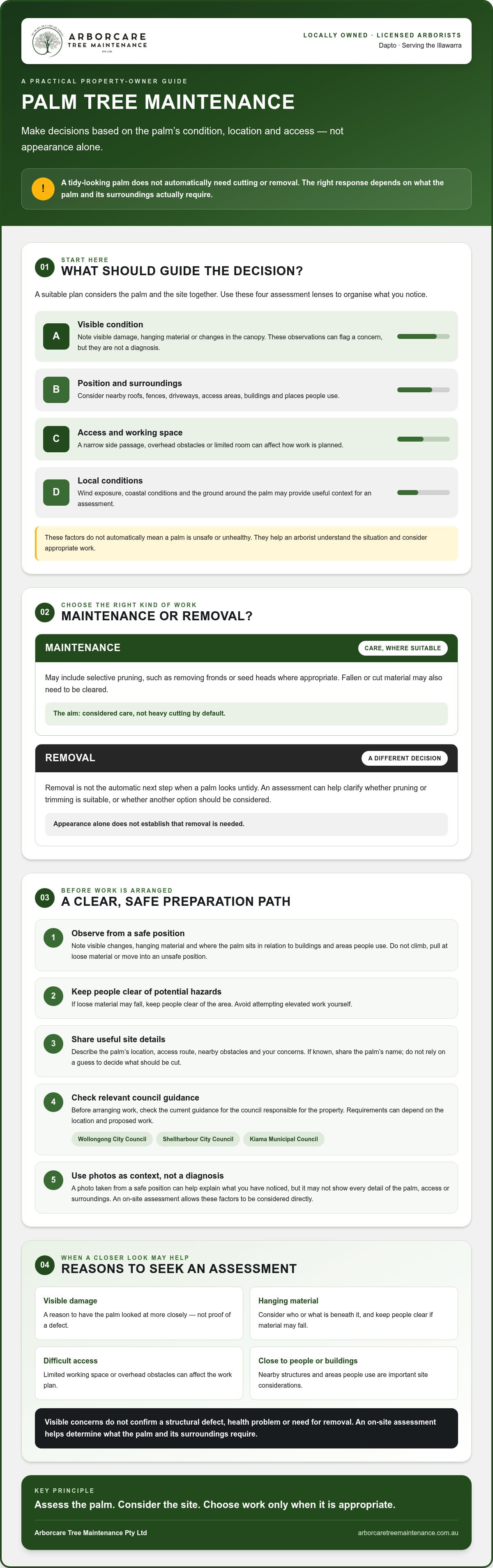
A suitable maintenance plan takes more into account than appearance. An arborist needs to consider the palm’s visible condition, the work you’re asking about, how the site can be accessed and what’s nearby. A palm beside a roof, fence, driveway or public area may need a different work plan from one with clear space around it.
Wind exposure, coastal conditions and the ground around the palm can also be relevant to an assessment. These factors don’t automatically mean a palm is unsafe or unhealthy. They provide context for considering what you’ve noticed and what work may be appropriate.
How condition and location influence the work
From a safe position, look for visible damage, hanging material or changes in the canopy. Note where the palm sits in relation to buildings and areas people use. These observations aren’t a diagnosis: visible concerns don’t confirm a structural defect or health problem. Don’t climb the palm, pull at loose material or move into an unsafe position to inspect it.
Access matters too. A narrow side passage, overhead obstacles or limited working space can affect how a job is planned. When you enquire, describe the route to the palm and any constraints you can see. This gives an arborist useful context before they recommend next steps.
Why palm species and site details matter
Different palms and growing conditions can call for different care. If you know the palm’s name, share it, but don’t rely on a guess to decide what should be cut or whether removal is suitable. If you’re unsure about its identification or condition, an arborist can assess the palm and site before recommending work.
A photograph taken from a safe position can help explain what you’ve noticed and support an initial discussion. It may show the palm’s location or visible changes, but it can’t reliably convey every detail of its condition, access or surroundings. An on-site assessment allows the arborist to consider those factors directly.
Before arranging work, check the current guidance from the council responsible for your property, such as Wollongong City Council, Shellharbour City Council or Kiama Municipal Council. Requirements can depend on the location and proposed work, so don’t assume the same guidance applies across the Illawarra.
If you’d like to discuss pruning or trimming, contact Arborcare Tree Maintenance Pty Ltd with the palm’s location, access details and the concern you’ve observed.
Palm Maintenance or Removal: Which Service Do You Need?
The choice depends on what you want to address, what you can observe and what an arborist finds during an assessment. If your goal is to deal with specific growth or material obstructing an area, ask whether pruning or trimming is suitable. If the palm has declined significantly, is seriously damaged or conflicts with how the site is used, removal may be worth discussing.
A tidy appearance alone doesn’t mean a palm needs to come down. Likewise, asking about palm tree maintenance doesn’t establish that pruning is the right response. An assessment helps distinguish a manageable care need from a concern that may call for another option.
When maintenance may be the right conversation
Pruning or trimming may be appropriate to discuss if growth is unwanted or material is obstructing access. The palm and its surroundings still need to be assessed before deciding on work. Pruning shouldn’t be assumed to resolve a structural concern or a suspected health or pest problem. An arborist can consider the observed condition and the site, then clarify what work may be suitable.
For help understanding the separate removal option, see this Illawarra palm tree removal guide.
When to ask about palm removal
Removal is a separate service to assess, not the automatic next step in routine care. Significant decline, serious damage or an ongoing conflict with a building, access route or the way you use the property are reasons to seek professional advice. These signs don’t prove that removal is necessary; they help frame the question for an arborist.
Where a palm is close to a building or another feature that could make the work complex, the site needs careful consideration. An arborist can assess access and surrounding hazards before advising on an appropriate approach. For more on higher-risk sites, read the complex tree removal guide for Illawarra properties.
If material is falling or appears at immediate risk of coming down, keep people away from the area and seek prompt professional advice. Don’t attempt to remove it yourself, particularly if the palm is elevated or close to property. When you speak with an arborist, describe what you’ve noticed, where the palm is and what outcome you’re seeking. That information helps them understand whether maintenance or removal should be considered.
How to Prepare for Safe Palm Tree Maintenance in the Illawarra
A little preparation helps an arborist understand the concern and plan an assessment safely. Before arranging palm tree maintenance, work through these steps:
- Note what you’ve observed. Record visible damage, hanging material or changes around the palm, and when you first noticed them.
- Keep people clear. If material appears unstable, keep people and pets away from the area beneath it.
- Check local requirements. Contact the council responsible for your property to confirm whether its current guidance applies to the proposed work.
- Request an assessment. Explain what concerns you and what you hope the work will achieve.
Keep clear of unstable or falling palm material, and don’t try to move it yourself. Climbing a palm, cutting overhead material or using powered equipment without appropriate competence can put you and others at risk. Leave elevated or difficult work to a professional.
What information should you share with an arborist?
Give a clear picture of the situation: where the palm is, how it can be accessed, what you’ve noticed and what’s nearby. Mention features such as a roof, fence, driveway or area regularly used by people. If you can take a clear photo from ground level without going near a hazard, it may help with an initial discussion. A photo can’t replace an on-site assessment.
Before agreeing to work, ask what the proposed scope includes and how green waste will be handled. Clarifying these details helps you understand what is planned and what will happen to material from the job.
What should you do while waiting for an assessment?
Keep people and pets away from the area beneath visibly unstable or hanging material. Don’t climb the palm, pull at fronds or attempt to remove elevated growth. If a tree has fallen or there’s an immediate hazard, follow the advice in this Illawarra emergency tree service guide and seek prompt professional help.
For an assessment or to discuss pruning, trimming or palm removal, contact Arborcare Tree Maintenance Pty Ltd with the palm’s location, access details and the concerns you’ve noted.
Arrange Professional Palm Tree Maintenance with a Local Arborist
Before arranging an assessment, be ready to explain what concerns you, where the palm is, how it can be accessed and what outcome you’re hoping for. You might want advice about obstructive fronds, a palm close to a building or whether removal should be considered. Clear details help an arborist understand the situation and assess what work, if any, may be suitable.
Arborcare Tree Maintenance is a locally owned Illawarra business offering palm tree removal, pruning and trimming. The company is based in Dapto and serves communities including Dapto, Wollongong, Shellharbour, Woonona, Jamberoo, Fairy Meadow and Dombarton.
What to ask before work begins
Before agreeing to work, ask what’s proposed and how it relates to the palm’s observed condition. Check how the team will access the site, manage the work area and handle green waste. If you’re unsure whether council approval or another local requirement applies, confirm this with the relevant council before work proceeds.
It’s also reasonable to ask what the assessment has identified and whether the recommendation is for pruning or trimming, removal, or no work at this stage. This helps you understand the scope rather than assuming every concern calls for cutting.
Choose a service that fits the property
Residential and commercial properties can have different access and coordination needs. A palm in a home’s narrow side passage may present different practical constraints from one near a shared access area at a commercial site. Explain any nearby buildings, fences, driveways or areas used by staff, residents or visitors.
Include the property’s location when you enquire. Arborcare serves Illawarra communities including Dapto, Wollongong, Shellharbour, Woonona, Jamberoo, Fairy Meadow and Dombarton. Share what you’ve noticed, how the palm can be reached and what you’d like the assessment to clarify. This gives the discussion a useful starting point without assuming the palm needs routine work.
A careful assessment can help identify the next step, whether that’s suitable pruning or trimming, considering removal, or checking local requirements first. For advice about your property, contact Arborcare about palm maintenance.
Make a Safe, Informed Plan for Your Palm
Good palm tree maintenance starts with the individual palm and its setting, not a routine cut-back. Note what you’ve observed, consider nearby buildings and access, and seek an arborist’s assessment when work is elevated, complex or close to people. A tidy appearance alone doesn’t mean removal is needed. Checking local council guidance can also help you plan before work begins.
Arborcare Tree Maintenance is locally owned and operated in the Illawarra, with services including palm tree pruning, trimming and removal. Sharing your location, access details and desired outcome can help start a practical conversation about the next step for your property.
Contact Arborcare to discuss palm tree maintenance for your Illawarra property, including in Dapto, Wollongong, Shellharbour, Woonona, Jamberoo, Fairy Meadow or Dombarton.
Frequently Asked Questions
How often should palm trees be maintained?
Palm tree maintenance doesn’t follow one schedule for every palm. The need depends on the palm’s condition, location and surroundings. From a safe position, check periodically for changes such as hanging fronds or visible damage rather than arranging heavy cutting by default. If the palm is close to a roof, walkway or access area, or you’re unsure what you’ve noticed, arrange an arborist assessment to help decide whether work is appropriate.
Is it safe to remove palm fronds yourself?
Removing fronds yourself can be unsafe if they’re elevated, heavy, unstable or near people and property. Don’t climb the palm, use a ladder to reach overhead growth, pull on hanging material or use powered equipment unless you’re competent to do so safely. Keep clear of anything that could fall. For work above ground level or close to buildings, ask an arborist to assess the palm and site before any cutting.
Can palm trees be pruned at any time of year?
There isn’t one pruning time that suits every palm and situation. The appropriate timing can depend on the palm, its condition, the work being considered and the site. Ask an arborist to assess the tree before scheduling pruning or trimming, especially if you’re unsure whether the material should be removed. Don’t delay seeking advice about visibly unstable or hanging fronds simply to wait for a particular season.
What is palm tree skinning, and should every palm be skinned?
Skinning generally means removing old leaf bases or fibrous material from around a palm’s trunk, often to change its appearance. It isn’t a routine requirement for every palm. The right approach depends on the palm and its condition, so don’t assume heavy cutting or stripping is appropriate. Avoid cutting into the trunk or attempting elevated work yourself. Ask an arborist whether any work is suitable for the palm.
How do I know whether a palm tree needs maintenance or removal?
A palm may need assessment if you’ve noticed hanging material, visible damage, obstructive growth or a change in its condition. These signs don’t prove that removal is required. Pruning or trimming may be worth discussing for specific growth concerns, while significant decline, serious damage or conflict with the site can prompt a conversation about removal. An arborist’s assessment can help clarify the options. A tidy appearance alone doesn’t mean a palm must come down.
Do I need council approval to prune or remove a palm tree in the Illawarra?
Approval requirements can vary with the council, palm and proposed work, so check with your local council before arranging pruning or removal. In the Illawarra, property owners in Dapto, Wollongong, Shellharbour, Woonona, Jamberoo, Fairy Meadow and Dombarton should confirm which council applies to their property and consult its current guidance. Don’t assume rules are identical across council areas or that a palm is automatically exempt.
What should I do if palm fronds are hanging over a walkway or roof?
Keep people and pets away from the area beneath visibly unstable or hanging fronds, and don’t try to pull them down or cut them yourself. Note the palm’s position and the nearby walkway or roof, then seek professional advice about an assessment. If material is falling or there’s an immediate hazard, keep clear and seek prompt help. Don’t use the walkway or stand beneath the affected area until it’s safe.


