
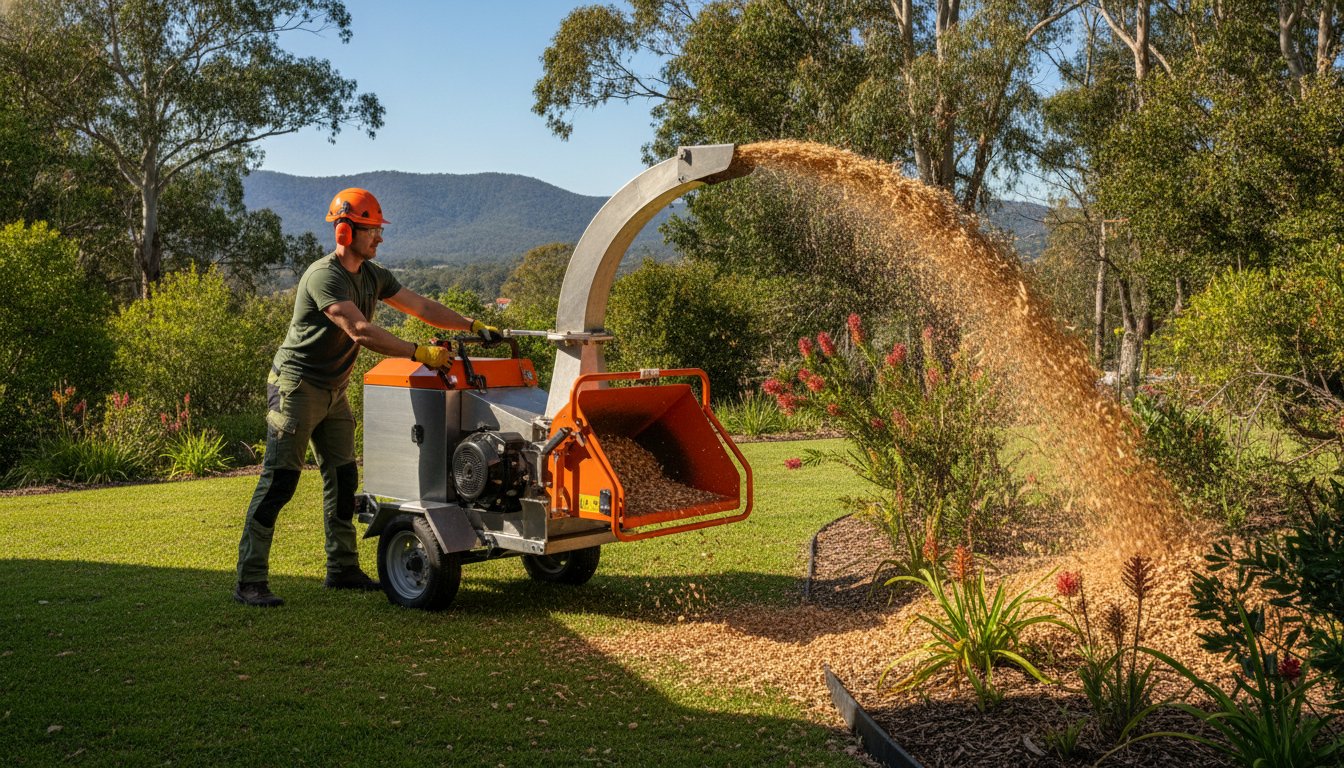
What if the massive pile of debris sitting in your yard after the last Illawarra storm wasn't a disposal headache, but the secret to a drought-proof garden? Most homeowners see garden waste as a costly burden, especially with the rising expense and effort of green waste disposal in our region. You're likely concerned about rising water bills during our scorching NSW summers or the stability of your soil on a sloped block. It's a common stress, but professional tree mulching offers a sophisticated solution that prioritises both property safety and long-term sustainability.
Discover how modern tree mulching trends are transforming garden waste into a high-performance resource for climate-resilient Australian landscapes. We'll show you how to achieve a thriving, low-maintenance garden while managing large amounts of debris after necessary tree removals. This guide covers everything from termite prevention to the circular economy practices helping Illawarra and Shellharbour residents adapt to changing waste collection schedules. By the end, you'll understand how to turn a potential property hazard into a protective, water-saving layer for your soil.
Key Takeaways
- Learn how professional tree mulching converts garden debris into a climate-resilient resource that suppresses weeds and improves soil structure.
- Understand the science of thermoregulation, which helps Illawarra gardens retain up to 70% more moisture during intense 35°C+ summer days.
- Discover the "zero-waste" approach to property maintenance that keeps carbon on-site and helps you avoid rising council disposal fees.
- Protect your landscape from topsoil washout during the NSW storm season by implementing strategic ground cover techniques.
- Identify the safety benefits of managing fuel loads and moisture content to enhance your home's bushfire resilience.
What is Tree Mulching? The Shift from Waste to Resource
Tree mulching is the professional process of mechanically grinding tree limbs, trunks, and foliage into a nutrient-dense organic ground cover. This practice represents a fundamental shift in how we manage property maintenance in the Illawarra. In previous decades, garden debris was often viewed as a liability to be hauled away to a landfill. Today, informed homeowners recognise this material as a high-performance resource. By keeping organic matter on-site, you're participating in a circular economy where the nutrients extracted from your soil by a tree are returned directly to the earth. For a comprehensive overview of mulch and its diverse applications, it's helpful to understand how professional processing differs from basic wood chips.
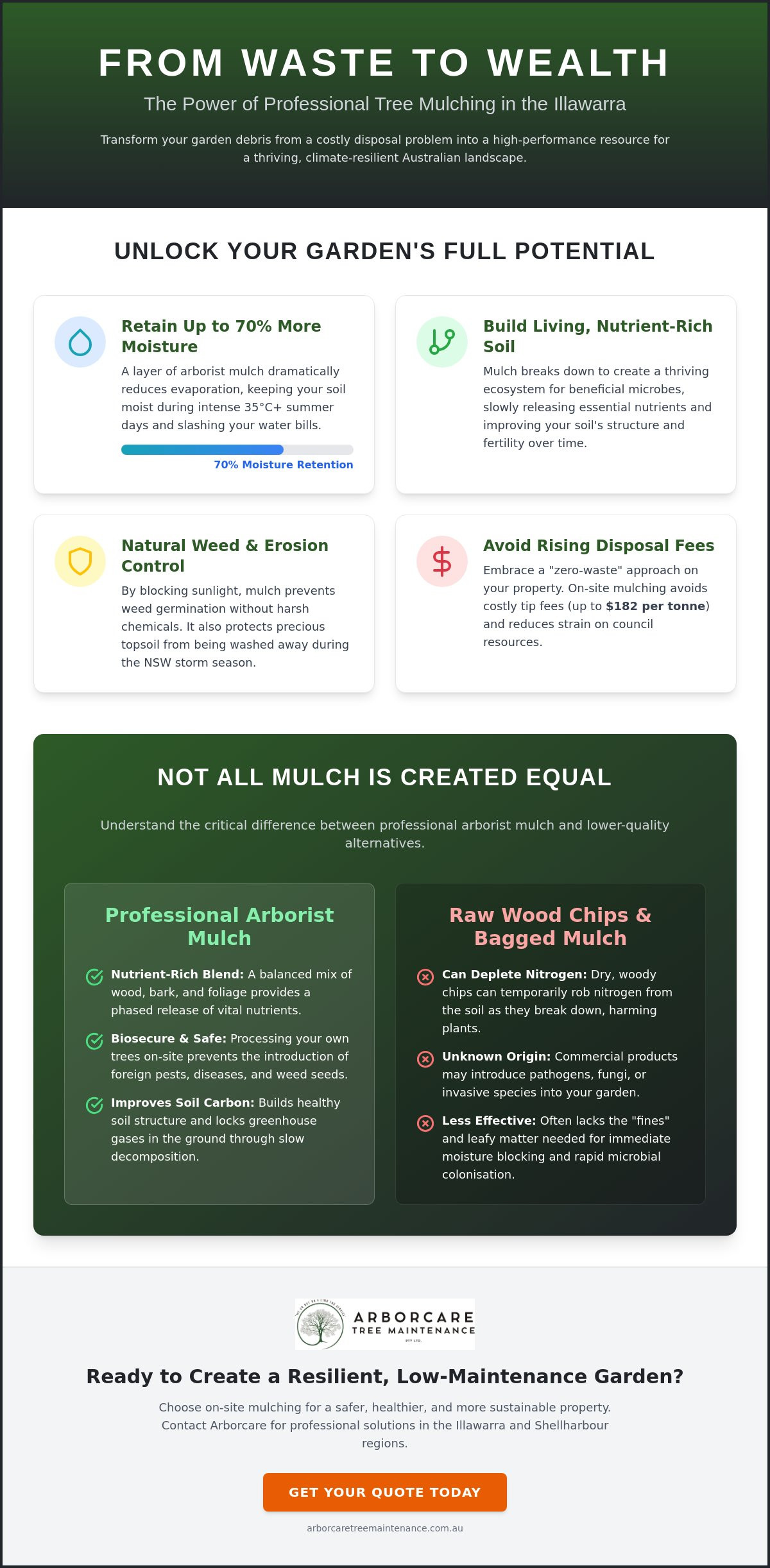
There's a significant technical difference between raw wood chips and professional arborist-grade mulch. Raw chips, often produced from large, dry trunks, can actually deplete soil nitrogen as they struggle to break down. In contrast, arborist mulch is a heterogeneous mix of bark, wood, and foliage. This specific blend ensures a steady, phased release of nutrients. In 2026, local residents are increasingly choosing on-site tree mulching over commercial delivery. This preference isn't just about convenience; it's a biosecurity measure. Processing your own trees ensures you aren't importing pathogens, fungi, or invasive weed seeds from unknown commercial sources into your private landscape.
The Environmental Impact of Local Mulching
Choosing to process waste on-site directly reduces the strain on regional infrastructure. With Wollongong waste disposal fees currently at $182 per tonne for larger quantities, diverting tonnes of green matter from the tip is a fiscally responsible decision. Beyond the cost, this approach prioritises carbon sequestration. When wood and leaves decompose slowly in your garden, they build soil carbon levels. This keeps greenhouse gases locked in the ground rather than releasing them through industrial waste processing. It also fosters local biodiversity by providing a habitat for beneficial microbes that are unique to our coastal environment.
The Anatomy of Quality Arborist Mulch
The effectiveness of mulch depends on its physical composition. A high leaf-to-wood ratio is essential because the foliage provides immediate nitrogen for plant growth, while the woodier components offer long-term soil structure. We also focus on the role of "fines". These are the smallest particles that settle directly against the soil surface. They provide an immediate barrier against evaporation and allow for faster microbial colonisation. This balanced mix creates a self-sustaining ecosystem that protects your plants' root zones from the harsh Australian sun. Professional arborist mulch is a heterogeneous mix of bark, wood, and foliage.
The Science of Soil Health: Why Your Garden Craves Mulch
Roots are the engine room of your trees. Without a protective layer, the intense radiation from a 35°C Wollongong summer day can bake the upper soil horizon, effectively killing the fine feeder roots responsible for water uptake. Professional tree mulching provides critical thermoregulation by acting as an insulating blanket. This layer keeps soil temperatures stable and significantly cooler than exposed earth. Research into the benefits of proper mulching shows that a well-applied layer can reduce soil moisture evaporation by up to 70% in coastal environments. For Illawarra gardens facing salt-laden winds and sandy soils, this retention is the difference between a thriving landscape and a dying one.
Beyond simple hydration, mulch facilitates a complex biological process known as nutrient cycling. As the organic material breaks down, a diverse community of fungi and bacteria begins to thrive. These microorganisms decompose the wood and leaf matter, slowly releasing plant-available nitrogen and other essential minerals back into the ground. This process also creates a physical barrier that suppresses weed germination. By blocking sunlight from reaching the soil surface, mulch prevents dormant weed seeds from taking hold. This reduces your weekend maintenance and eliminates the need for harsh chemical herbicides. If you've recently dealt with fallen limbs, professional mulching is the most efficient way to kickstart this natural fertilisation process.
Arborist Mulch vs. Dyed Commercial Wood Chips
Many homeowners are tempted by the uniform look of dyed wood chips found in retail bags. However, these products often consist of ground-up pallets or timber waste that lacks nutrient density. The chemical dyes used to achieve red or black finishes can also leach into the soil, potentially harming sensitive local flora. Arborist-grade mulch is superior because it mimics the natural "forest floor" environment. It provides a rich variety of organic compounds that store-bought alternatives simply cannot match. From a cost-benefit perspective, using material generated from your own property removals is far more economical than paying for retail delivery.
Busting the Termite Myth
A common source of anxiety for Illawarra residents is the fear that wood chips attract termites. The scientific reality is more nuanced. Termites are primarily attracted to consistent moisture and large, solid pieces of timber rather than the small, dry fragments produced by a wood chipper. While mulch provides the moist environment termites enjoy, it doesn't serve as a primary food source for a colony. To ensure maximum safety, we recommend maintaining a clear "inspection zone" of at least 75mm to 100mm between your mulch beds and the concrete foundations of your home. Using mulch from species like Tallowwood or certain Eucalypts can also provide a higher level of natural resistance to pests.
Modern Trends in Circular Arboriculture: On-Site Wood Chipping
The role of the arborist has evolved from simple tree removal to sophisticated resource management. In 2026, the rise of the "Zero-Waste Property" is a dominant trend across Illawarra estates. Homeowners no longer want their garden's organic assets hauled away to a tip. Instead, they're choosing to keep their carbon on-site. High-capacity wood chippers have revolutionised this transition, allowing for rapid tree mulching even on constrained residential blocks. These machines don't just clear debris; they act as mobile processing plants that convert bulky hazards into manageable, high-value ground cover. This "Arborist-as-a-Resource" model prioritises the retention of biomass, ensuring that the ecological value of a removed tree remains within your property's boundaries.
Modern equipment also allows for "Custom Mulching". Depending on your garden's specific requirements, we can often adjust the output to suit different applications. Coarser chips provide excellent longevity for high-traffic pathways or sloped areas prone to erosion, while finer grinds are better suited for delicate garden beds where rapid nutrient release is the priority. This tailored approach ensures that the resulting mulch isn't just a byproduct, but a strategic tool for your landscape's health. To see how professional lawn and garden care can further enhance your property, you can learn more about CG Mowing.
The Process of On-Site Mulching
We follow a methodical three-stage process to ensure the highest quality output. This structured approach guarantees safety and maximises the biological utility of the waste.
- Stage 1: Professional Assessment. We inspect all green waste for pathogens or invasive fungi before processing. This prevents the accidental spread of disease throughout your garden.
- Stage 2: High-Speed Chipping. Using industrial-grade machinery, we achieve a volume reduction ratio of approximately 4:1. This turns a massive pile of limbs into a compact, usable resource.
- Stage 3: Strategic Placement. The mulch is either stockpiled for aging or spread immediately. Aging the mulch for a few weeks can help stabilise nitrogen levels before it's applied to sensitive plants.
Mulching for Commercial and Large-Scale Land Management
The benefits of on-site processing extend far beyond residential backyards. In the rapidly expanding growth corridors of Shellharbour and Dapto, developers are increasingly using tree mulching to meet stringent NSW sustainability targets. Large-scale land clearing now frequently employs horizontal grinders. These machines process entire trees in seconds, providing immediate erosion control for new building sites. By keeping mulch on-site during construction, developers prevent topsoil washout and manage dust levels effectively. This practice aligns with modern environmental regulations and provides a cost-effective alternative to importing commercial ground cover for site stabilisation.
Climate-Resilient Landscaping: Mulching for Illawarra Seasons
September marks the peak of the "Spring Refresh" for gardens across the Illawarra. This specific window is the ideal time to establish a protective ground layer before the summer heat intensifies and the NSW storm season begins. Professional tree mulching serves as your property's primary defence against topsoil washout. During heavy rainfall events, exposed soil is easily stripped away; however, a consistent application of arborist mulch absorbs the kinetic energy of falling rain. This allows moisture to permeate the ground slowly rather than rushing off the surface and taking your garden's nutrients with it.
In coastal suburbs like Fairy Meadow and Woonona, salt spray is a constant environmental stressor that can dehydrate sensitive root systems. Mulch acts as a critical buffer, preventing salt crystals from accumulating directly in the upper soil horizons. Safety is another vital consideration during the hotter months. While some residents worry about mulch and fire, a well-hydrated, organic mulch layer actually helps maintain soil moisture. This prevents the growth of highly combustible "fine fuels" such as parched grass and dry leaf litter. If you are preparing your property for the coming season, our team provides expert mulching and land clearing services to help you manage these seasonal risks effectively.
Best Mulch Practices for Sloped Blocks
Properties along the Illawarra escarpment face the unique challenge of mulch "creep" on steep gradients. To prevent your ground cover from sliding into the gutters, we recommend using a coarser, "double-ground" mulch. The irregular, interlocking shapes of larger wood fragments create a stable mat that resists movement during wind and rain. In rural areas like Jamberoo, we often implement "mulch basins" for fruit trees. These are shallow, circular depressions filled with mulch that capture and hold water on sloped land, ensuring that every drop reaches the tree's root zone rather than running down the hill.
Species-Specific Mulching in Wollongong
The type of tree being processed significantly changes the utility of the resulting mulch. Eucalypts produce a high-quality, long-lasting mulch that is excellent for native gardens and weed suppression. Conversely, palm trees require specialised processing. Because of their fibrous, monocot structure, palms can produce stringy debris if not handled with high-torque machinery. When processed correctly, palm mulch is surprisingly effective at retaining moisture without compacting. We also encourage the use of native mulch blends. These attract local birdlife and beneficial insects, creating a self-sustaining ecosystem that mirrors the natural biodiversity of our region.
Professional Mulching Solutions: Why Arborcare is the Local Choice
Managing a property in the Illawarra requires more than just basic maintenance; it demands an understanding of our unique coastal and escarpment environments. From the residential blocks of Wollongong to the larger estates in Dapto, Arborcare Tree Maintenance Pty Ltd provides a level of technical authority that goes beyond simple tree lopping. Our team consists of qualified arborists who view every job through the lens of long-term soil health and property safety. We don't just remove hazards. We transform them into high-performance resources. This integrated approach combines tree removals and stump grinding with professional tree mulching to deliver a total site solution that adheres to the highest Australian Standards for pruning and land management.
Safety is our primary driver. Every tree mulching project we undertake follows strict protocols to protect your family and our crew. By utilising industrial-grade equipment, we resolve the danger of large, unstable debris piles that can become fire hazards or breeding grounds for pests. Our process is methodical. We identify the potential property requirement, whether it's clearing storm damage or preparing for new growth, and provide a professional resolution that leaves your landscape in a superior state. This disciplined delivery ensures that the ecological value of your trees is handled with the respect it deserves.
Our On-Site Processing Capabilities
Our fleet includes high-performance wood chippers designed for rapid, clean processing of any species, including the fibrous palms common to our region. This equipment allows us to handle high-volume debris with minimal disruption to your daily routine. We offer flexible options for the final product. If you wish to retain the nutrient-rich biomass for your garden beds as discussed in previous sections, we can stockpile it in a convenient location. Alternatively, we can remove the material entirely. Regardless of your choice, our commitment to a spotless finish remains the same. We ensure all work areas are thoroughly cleared, leaving your property tidy and ready for immediate use.
Reclaim Your Property Today
Investing in professional maintenance does more than just tidy up a yard. It significantly increases your property's aesthetics and market value. A well-mulched garden looks intentional and cared for, while also reducing the risk of hazardous debris during the unpredictable NSW storm season. By resolving these issues now, you prevent more costly emergency interventions later. If you're ready to improve your landscape's resilience and sustainability, you can organise a professional mulching quote for your Illawarra property today. Our team is ready to provide the steady, disciplined service your garden requires.
Build a Climate-Resilient Garden for the Future
Securing the long-term health of your property requires a transition from traditional waste disposal to strategic resource management. Professional tree mulching provides the essential protection your soil needs to remain productive and stable during the harsh Australian summer. By returning organic matter to the earth, you create a self-sustaining ecosystem that reduces water dependency and suppresses invasive weeds without the need for chemical intervention. This proactive approach ensures your landscape remains an asset rather than a maintenance burden.
As a locally owned and operated business based in Dapto, we pride ourselves on delivering safety-conscious expertise to our community. Our team consists of licensed and insured arborists who prioritise the integrity of your landscape. We also provide a 24/7 emergency storm response to ensure your home remains protected during severe weather events. You can get a free quote for professional mulching in the Illawarra to resolve your property maintenance needs with confidence. We look forward to helping you cultivate a thriving, sustainable garden that stands the test of time.
Frequently Asked Questions
How thick should the mulch layer be for my garden in the Illawarra?
A depth of 75mm to 100mm is the industry standard for effective ground cover in our region. This thickness provides enough weight to suppress weeds while creating a robust thermal barrier. If you apply it too thinly, sunlight will still reach the soil; if it's too thick, you risk preventing oxygen from reaching the root zone.
Can I use fresh wood chips directly on my garden beds?
You can use fresh wood chips, but they are most effective when applied to established trees and shrubs. Fresh chips consume nitrogen from the soil surface as they begin to decompose. For delicate seedlings or vegetable patches, we recommend allowing the mulch to age for a few weeks to prevent nutrient competition.
Does tree mulching attract termites to my house foundations?
Tree mulching does not directly attract termites, but it does create the moist soil conditions they prefer. To mitigate risk, always maintain a clear inspection zone of 100mm between your garden beds and the concrete slab of your home. This ensures your termite barrier remains visible and effective.
What is the best time of year to mulch trees in Wollongong?
Early spring, specifically September, is the most strategic time for tree mulching in Wollongong. Applying mulch before the intense summer heat arrives ensures your soil moisture is locked in. Late autumn is also a suitable time to protect root systems from the heavy rainfall often associated with NSW east coast low events.
Is arborist mulch better than the bags I buy at a garden centre?
Arborist mulch is superior because it contains a diverse mix of bark, wood, and foliage. This variety provides a broader spectrum of nutrients than the uniform, dyed wood waste found in retail bags. The "fines" in arborist mulch also help build soil structure much faster than industrial wood chips.
How long does it take for professional tree mulch to break down?
Professional mulch typically breaks down over a period of 12 to 24 months. The exact timeline depends on the tree species and the local rainfall. Hardwoods like Eucalypts will last significantly longer on the ground than softer materials or palm fronds, providing extended protection for your garden beds.
Can all types of trees be turned into mulch?
Most local tree species are suitable for processing, but we exclude diseased timber or specific invasive weeds to protect your garden. Trees like Camphor Laurel require careful management to ensure seeds aren't spread. We assess the health of all green waste before it enters our machinery.
What happens to the mulch if I don’t want to keep it on my property?
If you prefer not to keep the mulch, we simply haul it away as part of our integrated service. We ensure all material is transported to a dedicated recycling facility where it's processed for commercial use. This guarantees that your tree waste is managed sustainably even if it doesn't stay on your property.


