
The cost of 24/7 emergency tree removal depends on the tree’s size, location and how difficult it is to remove safely. A tree resting on a roof or blocking access can require different work from one that has fallen in an open area, so the price is assessed for the specific situation.
After a storm, it’s understandable to want clear answers quickly, especially if a tree has damaged property or made an area unsafe. This guide explains what affects the cost, what storm cleanup and debris removal may involve, and what to expect from follow-up work.
You’ll also find practical advice on staying clear of hazards, documenting damage safely and responding when a tree blocks a road. Understanding the work involved can help you make informed decisions while keeping people and property away from danger.
Key Takeaways
- Tree size, location and removal difficulty all affect the work involved and the quote. A tree on a structure may also require more complex removal.
- If a tree emergency poses an immediate danger to life, call 000 first, as advised by the Australian Government Department of Home Affairs.
- Keep people and pets clear of damaged trees, and take photos of property damage only from a safe distance.
- For immediate dangers such as a tree blocking a public road or branches on power lines, contact the SES on 132 500, according to the NSW State Emergency Service.
- Find out what storm cleanup and follow-up work may involve, from debris removal to addressing the remaining stump.
How much does emergency tree removal cost?
The cost of 24/7 emergency tree removal depends on the tree’s size, position and removal difficulty. A fallen tree in an open yard differs from a trunk resting on a roof or tangled around a fence. Access, equipment needs, surrounding structures and debris handling also affect the work. The price depends on the case and is given after a quote request; the site conditions and agreed scope shape the assessment.
Across Dapto and the Illawarra, the response plan depends on the hazard and access at the property. A tree blocking a driveway, resting on a building or close to overhead lines presents different challenges. When reporting the situation, describe the location, visible damage and any access restrictions. These details help clarify the work required, as not every emergency calls for the same approach.
Response timing and removal duration are separate issues. Tree size, position, access and nearby hazards all influence how the work is planned and carried out. A fallen trunk near a house may need controlled removal, while branches obstructing an otherwise clear yard present different conditions. Keep away from the affected area while help is arranged, and don’t approach the tree to inspect it more closely.
Availability and arrival timing depend on the situation. A dangerously leaning tree, a trunk across an access route and loose branches above a walkway each need a different assessment. When describing the incident, explain what has fallen, what remains unstable and whether the site is safely accessible. Don’t assume that the word “emergency” means a specific arrival time.
How do I choose a qualified and insured emergency arborist or tree removal company? Look for relevant arborist qualifications, insurance and a written scope describing the tree, removal method, debris handling and follow-up work. For example, clarify whether clearing a fallen trunk includes branches or stump removal, so you know exactly what the proposed work covers.
Does home insurance cover emergency tree removal after a storm in Australia? Many home insurance policies cover removal when a fallen tree damages an insured structure, such as a house, garage or fence, but cover depends on the policy. Photograph damage from a safe distance and ask your insurer what documentation it requires for a claim.
Responsibility can depend on where the tree stood before it fell. A fallen tree on your property may be your responsibility. If it came from a neighbour’s yard, the neighbour’s insurance may cover removal. Fallen public trees are the responsibility of the relevant public authority. Identifying where the tree came from and whether it damaged an insured structure can help clarify the next steps.
Emergency tree removal and storm cleanup
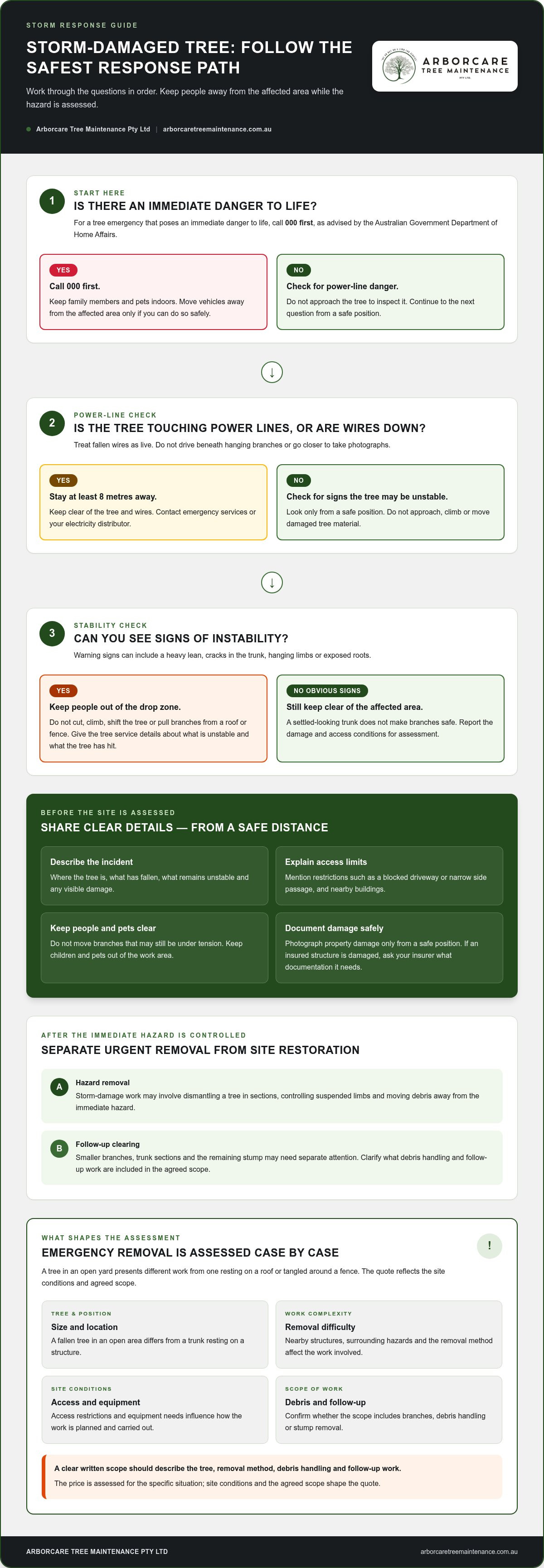
After storms, separate immediate life risks from clearing and recovery work. If a tree emergency poses an immediate danger to life, call 000 first, according to the Australian Government Department of Home Affairs. Keep family members and pets indoors, and move vehicles away from the affected area if you can do so safely. Don’t cut, climb or shift a fallen tree yourself; branches can be unstable even when the trunk appears settled.
Power lines change the response. The NSW State Emergency Service advises keeping at least 8 metres away from trees in contact with power lines. Treat fallen wires as live, stay clear and contact emergency services or your electricity distributor. Don’t drive beneath hanging branches or approach a damaged tree to take photographs. A safe distance lets responders assess the hazard without exposing others to it.
For a storm-damaged tree away from wires, note what has fallen, what remains attached and whether the tree has hit a structure. A heavy lean, trunk cracks, hanging limbs and exposed roots can indicate instability. Keep people out of the drop zone and give the tree service clear details about access, nearby buildings and visible damage. Don’t pull branches from a roof or fence.
Emergency storm-damage removal may involve dismantling the tree in sections, controlling suspended limbs and moving debris away from the immediate hazard. The method depends on the tree’s position, access and what it has hit. Removing dangerous material is different from restoring the site: smaller branches, trunk sections and stumps may need separate attention. Photograph property damage only when the area is safe.
Preparation can reduce storm-related hazards. Before severe weather, look for dead or hanging branches, cracks and a heavy lean. Arrange an assessment if you spot a concern. Preventive pruning can address selected limbs, but should only be done by qualified professionals, and never near power lines. An assessment can also identify access constraints, such as narrow side passages or trees close to sheds.
Once the immediate risk is controlled, plan debris clearing around safe access and any property damage. Keep children and pets out of the work area, and don’t move branches that remain under tension. If the tree has damaged an insured structure, document the damage from a safe position and ask your insurer about claim requirements. This helps distinguish urgent hazard removal from later site restoration.
For storm damage that requires professional assessment or removal, tree removal and storm-damage support can help address the hazard and plan the next stage of clearing.
Emergency tree removal costs
The cost of urgent tree removal depends on the tree’s size, location and the difficulty of the work. A small fallen tree in an open yard differs from a large trunk resting on a roof. Nearby structures, site access and the equipment needed also affect the work. Arborcare provides a free onsite quote, with the assessment based on the site conditions and work required.
Call-out charges and after-hours surcharges can contribute to an emergency bill. The total may also reflect crew mobilisation, specialised equipment, controlled cutting and debris handling. A tree beside a building can need a different removal method from one lying clear of obstacles. Ask for a written scope that separates urgent hazard work from later cleanup or stump work.
Tree size alone doesn’t determine the difficulty of removal. A medium-sized tree with a suspended limb above a driveway may need careful sectional removal, while a larger tree in an open, accessible area may be simpler to manage. Equipment access, the tree’s lean and the risk of damaging nearby property all affect the plan. Describe these details when requesting an assessment.
Timing and site conditions also matter. During storms, several urgent situations may arise across the Illawarra, and blocked access can affect how a crew reaches a property. Don’t assume a particular arrival time from the word “emergency”. Give the exact location, explain whether the tree has hit a structure, and report hazards such as overhead lines without approaching them.
When should I call emergency services or the SES instead of a tree removal company? If a tree emergency poses an immediate danger to life, call 000 first, according to the Australian Government Department of Home Affairs. For immediate dangers such as a tree blocking a public road or branches on power lines, contact the SES on 132 500, according to the NSW State Emergency Service.
Before work begins, make sure the proposed scope explains what will be made safe, what material will be removed and what will remain. For example, clearing a trunk from a damaged fence may not include removing every branch or grinding the stump. These are separate tasks to specify in the scope, so it’s clear which work addresses the immediate danger.
While arranging help, keep people and pets away, describe visible damage from a safe position and note any access restrictions. If the tree has damaged an insured structure, photograph the damage safely and keep a record of the agreed work. Clear information helps define the required response and distinguish urgent removal from cleanup that can follow.
Tree removal, debris cleanup and follow-up work
Emergency removal starts with identifying the immediate hazard and keeping people clear of the area. A tree resting against a house, garage or fence may need controlled sectional removal rather than being pulled away in one piece. The crew assesses the trunk, hanging limbs, nearby structures and available access before deciding how to dismantle it. Keep everyone clear while the work is underway.
Work near homes needs careful planning to avoid damage as the tree is cut. A leaning trunk above a roof, for example, may need to be lowered in sections. Branches caught on a fence can shift when released. Explain what the tree has hit and where workers can safely enter the property. Don’t move branches that remain under tension.
Tree removal and debris cleanup are related but distinct tasks. The immediate work may clear a dangerous trunk from a doorway or driveway. Smaller branches, remaining wood and a stump may need separate follow-up. Before work starts, clarify the agreed scope, including where cut material will go and whether the cleanup covers more than the immediate hazard.
After the tree is down, check the site from a safe position for broken branches, structural damage and blocked access. Photograph damage only when safe, then provide relevant images to your insurer if you’re making a claim. If a tree has hit an insured structure, your policy’s terms and documentation requirements will guide the claim.
For properties in Dapto and the wider Illawarra, consider council requirements separately from immediate safety work when planning tree removal. Local rules can depend on the council area, the tree and any applicable protections. Don’t assume emergency work and planned removal follow the same process. Establish the relevant requirements before arranging non-urgent work.
Once the immediate hazard is addressed, follow-up work can help restore safe use of the property. This may include clearing branches from a side passage, arranging stump grinding or assessing nearby trees with hanging limbs. Keep the area closed until unstable material has been dealt with. A clear scope separates urgent removal from later debris clearing and site work.
Before the work is finished, review the agreed scope from a safe location. Check whether the driveway, access path or affected structure is clear, and identify any remaining debris or follow-up tasks. If access is still blocked, point out the location without approaching unstable material. Clear communication helps ensure the next stage deals with outstanding work rather than repeating completed tasks.
Clearing trees that block roads
A fallen tree blocking a public road creates a hazard for drivers, pedestrians and emergency vehicles. Don’t drive around branches or enter a blocked section to inspect the damage. The NSW State Emergency Service advises contacting the SES on 132 500 for immediate dangers such as trees blocking public roads or branches on power lines. Give the location, direction of travel and visible hazards when reporting the incident.
Keep a safe distance from the tree and any loose branches. A trunk can shift, and suspended limbs may fall without warning, especially after severe weather. If power lines are involved, stay clear of the tree and wires, and don’t touch nearby fences or vehicles. Tell emergency services about the lines when calling, then keep other road users away from the area.
If a tree blocks a road in your neighbourhood, take a safer route instead of trying to clear it yourself. Don’t cut branches, drag timber or move debris into another traffic lane. A fallen tree can conceal damage or unstable material beneath it. If you’re reporting from a vehicle, stop somewhere safe before calling and stay out of the roadway.
Public and private access require different coordination. The relevant public authority is responsible for fallen public trees, while a tree on private property needs separate assessment and removal arrangements. State whether the tree has blocked a public road, private driveway or shared accessway. This helps responders understand which route is obstructed and whether residents, businesses or emergency vehicles are affected.
Weather and site conditions shape the clearing work. A tree across a narrow road may need controlled cutting and staged removal, while branches caught above traffic require careful assessment before anyone enters the area. Tell responders about nearby buildings, parked vehicles, overhead wires and restricted access. Don’t secure a branch with rope or try to climb the tree; these actions can make an unstable situation more dangerous.
Once the immediate blockage is addressed, check whether smaller branches or debris still obstruct safe access. Keep clear until the site is safe to approach, and report any remaining hazards through the appropriate response channel. For a fallen tree on private land, arrange a professional assessment rather than attempting roadside clearing yourself. The agreed scope may include removing the tree and debris from the affected access area.
If a tree on your property is blocking access, arrange professional tree removal to assess the obstruction and plan safe clearing.
Arborcare Tree Maintenance: Tree Removals
Arborcare Tree Maintenance provides tree removal for property owners dealing with fallen, damaged or unwanted trees. Contact the team when a tree poses a safety concern, obstructs access or needs careful removal near a home or other structure. Arborcare also handles complex removals when the tree’s position or surroundings make the work more involved.
After removal, stump grinding can deal with the remaining stump. Hedging, pruning and trimming can help manage other trees and branches on the property, while palm tree removal is available for damaged or unwanted palms. The right work depends on the issue and the tree’s condition.
For tree removal or related work, contact Arborcare Tree Maintenance or visit arborcaretreemaintenance.com.au.
Take the next step towards a safer property
Use the assessment to make a clear plan for the tree and the space around it. Note what needs attention, such as a damaged trunk, branches near a structure or a stump affecting how you use the area. These details help focus the discussion on what your property needs, rather than treating every storm-damaged tree as the same problem.
Arborcare Tree Maintenance offers tree removals, hedging, pruning and trimming, and palm tree removals. Whether you’re planning ahead or considering 24/7 emergency tree removal after a hazardous event, describe the tree’s condition and any access concerns when you get in touch. The team can discuss the relevant work for your property.
Contact Arborcare Tree Maintenance today to discuss the tree work you need. Taking a considered next step can help you move forward with greater clarity.
Frequently Asked Questions
How quickly can you respond to a tree emergency?
Arrival timing depends on the hazard, access to the site and the information provided when you call. Arborcare Tree Maintenance’s emergency line operates 24 hours × 7 days, so you can report an urgent situation outside standard business hours. Describe the property location, what the tree has damaged and any access restrictions. Around Wollongong and Shellharbour, clear details help the team understand the job before attending.
Can I remove a fallen tree myself?
No. Tree removal should be left to qualified, insured professionals, particularly if the trunk is leaning, under tension or resting on a structure. Cutting can release stored pressure and cause the trunk or branches to shift unexpectedly. Don’t use a chainsaw, climb onto the tree or pull limbs free. Keep others away, and report whether the tree blocks a driveway, has damaged a fence or is affecting access to the property.
What if a tree is touching power lines?
Stay well clear and don’t touch the tree, wires, nearby fences or anything in contact with them. The NSW State Emergency Service advises keeping at least 8 metres away from trees in contact with power lines. Treat fallen wires as live, then contact emergency services or your electricity distributor. Give them the location and describe what you can see from a safe position.
What should I do if a tree falls on my house?
Move people and pets away from the affected part of the house without going beneath damaged sections. If anyone faces immediate danger, call 000, as advised by the Australian Government Department of Home Affairs. Don’t climb onto the roof or move branches pressing against it. Once safe, photograph damage from a distance and contact your insurer to ask what evidence it needs for a claim.
Are emergency tree services available 24/7?
Availability varies between businesses. Arborcare Tree Maintenance provides a 24/7 emergency tree service for fallen or storm-damaged trees. Around Dapto and the Illawarra, call to report the hazard and explain whether it affects people, property or vehicles. Provide a precise address and safe access details. Round-the-clock emergency contact means you can report a situation at any hour, including overnight or during a storm.
How do I know if a tree is dangerous?
Look for a new or worsening lean, cracks in the trunk, hanging dead branches or roots lifting from the ground. Compare the tree’s position with how it stood before severe weather, but observe only from a safe distance. A damaged limb above a regular path or parked car is a particular concern. Keep people away and describe the visible changes when arranging an assessment.
What are the risks of leaving a damaged tree standing?
A damaged trunk or hanging limb could fail later and affect a roof, vehicle, fence or access route. Wind or rain can change the support around a compromised tree, extending the hazard beyond where damage first appeared. Keep people clear of the likely fall area and avoid parking beneath affected branches. Arrange a professional assessment before using the space normally again.
What counts as a 24/7 emergency tree removal service in Australia?
The phrase describes tree removal support that can be contacted at any time for urgent hazards, such as a storm-damaged tree threatening property or access. It isn’t a single response-time promise for every Australian service. Arborcare Tree Maintenance provides emergency tree services across the Illawarra, including Wollongong and Shellharbour. Explain the immediate risk and location when calling so the situation can be understood and assessed.


