
What if you could keep the majestic canopy that defines your backyard while finally saying goodbye to that damp, mossy patch on your southern lawn? Professional crown thinning for light penetration offers a surgical, health-first solution that balances our local love for greenery with the practical need for sunlight. Many Illawarra homeowners feel stuck in a difficult position, wanting the privacy and shade of their mature trees but struggling with a garden that feels cold and dark. It's frustrating to watch your turf die off or deal with persistent mould on your walls just because you value your greenery. You shouldn't have to choose between a healthy tree and a healthy lawn.
By selectively removing specific secondary branches, we can increase filtered light to your garden by up to 40 per cent without altering the tree's natural shape or compromising its structural integrity. This guide will walk you through how this specialised technique works under Australian Standard AS 4373-2007. You'll learn how to brighten your property, maintain essential privacy, and navigate local council regulations to ensure your garden remains both beautiful and safe.
Key Takeaways
- Professional crown thinning for light penetration allows you to brighten your property without sacrificing the privacy or character of your mature trees.
- Understand the critical difference between selective thinning and "lopping" to ensure your garden remains a healthy asset rather than a structural safety liability.
- Learn how reducing the "wind sail" effect in a tree's canopy can significantly protect your home from limb failure during intense Illawarra storm events.
- Identify whether your specific project requires a council permit by understanding local Wollongong and Shellharbour tree management thresholds.
What is Crown Thinning and How Does it Increase Light?
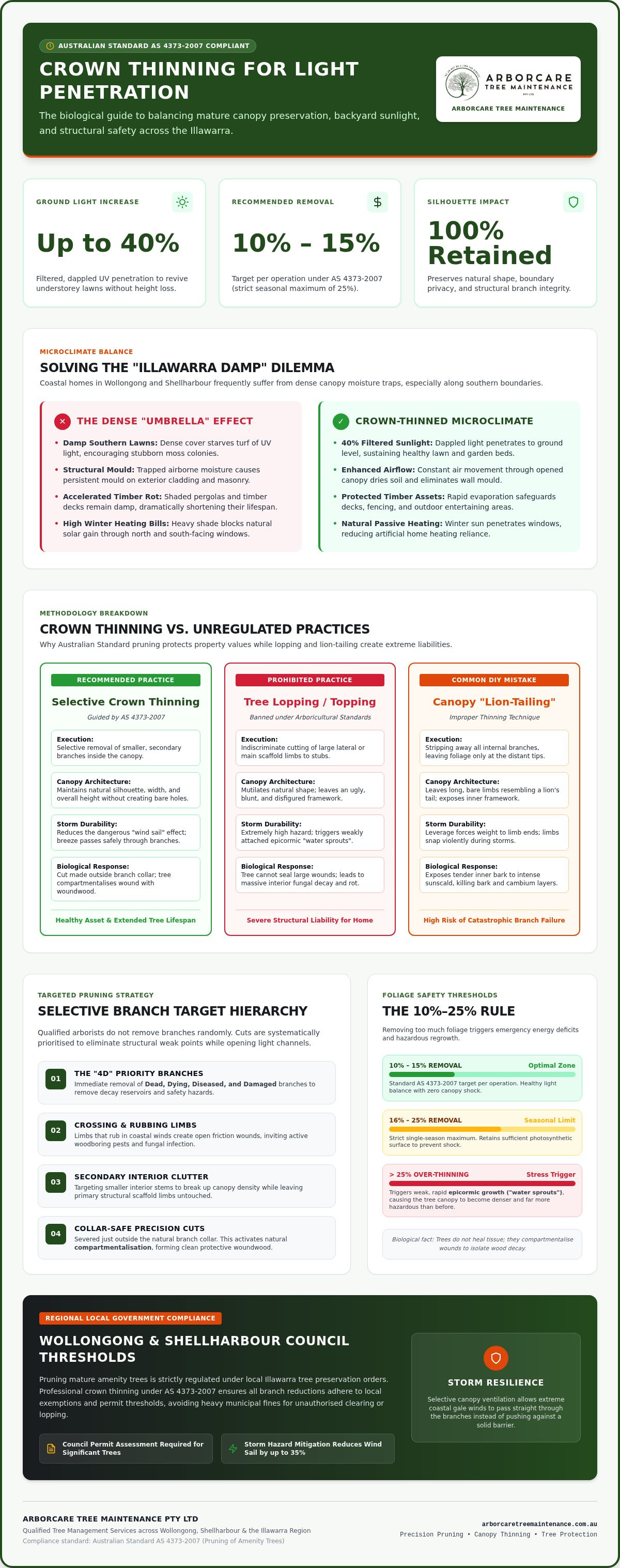
Crown thinning is a precise method of tree maintenance that involves the selective removal of smaller, secondary branches from within the tree's canopy. Unlike other forms of pruning, the primary goal here isn't to reduce the height or the width of the tree. Instead, we focus on opening up the interior to create a more transparent structure. This process maintains the natural silhouette and aesthetic value of the tree while significantly increasing light penetration and air movement through the foliage.
Establishing professional authority requires a clear distinction between this surgical approach and "lopping" or "topping." While some might suggest lopping as a quick fix for shade, it is a prohibited practice in professional arboriculture that causes long-term structural instability and decay. By using established arboricultural pruning techniques, we ensure the tree remains safe and healthy. The result is a beautiful, airy canopy that provides "dappled sunlight," which is ideal for understorey plants and garden beds that would otherwise perish in deep shade.
The Mechanics of Light Penetration
The science behind crown thinning for light penetration relies on breaking up the dense "umbrella" effect of a neglected canopy. When secondary branches are thinned out, UV rays can filter through the remaining foliage to reach the ground. This is often more effective for large, broad-canopy trees than "crown lifting," which only clears the lower trunk but leaves a massive shadow from above. A professional crown thin should remove no more than 10 to 25 per cent of the live foliage in a single season to maintain tree health. This specific threshold prevents the tree from entering a stress response, ensuring it continues to thrive while your garden gets the sunlight it needs.
Solving the "Illawarra Damp" Problem
Homeowners in Wollongong and Shellharbour often struggle with a specific type of coastal dampness, especially on the southern side of their properties. A dense tree canopy traps moisture against the house, leading to moss growth on lawns and mould on exterior walls. By improving airflow and light, we can dry out damp soil and help prevent timber rot on expensive decks or pergolas. Additionally, crown thinning for light penetration allows more winter sun to hit your windows. This natural solar gain can help reduce winter heating costs, making your home more energy-efficient and comfortable during the cooler months.
The Science of Selective Pruning: How it Works
Professional arboriculture follows strict biological principles to ensure that crown thinning for light penetration doesn't compromise a tree's lifespan. Every cut made by a qualified arborist is guided by Australian Standard AS 4373-2007 (Pruning of Amenity Trees). This standard dictates that thinning should ideally remove no more than 10 to 15 per cent of the canopy in a single operation. Exceeding these limits often triggers a stress response known as epicormic growth. These "water sprouts" are weakly attached, fast-growing shoots that the tree produces in a desperate attempt to regain lost foliage. This ultimately makes the canopy denser and more hazardous than it was before the work began.
Identifying Target Branches
Effective thinning begins with a methodical assessment of the tree's internal structure. We prioritise the removal of branches that are dead, dying, diseased, or crossing over one another. Crossing branches are particularly problematic. As they rub together in the wind, they create open wounds that invite pest infestation and fungal decay. By clearing this secondary clutter, we preserve the primary scaffold branches that give the tree its strength and shape. This selective approach ensures that light reaches the garden floor without stripping the tree of its natural wind resistance. Using proper crown pruning methods ensures the tree’s energy is directed toward healthy growth rather than repairing unnecessary damage. By distributing these cuts evenly, we avoid creating "holes" in the canopy, maintaining a uniform look that remains aesthetically pleasing.
Maintaining Tree Health and Vitality
When a branch is removed correctly, the tree doesn't "heal" in the way human skin does; it compartmentalises the wound to prevent the spread of decay. A professional cut is made just outside the branch collar, allowing the tree to form "woundwood" that eventually seals the area. Improper DIY thinning often results in "lion-tailing," where all the inner branches are stripped, leaving foliage only at the very tips. This shifts the weight to the ends of the limbs, significantly increasing the risk of branch failure during an Illawarra storm. It also exposes the inner bark to sunscald, which can kill the living tissue beneath. If you are concerned about the density of your trees, organising a professional assessment is the safest way to protect your property and your plants. This ensures the work is performed by someone with the technical expertise to balance your need for light with the tree's biological requirements.
Crown Thinning vs. Lopping: Why Professionalism Matters
Many homeowners worry that hiring an arborist means their beautiful tree will be "butchered" or left looking like a bare skeleton. Such anxiety usually stems from seeing the results of "lopping," an outdated and harmful practice often performed by unqualified operators. True crown thinning for light penetration is a surgical process. It preserves the tree's health and appearance while achieving your goal of a brighter, drier backyard.
Lopping involves cutting large limbs back to stubs. Such a practice is effectively a death sentence for many species because it leaves the tree vulnerable to decay. It also forces the tree to produce "water sprouts"; these are bushy, weak shoots that grow rapidly and actually block more light in the long run. In contrast, thinning follows established USDA Forest Service pruning guidelines. Professional thinning involves removing only specific secondary branches to enhance the canopy's natural structure and air circulation.
The Hidden Risks of Poor Pruning
Improper cuts from lopping create entry points for rot and termites. These pests can compromise the entire structure, eventually leading to total tree failure. There is also the danger of "sunscald." When too much of the protective canopy is removed at once, the bark on the main trunk is exposed to direct UV rays. Exposure can burn the trunk and kill the vital tissue underneath. From a legal perspective, many local councils in the Illawarra explicitly forbid lopping. They view it as a form of property damage, whereas professional pruning is encouraged as a responsible maintenance task.
Aesthetic Preservation
A well-executed crown thin is often an "invisible" service. Whether you have a majestic Eucalypt or a spreading Jacaranda, the goal is to enhance the natural silhouette rather than change it. When the job is done correctly, the tree shouldn't look like it was cut; it should simply look healthier and more vibrant. Choosing this approach is far more cost-effective than removal. It maintains your property value and avoids the high expense of clearing a large tree. For more information on maintaining your garden's appeal, see our guide on tree pruning Illawarra.
Reclaiming Your Garden: The Real-World Benefits
Reclaiming a dark garden often starts from the ground up. While the previous sections focused on the health of the tree, the most immediate reward of crown thinning for light penetration is the transformation of the landscape below. Increasing filtered light allows your backyard to function as a living space again. For eco-conscious homeowners, this technique provides a way to reduce shadow cast on rooftop solar arrays, improving energy efficiency without violating local tree protection rules. It also helps improve your outlook by creating "filtered" views, allowing you to see through the canopy to the escarpment or ocean while maintaining essential privacy from neighbours.
Lawn Health and UV Requirements
Most popular Australian lawn varieties have strict sunlight requirements to stay healthy. Varieties like Couch or even the shade-tolerant Sir Walter DNA Certified Buffalo require between 4 and 6 hours of direct sun daily to maintain their density and vibrant colour. When light levels drop below this threshold, the grass thins out, leading to bare patches and weed infestations. Professional thinning can increase the sunlight reaching your turf by 20 to 40 per cent. This boost is often enough to stimulate photosynthesis and prevent the mossy, damp conditions that kill off lawns in the Illawarra. Better air circulation at ground level also helps the soil dry out after rain, which is essential for reducing fungal diseases in your grass.
Storm Resilience and Safety
Living on the coast means preparing for intense weather events. A dense, unmaintained canopy creates a "wind sail" effect, where the tree catches the wind rather than letting it pass through. This pressure can lead to limb failure or even total uprooting during a storm. Selective thinning can reduce canopy drag by approximately 30 per cent, significantly lowering the risk of damage to your home. Reducing the weight on overextended limbs before the storm season is a proactive way to manage your property's safety. If you've already noticed signs of limb stress or are worried about the next big southerly buster, our emergency tree service Illawarra guide explains how to identify immediate hazards.
To ensure your trees are both beautiful and storm-ready, book a professional pruning consultation today.
Organising Your Crown Thinning in Wollongong
Organising crown thinning for light penetration in the Illawarra requires a balance of horticultural knowledge and local regulatory compliance. Before any work begins, it's essential to determine if your tree is a suitable candidate. Most healthy, mature trees respond well to selective thinning, but those with existing structural decay or certain disease profiles may require different management strategies. Our role as your local expert is to guide you through this assessment, ensuring the tree remains a safe asset for your property.
In Wollongong, tree management is governed by the Wollongong Development Control Plan (WDCP 2009) Chapter E17. You will typically need a Tree Permit if the tree exceeds 5 metres in height or has a trunk diameter greater than 30 centimetres measured at ground level. Council permission is also mandatory if the work involves pruning branches larger than 10 centimetres in diameter. The standard processing time for these applications is 28 working days. Planning ahead is vital for homeowners looking to brighten their gardens before the winter months or the peak of the growing season.
The Consultation Process
A professional site visit is an essential first step. This allows an arborist to assess the biological health of the specimen and identify any hidden hazards within the upper canopy. During this meeting, you can discuss your specific "light goals" for your garden beds, lawn, or solar panels. We'll evaluate the canopy density and determine the safest approach to achieve your desired outcome without stressing the tree. To prepare for the work, ensure our crew has clear access to the base of the tree and move any portable garden furniture or ornaments away from the work zone.
Safety and Cleanup
Safety is our primary concern during every project. Our teams use specialised climbing gear and rigging systems to control the descent of every branch, protecting your fences, roofs, and delicate garden beds from impact. Once the pruning is complete, we use high-capacity wood chippers to process the debris on-site, leaving your property tidy. This methodical approach ensures that the only evidence of our visit is a healthier tree and a sun-drenched backyard. If you are ready to transform your garden, contact Arborcare for a professional pruning quote. We provide the expert advice and technical skill needed to manage your trees in accordance with Australian Standards.
Transform Your Garden with Expert Canopy Care
A dark, damp backyard doesn't have to be the price you pay for keeping beautiful, mature trees. By choosing professional crown thinning for light penetration, you can revitalise your lawn and improve your home's solar efficiency while staying compliant with local council regulations. This surgical approach ensures your trees remain structurally sound and aesthetically pleasing, avoiding the catastrophic damage caused by lopping. You're not just clearing a view; you're investing in the resilience of your landscape against coastal storms.
Arborcare Tree Maintenance has been serving the Illawarra for years, providing the technical authority required for complex tree care. Our team consists of fully qualified and insured arborists who are specialists in high-risk and complex pruning. We prioritise your property's safety and the long-term vitality of your greenery, delivering results that balance natural beauty with practical living. If you're ready to reclaim your sun-drenched oasis, Get a Professional Pruning Quote from Arborcare today. Let's work together to create a brighter, safer, and healthier outdoor space for your family to enjoy.
Frequently Asked Questions
Will crown thinning kill my tree?
Professional crown thinning won't kill your tree. It's actually a health-focused maintenance technique when performed correctly. By following Australian Standard AS 4373-2007, we selectively remove only small, secondary branches. This allows the tree to compartmentalise wounds effectively. Unlike lopping, which creates large decay entry points, professional thinning maintains the tree's natural energy production and structural integrity. It's a safe way to brighten your garden while keeping your tree vibrant and healthy.
How much of the tree canopy can be safely removed?
We recommend removing no more than 10 to 15 per cent of the live foliage in a single operation. Exceeding this limit can trigger a stress response, leading to weakly attached epicormic growth. In some cases, we might remove up to 25 per cent if the tree is exceptionally vigorous. Staying within these professional thresholds ensures the tree doesn't lose its ability to photosynthesise or become vulnerable to pests and diseases during the healing process.
Do I need council permission for crown thinning in Wollongong?
You generally need a Tree Permit from Wollongong City Council if the tree is over 5 metres tall or has a trunk diameter exceeding 30 centimetres. Permission is also required if you're pruning branches larger than 10 centimetres in diameter. The standard processing time for these applications is 28 working days. We can help you navigate these local regulations to ensure your property maintenance remains fully compliant and legal within the Illawarra region.
How often should a tree be thinned for light penetration?
Most mature trees in the Illawarra only require crown thinning every three to five years. Fast-growing species might need more frequent attention to maintain light levels. It's best to monitor your lawn and garden beds for signs of returning shade or dampness. Regular, minor maintenance is always better for the tree's health than waiting a decade and performing a major, stressful pruning operation all at once. This approach keeps your garden bright year-round.
Can I thin a tree myself with a pole saw?
We strongly advise against DIY thinning for any tree taller than head height. Using a pole saw from the ground makes it impossible to achieve the precise cuts required by Australian Standards. You also risk "lion-tailing" the tree or causing personal injury from falling limbs. Professional arborists use specialised climbing gear and rigging to control every branch's descent. This protects your home, your fences, and your personal safety during the maintenance process.
Will thinning my tree help my lawn grow back?
Yes, professional crown thinning for light penetration can increase filtered sunlight reaching the ground by 20 to 40 per cent. This is often the difference between a patchy, mossy yard and a healthy lawn. Increasing UV exposure helps varieties like Buffalo and Couch grass thrive. It also improves airflow at ground level. This dries out damp soil and prevents the fungal issues that frequently plague shaded Illawarra gardens during wet seasons.
What is the best time of year for crown thinning in the Illawarra?
Late autumn and winter are often ideal for many species in Wollongong and Shellharbour. Pruning during the dormant season reduces stress on the tree and minimises the risk of pest infestation. However, many local native species can be thinned year-round. We generally avoid thinning during periods of extreme summer heat or drought. This prevents sunscald on the newly exposed inner bark and ensures the tree has enough moisture to heal effectively.
How does thinning a tree help during storm season?
Thinning a tree dramatically improves its storm resilience by reducing the "wind sail" effect. By selectively removing internal branches, we allow wind to pass through the canopy rather than pushing against it as a solid mass. Research suggests this can reduce canopy drag by up to 30 per cent. This significantly lowers the likelihood of limb failure or whole-tree uprooting during the intense high-wind events common across Dapto and the wider Illawarra region.


