
A tree-service quote depends on the tree and its surroundings, not just the work involved. For Dombarton tree services, the price is assessed for the specific job: tree size, site access, nearby structures and complexity all affect the scope. Late winter or early spring can be a suitable time for removal, when trees are less full and easier to work around.
It’s reasonable to want a clear picture of the cost before deciding what to do. The right provider matters too: tree work can involve difficult access, nearby property and safety risks, so the scope and approach should be clear. This guide explains what affects costs, the types of residential and commercial jobs involved, and how seasonal timing can influence removal plans. It also covers practical points to consider when choosing a tree-service provider for your Dombarton property.
Key Takeaways
- Tree-removal costs depend on the tree, site access and job complexity. Understand how these factors shape a quote before planning the work.
- Late winter or early spring is often a practical time to plan removal, when trees are less full and easier to work around.
- Residential and commercial jobs can involve different access and site conditions, so clarify the scope of work and how debris will be handled.
- Before work begins, consider whether local council approval may be needed, particularly for a large, established or native tree.
- Compare a provider’s insurance and qualifications, and look for clear safety planning for work near buildings and other site hazards.
When is the best time of year to remove a tree?
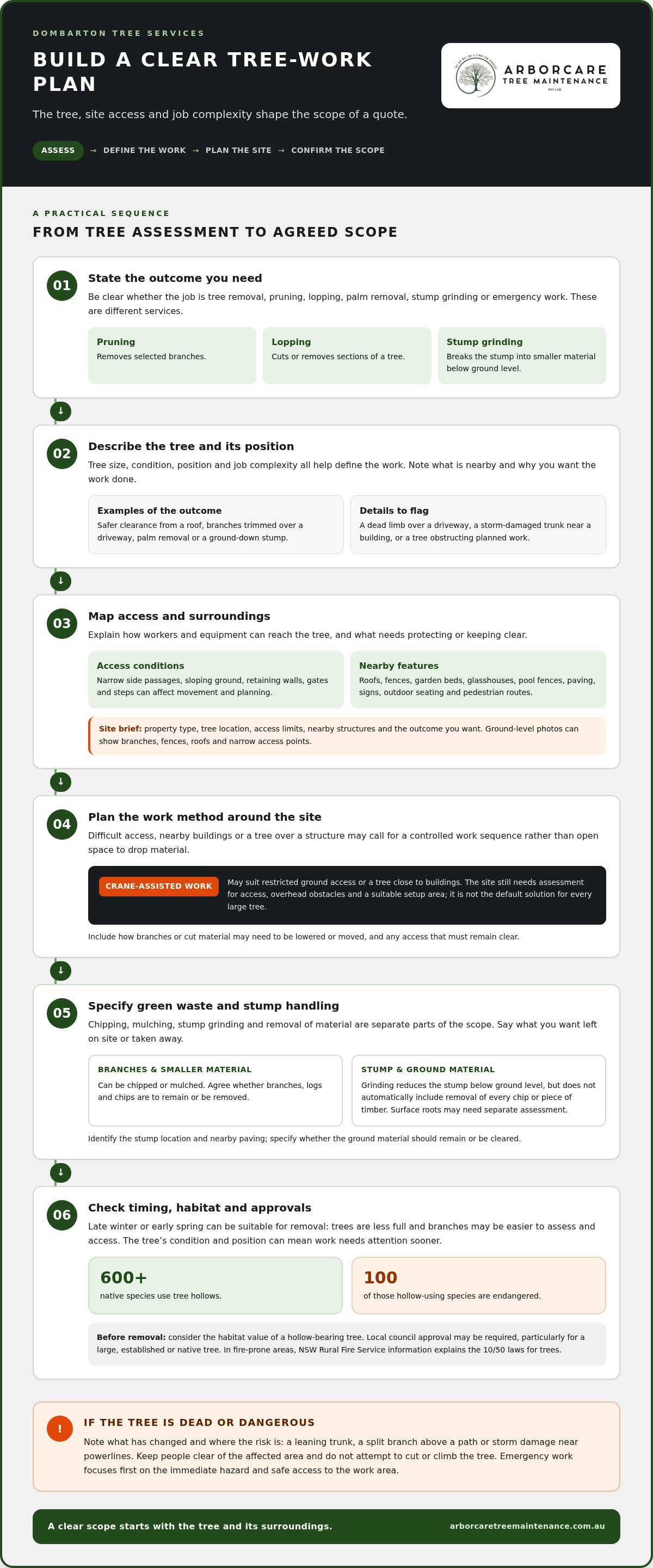
Late winter or early spring can be a suitable time for tree removal. With less foliage, branches may be easier to assess and access. Seasonal timing is only one consideration: a dead limb over a driveway, a storm-damaged trunk near a building or a tree obstructing planned work may need attention sooner. The tree’s condition and position help determine when the work should take place.
Dombarton tree services can include removal, pruning, lopping, palm removal, stump grinding and emergency work. At home, this might mean removing a tree close to a roof or trimming branches over a driveway. Commercial jobs may involve clearing trees around work areas or maintaining vegetation across a property. The right service depends on the tree and its surroundings.
Pruning removes selected branches, while lopping cuts or removes sections of a tree. Stump grinding deals with the stump left after removal. These are different jobs, so describe the outcome you need: safer clearance from a roof, palm removal or a ground-down stump, for example. Tall or complex removals need particular care where branches could affect buildings, fences or accessways.
Green-waste handling and stump removal are separate parts of the job scope. Branches and smaller material can be chipped or mulched, while stump grinding breaks the stump into smaller material below ground level. Grinding does not automatically include removal of every chip or piece of timber. Specify whether you want branches, logs, chips and stump material left on site or removed.
For a dead or dangerous tree, note what has changed and where the risk is. A leaning trunk, a split branch above a path or storm damage near powerlines each presents different site conditions. Keep people clear of the affected area and don’t attempt to cut or climb the tree. Emergency tree removal focuses first on the immediate hazard and safe access to the work area.
Seasonal planning also needs to account for wildlife and local approvals. Tree hollows are used by over 600 native species, and 100 of those species are endangered. Before removing a hollow-bearing tree, consider its habitat value. Local council approval may be required, particularly for a large, established or native tree. In fire-prone areas, NSW Rural Fire Service information explains the 10/50 laws for trees.
After a tree is removed, decide whether the stump also needs attention. Grinding can reduce a stump that obstructs mowing, access or future landscaping; surface roots may need separate assessment. Identify the stump’s location and nearby paving before work begins. This helps define the finish you want and whether the ground material should remain or be cleared.
Residential and commercial tree work
A residential tree job might involve branches near a roof, a tree beside a driveway or a stump blocking planned landscaping. Commercial sites can have different constraints, such as vehicle movements, customer access and work areas that need to remain usable. In both settings, planning starts with the tree’s position, the intended outcome and nearby structures. A clear scope distinguishes removal from pruning or stump grinding.
Steep or confined sites need careful planning before equipment enters the property. A narrow side passage, sloping ground or retaining wall can restrict where workers and machinery can move safely. Note the access route, ground conditions and any gates or steps when describing the site. A backyard tree reached only through a narrow passage, for example, may need a different work sequence from one beside an open driveway.
Delicate surroundings call for attention to what sits beneath and around the canopy. Garden beds, glasshouses, pool fences and paved courtyards may be affected by falling branches or equipment movement. Point out these features before work starts and clear the work area where possible. On commercial grounds, include signs, outdoor seating and pedestrian routes in the site description so the work can be planned around daily use.
Difficult access can affect how branches are handled and removed from the work area. A tree behind a building, close to a boundary or over a structure may require a controlled sequence rather than open space for dropping material. Describe nearby obstacles and available access points. This gives the work team a practical picture of the site when planning equipment use and how cut material will be lowered or moved.
Crane-assisted tree work may suit a site with restricted ground access or a tree close to buildings. A crane can lift sections from a planned position, but the site still needs assessment for access, overhead obstacles and a suitable setup area. It is not the default solution for every large tree. Details of the tree, surrounding structures and available working space help determine whether this method suits the job.
Before requesting work, prepare a short site brief: state the property type, location of the tree, access limitations, nearby structures and the outcome you want. Photos from the ground can show branches, fences, roofs and narrow access points. For a stump that remains after tree work, professional stump grinding can address an obstruction to access or future landscaping. Include the stump’s position and surrounding paving in your description.
For a commercial property, identify the affected work area and any access that needs to stay clear. At home, point out the boundary and surfaces beneath the canopy. These details help define the requested work and keep the plan focused on the site’s actual constraints.
On-site chipping and mulching
After pruning or tree removal, branches and smaller limbs can take up considerable space. On-site chipping processes suitable woody material into smaller pieces near the work area. The chips can be used as mulch or kept for another purpose, depending on the property owner’s plans. This reduces bulky green waste on site, but doesn’t automatically mean every log, stump or chip will be removed.
Chipping and stump grinding handle different material. A chipper processes branches and limbs, while grinding reduces a remaining stump and may leave wood fragments around the former stump site. For example, clearing a fallen tree may involve chipping branches and separately grinding the stump. Specify each part of the job so the scope distinguishes branch processing from stump removal.
Mulch made from chipped tree material can be useful around garden beds or beneath trees. Before spreading it, decide where it should go and keep it away from paths, drains and areas where you don’t want loose material. A garden bed beside a fence, for instance, may be suitable, while a narrow driveway may need to stay clear for vehicles.
Mulch delivery is different from producing chips on site. Chips created during a tree job come from material being processed there; delivered mulch is brought to the property for a planned use. If you need mulch for a new garden bed, estimate the area and identify where it should go. Keep the route clear and consider whether a vehicle can reach the intended spot.
Before work begins, decide how to handle the material. Useful details include:
- Whether branches should be chipped or left as larger pieces.
- Where suitable chips should be placed on the property.
- Whether logs or stump fragments should remain or be taken away.
- Which paths, garden beds or vehicle areas must stay clear.
These decisions help arborists plan the clearing sequence and avoid moving material more than necessary. In a confined backyard, the chipper’s position and the route from the tree matter. On a larger block, a nominated chip pile can keep access tracks open. Clear instructions also help separate reusable material from unwanted debris.
Don’t assume all tree material can be processed in the same way. Branches, logs, leaves and stump fragments differ, so describe the intended result before work starts. For example, ask for branches to be chipped and identify a clear area for the resulting mulch. If a tidy site is the priority, state which material should be removed and which may stay.
Mulching is most useful when its destination is planned alongside the tree work. Mark the proposed pile or garden area, identify access restrictions and specify how stump-grinding debris should be handled. This helps coordinate chipping, mulch placement and site clearing with the property’s next use.
Business experience and operating hours
Experience matters when it matches the task and site conditions. Routine pruning beside an open lawn differs from removing a damaged tree near a roof. Look for a work plan that accounts for access, surrounding structures and debris handling. Ask how the proposed sequence suits your property, such as how branches will be controlled above a driveway.
In Australia, tree loppers aren’t required to hold a licence. Formal qualifications, relevant experience and insurance therefore help readers assess a provider’s approach. The Institute of Australian Consulting Arboriculture describes its members as holding AQF Level 5 or an equivalent qualification. That level is relevant when you need informed advice about tree condition, pruning decisions or complex site constraints.
Insurance is another practical point to consider before work begins. According to the Tree Contractors Association of Australia, its members must carry current public liability and workers compensation insurance. The association also refers to Australian Standard 4970. For a job near a building or boundary, ask for the work plan to explain how the site and nearby property will be protected.
Operating hours shape when routine discussions and scheduled work can take place. Distinguish a planned job, such as trimming branches away from a shed, from an urgent hazard after storm damage. Describe the issue clearly and state whether access is affected. This helps establish the response needed without assuming routine hours also cover emergency work.
Before arranging a site assessment, prepare a concise brief. Include the property address, the tree’s location, the work you want and any access limits. For example, note whether a narrow side gate prevents equipment from reaching a backyard. Photos showing the whole tree and nearby structures can help explain the site before an in-person assessment.
Use the assessment to understand how the proposed work suits your job. The arborist should explain the difference between pruning selected branches and removing the tree, and how each option affects the property. For a commercial site, include vehicle access and pedestrian routes. At home, point out roofs, fences and garden areas beneath the canopy.
Finally, record the agreed scope and timing in writing. List the work area, expected start arrangements, debris handling and any access requirements. If weather changes the site conditions, a clear plan helps everyone understand what needs reassessment before work proceeds. These details make experience and operating hours relevant to the actual job, rather than relying on broad claims alone.
Choosing a tree-service provider
Choose based on evidence relevant to your job, not a broad promise. Compare the proposed approach, relevant qualifications, insurance and written scope.
Reviews, experience and response time
How do providers compare on reviews, experience and response time? Read reviews for details about similar work, such as difficult access, emergency response or stump clean-up. Compare those accounts with the provider’s experience handling your type of tree and site. Response time matters most when a hazard needs attention; for planned pruning, clear scheduling and a defined scope matter more than speed alone.
Licences, qualifications and insurance
Tree loppers in Australia aren’t required to be licensed. The Institute of Australian Consulting Arboriculture describes its members as holding AQF Level 5 or an equivalent qualification. The Tree Contractors Association of Australia says its members must carry current public liability and workers compensation insurance, and refers to Australian Standard 4970. Compare relevant training and insurance against the work and site risks.
Quotes and on-site inspections
Do Dombarton tree-service providers provide free quotes and on-site inspections? A quote request establishes the job price, which depends on the tree, access and work complexity. Don’t assume an inspection or quote is free; compare the stated terms and whether the assessment reflects the actual site. An on-site view can account for features photos may miss, such as slope, overhead branches or restricted equipment access.
Use the written quote to compare like with like. It should describe the requested work, the tree or area involved, and how branches and other material will be handled. A removal quote and a pruning quote, for example, cover different outcomes. If stump grinding is part of the plan, check that the scope identifies the stump and the intended finish.
Check whether local council approval may be required before removal, particularly for a large, established or native tree. A provider’s work plan should distinguish council approval from the physical removal task. In fire-prone areas, NSW Rural Fire Service information covers the 10/50 laws for trees. These are separate considerations, so don’t treat a quote as proof that approval requirements are met.
For emergency work, consider how the provider addresses the immediate hazard and site access. A storm-damaged tree over a path needs a different response from routine trimming beside a clear lawn. State what happened, where the danger is and whether people or vehicles need to avoid the area. Clear details help the provider understand the urgency and work required.
Make your decision on relevant experience, documented insurance, an explained work plan and a clear quote. Request a tree-service quote with the tree’s location, access details and the outcome you need.
Arborcare Tree Maintenance: Tree Removals
Arborcare Tree Maintenance provides tree removal for residential and commercial properties across the Illawarra, including Dombarton. Contact the team when a tree needs removal, a palm has outgrown its space or complex site conditions make the work challenging.
Not every tree needs to come down. Hedging, pruning and trimming can address selected branches, while stump grinding can deal with a stump after removal. The right scope depends on the tree, its position and the result you need. Describe the site, access and nearby structures when requesting a quote so the work can be assessed in context.
For help with tree removal, pruning or a remaining stump, contact Arborcare Tree Maintenance.
Plan the next step for your property
Before arranging work, decide how you want the site to look afterwards. You might want a tree removed while retaining nearby vegetation, a palm removed from a tight area, or branches trimmed to improve clearance. A clear end goal helps define the scope and gives the assessment a practical focus.
Arborcare Tree Maintenance offers tree removals, hedging, pruning and trimming, and palm tree removals across the Illawarra. For Dombarton tree services, prepare the tree’s location, access details and the outcome you want to discuss. Photos can show nearby structures or areas needing care, while an onsite assessment considers the property conditions directly.
Take the next step at a pace that suits your situation. Contact Arborcare Tree Maintenance to discuss the tree work your property needs and move towards a clear, considered plan.
Frequently Asked Questions
How much will it cost?
The cost depends on the tree, access, site conditions and work required. Arborcare Tree Maintenance provides free onsite quotes, allowing the assessment to account for details such as a narrow entry, nearby structures or multiple trees. Share the outcome you want and any site constraints when arranging a quote. This helps define the work needed instead of relying on a broad estimate that may not suit your property.
Which tree removal and arborist companies service Dombarton and nearby areas?
Arborcare Tree Maintenance serves Dombarton and Illawarra communities, including Dapto, Wollongong, Shellharbour, Wonoona, Jamberoo and Fairy Meadow. Its Dombarton tree services include tree removal and maintenance for residential and commercial properties. Describe your location and the job, such as palm removal or trimming near a building, to identify the service relevant to your property.
What are typical tree removal and pruning prices in Dombarton, NSW?
There isn’t one typical price for every removal or pruning job in Dombarton. Costs depend on the tree’s condition, access, surrounding obstacles and requested scope. Arborcare Tree Maintenance provides free onsite quotes rather than publishing set prices. For a useful assessment, specify whether you want selected branches pruned, a whole tree removed or both, and point out nearby structures.
What council permits or rules apply to removing or pruning trees in Dombarton, NSW?
Local council approval may be required for tree removal, particularly for a large, established or native tree. Check the relevant council’s tree controls before arranging work, and describe the species, location and proposed pruning or removal. In fire-prone areas, the NSW Rural Fire Service provides information about 10/50 laws for trees. Those rules are a separate consideration from council approval, so identify which may apply to your property.
Do local tree services offer emergency tree work after storms in Dombarton?
Yes. Arborcare Tree Maintenance offers 24/7 emergency tree service for fallen or storm-damaged trees. If a tree threatens people, property or vehicles, stay clear of the affected area and call for professional help rather than attempting to cut or move it. Explain what has fallen, where it is, and whether access is blocked. These details help describe the hazard and the work required.
What are the risks of DIY tree removal, and how can residents choose a safe arborist?
DIY tree removal can expose people and property to falling timber, unstable branches, cutting equipment and unpredictable tree movement. Keep clear of hazardous trees and use qualified, insured professionals for removal, pruning and stump work. Compare relevant experience, qualifications and insurance, then review the written work scope. The Tree Contractors Association of Australia says its members carry current public liability and workers compensation insurance; the Institute of Australian Consulting Arboriculture describes members as holding AQF Level 5 or equivalent qualifications.


