
An emergency tree hazard needs the right response first. In NSW, call 132 500 if a fallen tree blocks access or may fall on a property or driveway. Call Triple Zero (000) if anyone is trapped or injured. An emergency call-out arborist in Dapto can help manage tree damage once immediate danger has been addressed.
Storm damage can leave a tree unstable, with branches hanging over accessways or debris blocking a driveway. It’s understandable to want the hazard cleared quickly, but approaching a damaged tree or trying to cut it yourself can increase the risk.
This guide explains what an emergency call out arborist in Dapto can help with, how hazards and debris are managed, and what to do while waiting for professional help. You’ll also learn when to contact emergency services, how powerline hazards affect the response, and what information helps an arborist understand the situation. These steps can help protect people and property while the next actions are arranged.
Key Takeaways
- For non-urgent police assistance in NSW, call 131 444 through the Police Assistance Line, according to NSW Police Force.
- Keep clear of unstable trees and hanging branches, and leave cutting or debris removal to trained professionals.
- Treat fallen powerlines as live and stay at least 8 metres away; contact the relevant electricity network about the hazard.
- While waiting, keep people and pets away from the affected area and share clear details about access and visible damage with the arborist.
- Emergency services handle immediate threats, while tree removal and site clean-up address hazards left on the property.
Do you provide emergency tree services?
Emergency tree work addresses immediate hazards caused by storm damage, including fallen trees and unstable limbs. In NSW, the right first call depends on whether people, property or access face immediate danger.
Storm-Damaged and Fallen Tree Work
Storm-damaged trees can have split limbs, cracked trunks or disturbed roots that aren’t obvious from the ground. A professional assessment considers the tree’s condition, its lean and what lies beneath it, such as a roof, driveway or fence. Tree removal may be appropriate if the tree remains hazardous, while other work may focus on removing damaged sections. Don’t approach a fallen tree to assess it yourself.
If a fallen tree blocks access or may fall on a property or driveway, call 132 500 in NSW for assistance. If anyone is trapped or injured during a storm, call Triple Zero (000).
Round-the-Clock Storm Response
Storms can occur at any hour, but immediate danger and arborist work are separate parts of the response. NSW SES takes storm-damage calls on 132 500 and prioritises the most urgent emergencies. Its volunteers may provide temporary help; permanent repairs are arranged through an insurer or private contractor. Don’t assume a tree can be safely dealt with just because the weather has eased.
For non-urgent police assistance in NSW, call 131 444 through the Police Assistance Line (PAL), according to NSW Police Force. For a fire emergency, call 000.
Storm Damage Inspections
An inspection helps identify visible damage and risks that need attention before removal or other work begins. From a safe position, point out the affected tree, nearby buildings, access routes and any branches resting on structures. Note changes such as a new lean, a split trunk or branches caught overhead. These details help the arborist assess the tree and surrounding hazards.
Insurance and Approval Considerations
For an insurance claim, photograph storm damage from a safe distance before clean-up, if conditions allow. Record the date, affected areas and damage to buildings or other property, then keep relevant correspondence and documents together. Contact your insurer about its claims process, as temporary safety work and permanent repairs may be treated differently.
In Wollongong City Council, whether tree work can proceed without approval depends on the tree and applicable planning controls. Check the council’s requirements before arranging non-urgent work, and don’t assume storm damage automatically removes approval requirements. When choosing an arborist in Dapto, look for documented qualifications and current public liability and workers compensation insurance. Tree loppers aren’t required to be licensed, so a job title alone doesn’t establish those credentials.
Debris removal and site stabilisation
After a storm-damaged tree is cut, branches, trunk sections and leaves can still block access or create trip hazards. A careful clean-up separates woody material from smaller green waste, then clears the agreed work area. The removal plan should account for nearby fences, paths, parked vehicles and public access, not just the fallen tree.
Site stabilisation means leaving the affected area safe to access after the immediate tree work. The crew assesses the ground, remaining trunk and nearby structures before moving debris. For example, a large limb across a driveway may need to be sectioned into manageable pieces before the driveway can be cleared. Don’t walk beneath suspended branches or move timber that may shift.
Debris handling depends on the material and the work area. Branches may be chipped into mulch, while larger timber is handled separately. Recycling branches into mulch can reduce loose debris left on site, but wood chips aren’t a finished garden surface. Keep them clear of drains, accessways and areas where they could obstruct repairs. Clarify whether green waste will be removed or left on the property.
Stump grinding and removal
Once the trunk is removed, the stump can still obstruct mowing, paving or access. Stump grinding breaks the stump into wood chips below the surrounding surface, while full stump removal involves taking out the stump itself. The suitable approach depends on its position, surrounding roots, nearby services and how the ground will be used. A stump beside a fence or paved path needs a different plan from one in an open lawn.
Before work starts, identify the area to be cleared and any features to protect, such as garden beds or retaining edges. Keep people and pets away from the work zone while machinery is operating. If the site is in Dapto, explain whether the priority is clearing a path, removing a stump or preparing the ground for repairs. This helps define the job without confusing debris clearance with structural repairs.
Where storm debris needs removal or a stump affects safe use of the property, tree removal and stump grinding can form part of the site clean-up plan. The outcome depends on the agreed work area and how debris is handled. A clear scope helps prevent loose branches, chips or an exposed stump from being overlooked once the main tree work is complete.
Powerline and infrastructure hazards
A fallen tree near powerlines changes the response. Treat every fallen powerline as live, whether it is sparking, lying on a tree or appears undamaged. Stay at least 8 metres away and keep other people clear. Never touch the tree, fence, vehicle or other object that may be in contact with the line.
If a fallen powerline creates a life-threatening emergency in NSW, call Triple Zero (000). For a fallen line in Ausgrid’s network area, call 13 13 88. For an emergency involving Endeavour Energy’s network, call 131 003. Don’t approach the line to identify the network or move branches; report the location from a safe place.
After contacting the electricity network, give the operator a clear location, such as the street address, nearest intersection or a recognisable landmark. Explain whether a tree or branch is touching the line, whether access is blocked and whether people are at risk. Keep bystanders away and follow instructions while waiting. Take a photo only if you can do so safely from well beyond the exclusion distance.
Tree work near powerlines needs a different assessment from ordinary pruning. A branch can move as it is cut, and a fallen tree may shift under its own weight. Don’t climb, use a ladder, operate machinery or attempt pruning near electrical infrastructure. An arborist can assess the tree only after the electrical hazard has been managed and safe access is available.
Infrastructure risks can extend beyond overhead wires. Storm-damaged branches may rest on a roof, fence, streetlight or communications cable. Don’t pull or cut a branch resting on a structure, as movement could worsen the hazard. Keep clear and report the point of contact to the relevant service operator or emergency responder.
For ongoing tree care, inspect the canopy from the ground and note branches growing towards overhead lines. Arrange professional tree work before a limb becomes a storm hazard. Pruning must account for the tree’s structure and nearby infrastructure, not simply shorten the branch closest to a wire. If a tree is already tangled with a line, prioritise network safety over removal or tidy-up work.
The NSW Rural Fire Service’s 10/50 vegetation clearing rule has a dedicated tool for checking where the rule applies. It concerns vegetation clearing, not permission to work on powerlines. Don’t use it as a basis for cutting a tree touching electrical infrastructure. Keep the hazard isolated and leave work near live lines to the network’s authorised response.
Safety advice while waiting for an arborist
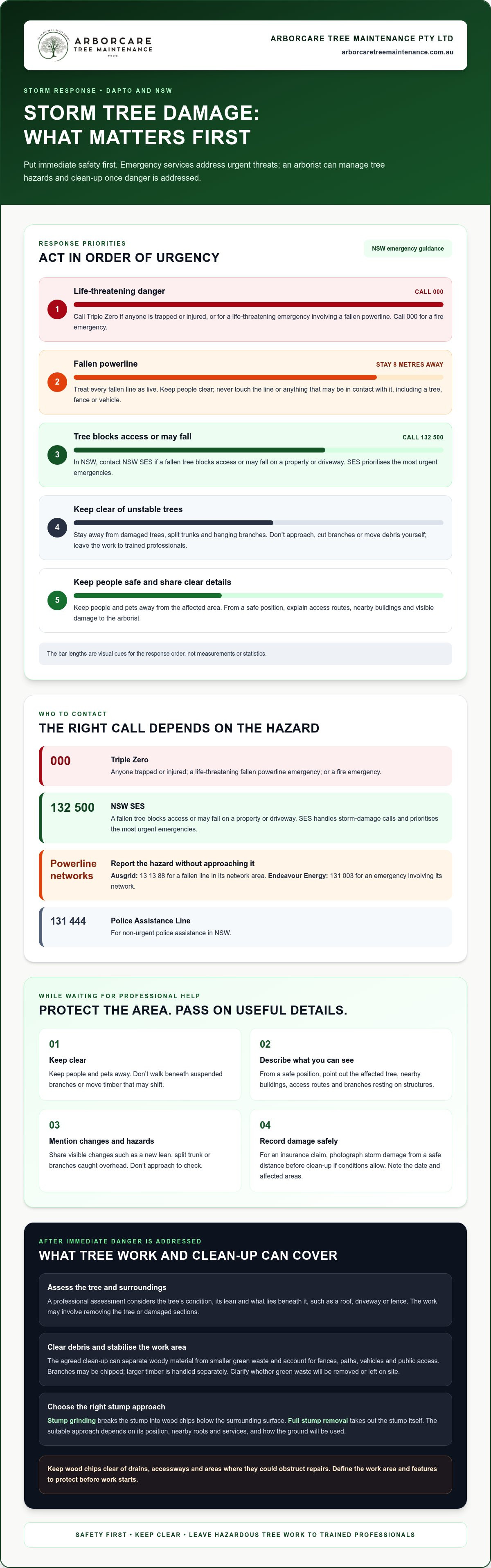
If a fallen tree or branch poses an immediate danger in Dapto, move people away and call emergency services. Call Triple Zero (000) if anyone is trapped or injured, or if fallen powerlines create a life-threatening situation. If a tree blocks access or may fall on a property or driveway, call 132 500 for NSW SES assistance.
Keep clear of the affected area while help is arranged. A cracked trunk, hanging limb or root plate lifting from the ground can shift without warning. Don’t try to cut, pull or prop the tree, even if a branch appears small. Using a ladder, chainsaw or vehicle can put you directly beneath unstable timber.
Use these steps to reduce exposure to the hazard:
- Move children, visitors and pets indoors or to a safe area away from the tree.
- Keep clear of fences, sheds and vehicles that a branch could strike.
- Close gates or doors that lead into the affected area, if you can do so safely.
- Tell household members not to enter the site for belongings or to inspect damage.
Electrical hazards need extra distance. Treat a fallen powerline as live and stay at least 8 metres away. Don’t touch a tree, fence or vehicle that may be in contact with a line. Call 000 for a life-threatening emergency involving fallen powerlines. Otherwise, contact the relevant network from a safe location, such as Ausgrid on 13 13 88 or Endeavour Energy on 131 003.
From a safe position, note details that help explain the scene. Record the street address, the tree’s location and what it appears to affect, such as a roof, driveway or access gate. A photo can help describe storm damage, but only take one from well outside the danger area. Don’t cross debris or stand beneath hanging branches for a better view.
Keep access routes clear for the tree crew. Move vehicles only if the route is safe and doesn’t take you near unstable limbs or powerlines. If access is blocked, explain where the obstruction is and whether another entrance is available. Don’t direct neighbours or passers-by through the hazard area.
While waiting, don’t assume a tree is safe because it has stopped moving. Wind, rain or disturbed ground can affect damaged branches and trunks. Leave inspection and removal to qualified, insured professionals, and don’t start clean-up before the hazard has been assessed. These precautions help protect people until the appropriate response reaches the site.
24/7 Emergency arborist availability
A storm can damage a tree at any hour, but emergency response has separate roles. In NSW, call 132 500 if a fallen tree blocks access or may fall on a property or driveway. The NSW SES attends to the most urgent calls first and gives emergencies priority. Its volunteers provide temporary help; permanent repairs are arranged through an insurer or private contractor.
That distinction matters when asking whether an arborist is available around the clock. Emergency services manage immediate threats to people and property, while arborists address the damaged tree and its ongoing risks. Don’t assume a public emergency response means an arborist will attend immediately. Describe the hazard clearly and follow the relevant emergency service’s instructions.
For a life-threatening situation involving injury, entrapment or fire, call Triple Zero (000). A tree touching fallen powerlines is an electrical hazard, not a routine tree job. Keep away and contact the electricity network from a safe location. For an incident involving a road or traffic hazard in NSW, call 131 700 for the Incident Reporting Line.
When contacting an arborist about an emergency tree, provide the Dapto address, a safe access point and a concise description. Explain whether the tree has fallen, is leaning, or has damaged a roof, driveway or fence. Mention blocked access and visible powerlines. These details help clarify the work required and whether emergency responders are already involved.
Before tree work proceeds, consider qualifications, safe work practices and insurance. The Tree Contractors Association of Australia states that its members must carry up-to-date public liability and workers compensation insurance. Ask for relevant evidence, especially where a tree threatens a home, public access or neighbouring property. Insurance helps address liability, but it doesn’t make an unsafe work area safe.
A qualified arborist assesses the tree, access and surrounding hazards before deciding on a work method. For example, a split limb above a driveway may need controlled removal rather than immediate whole-tree removal. The tree’s condition, nearby structures and safe equipment access all shape the response. Don’t climb or cut damaged branches while waiting.
For ongoing storm-damaged tree work in Dapto, arrange an emergency tree service with Arborcare Tree Maintenance Pty Ltd to address the hazard after immediate danger has been managed. Keep people clear until the site can be assessed safely.
Arborcare Tree Maintenance: Tree Removals
Arborcare Tree Maintenance can help when a damaged or unsafe tree needs professional removal after immediate danger has been addressed. Tree Removals and Complex Tree Removals suit different site conditions, while Palm Tree Removals address storm-damaged palms. The work required depends on the tree’s condition, nearby structures and access to the site.
If the tree is still standing but needs attention, Hedging, Pruning & Trimming can address specific branches. Stump Grinding can remove the remaining stump after tree removal, helping clear the area for its next use. These services offer practical options for managing tree hazards and their aftermath.
Contact Arborcare Tree Maintenance to discuss your tree removal needs, or visit arborcaretreemaintenance.com.au.
Choose a clear next step for your property
Once the immediate hazard is controlled, consider how the affected area needs to function. A damaged tree near a driveway may need removal, while a tree with isolated damaged branches may need pruning. An emergency call out arborist in Dapto can assess the work required for the tree and its surroundings.
Arborcare Tree Maintenance provides Tree Removals, Hedging, Pruning & Trimming, and Palm Tree Removals. These services address different property needs, from removing a hazardous tree to managing damaged growth or a storm-affected palm. When discussing the work, share the tree’s location, visible damage and any access concerns.
Taking that step can help you move from a storm-damaged site towards a safe, usable space. Contact Arborcare Tree Maintenance to discuss your tree work needs and plan what comes next.
Frequently Asked Questions
How much will it cost?
Arborcare Tree Maintenance provides a free onsite quote for its tree services. The scope depends on the work needed, including the tree’s condition, site access and whether removal or follow-up work is required. An onsite assessment helps define the job before you decide how to proceed. For example, removing a damaged tree beside a building may involve different work from clearing an accessible fallen limb.
Which arborists offer 24/7 emergency call-outs in Dapto, NSW?
Arborcare Tree Maintenance provides 24/7 emergency tree services in Dapto and the Illawarra. If you need an emergency call-out arborist in Dapto, call 1300 673 407. The service is for trees threatening people, property or vehicles. Give the team the property address and explain the immediate risk, such as a tree leaning over a parked car or blocking a building entrance.
What emergency tree services do Dapto arborists provide?
Emergency tree work can include removing a hazardous tree or addressing storm damage that threatens people, buildings or vehicles. Arborcare Tree Maintenance also provides Palm Tree Removals, Hedging, Pruning & Trimming, and Stump Grinding. The appropriate work depends on the tree and site. A damaged palm, for instance, may need a different removal approach from a fallen branch blocking access.
What are the emergency call-out fees and hourly rates for arborists in Dapto?
Arborcare Tree Maintenance provides a free onsite quote, rather than a standard hourly rate. The scope of work, tree condition and site access help shape the quote. Describe the hazard and any constraints, such as narrow access or nearby structures, so the onsite assessment can account for them. Ask for the proposed work to be clearly set out before deciding how to proceed.
How quickly can a Dapto arborist attend after hours?
Arborcare Tree Maintenance’s emergency service operates 24/7, but availability does not mean a fixed arrival time. Attendance depends on the circumstances and the work required. When calling, explain whether the tree threatens a person, vehicle or building, and whether emergency services are already involved. Clear details about access and the hazard help the team understand the situation and respond appropriately.
Who is responsible for paying for emergency tree removal in Dapto: the property owner, council, or insurer?
Responsibility depends on the tree’s location, the property involved and the insurance policy. A tree on private land, a council-controlled area or a boundary may raise different responsibility questions. Identify where the trunk stands and where damage occurred, then contact the relevant council or insurer for guidance. Don’t assume a nearby council-owned road means the council will pay for work on private property.
Does home insurance cover emergency tree removal in Dapto, and what evidence is needed?
Home insurance cover depends on the policy and circumstances of the damage. Review your policy wording and contact your insurer before authorising non-urgent work. Keep the claim reference, relevant policy details, written arborist findings and invoices together. If the insurer asks to inspect the damage, coordinate access before the site is altered. This record can help clarify what work was completed and why it was needed.


