

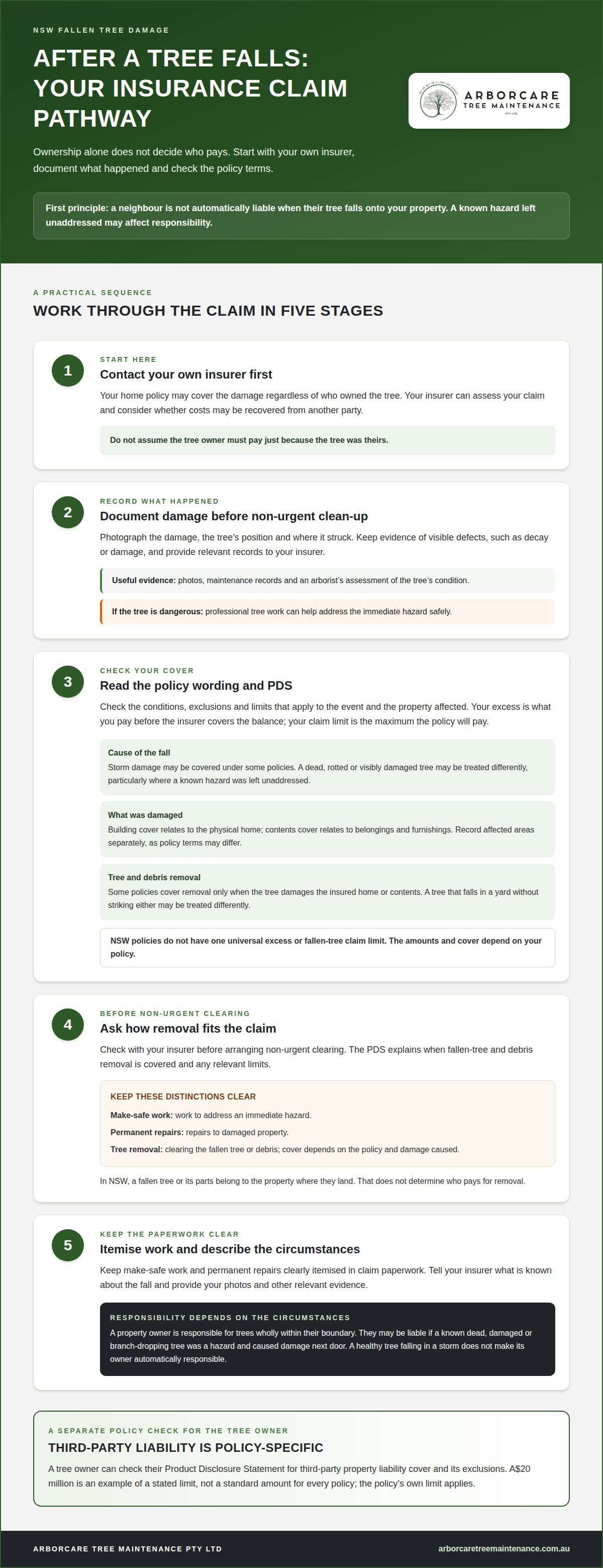
A tree’s owner doesn’t automatically have to pay when it falls onto a neighbour’s property in NSW. The affected owner should contact their own insurer first: an insurance claim for fallen tree damage in NSW may be covered regardless of who owned the tree. Responsibility can depend on whether the tree was a known hazard and what the policy covers.
It’s understandable to expect the tree owner to cover the damage, especially if a roof, fence or other property is affected. But ownership alone doesn’t determine liability, and cover depends on the circumstances and policy terms.
This guide explains who may be responsible, what home insurance may cover, and how to approach urgent make-safe work and permanent repairs. It also outlines evidence that can help clarify what happened, so you can take the next steps with a clearer understanding of the claims process.
Key Takeaways
- A neighbour isn’t automatically liable when their tree falls onto your property. Whether they may be responsible can depend on whether a hazard was known and left unaddressed.
- Contact your own insurer first after damage. Check your policy wording for cover, exclusions, excess and any third-party liability protection.
- Damage linked to a dead, rotted or neglected tree may be excluded, while storm damage may be covered under some policies.
- Keep make-safe work and permanent repairs clearly itemised in claim paperwork, and document the damage before non-emergency clean-up.
- For a dangerous or fallen tree, professional tree work can help address the immediate hazard and manage remaining tree or stump work safely.
Who Is Responsible When a Tree Falls on a Neighbour's Property in NSW?
In NSW, a neighbour isn’t automatically liable when a tree falls across a boundary. Responsibility can depend on the tree’s condition, what its owner knew and the insurance policy wording.
Your excess is the amount you pay before your insurer covers the balance, while your claim limit is the maximum the policy will pay. NSW policies don’t have one universal excess or limit for fallen-tree damage. The amounts and cover that apply depend on your policy.
Tree Owner Responsibility and Third-Party Liability
A NSW property owner is responsible for trees wholly within their boundary. They may be liable if a dead, damaged or branch-dropping tree was a known hazard and caused damage next door. But an owner isn’t automatically liable when a healthy tree falls in a storm. The key question is whether there was a known risk that the owner failed to address.
For an insurance claim for fallen tree damage in NSW, the affected owner should contact their home insurer first. Their policy may cover the damage regardless of who owned the tree, while the insurer considers whether it can recover costs from another party. This gives the affected neighbour a direct claims pathway without assuming the tree owner must pay.
A tree owner should read their Product Disclosure Statement (PDS) for third-party property liability cover. This cover may respond to damage their tree causes to a neighbour’s property, subject to the policy’s terms and exclusions. Australian home insurance liability cover can have a stated limit; A$20 million is an example, not a standard amount for every policy. The policy’s own limit applies.
Storm Damage and Policy Wording
Storm-related cover is insurance protection for damage caused by events such as storms, strong winds or lightning. Many Australian home insurance policies cover these events, but the PDS sets out the conditions, exclusions and claim limits. That wording matters when a storm-felled tree damages a roof, fence or contents, as each item may be treated differently.
Check how your policy defines storm damage and what evidence it requires. A healthy tree falling in a storm is generally treated differently from a neglected tree with known defects. If a neighbour’s healthy tree falls in a storm, the neighbour isn’t automatically responsible. Evidence of a known hazard may affect how liability is assessed.
For example, a policy may cover storm damage to the insured home but apply different terms to a boundary fence or belongings. Contents cover and building cover can apply to different property. The PDS explains which property, events and limits are covered, so read it alongside your insurer’s claim assessment.
Fallen Tree Removal Cover
Fallen-tree removal cover pays for clearing a tree or debris after it falls, but some Australian policies cover removal only when the tree damages the insured home or contents. This distinction matters if a tree falls in a yard without striking an insured structure. The PDS sets out when removal is covered and any relevant limits.
In NSW, a fallen tree or its parts belong to the property where they land. That doesn’t determine who pays for removal: the policy terms and damage caused still matter. Before arranging non-urgent clearing, ask your insurer how removal fits the claim and document the damage and tree’s position.
Does home insurance cover tree damage?
Home insurance may cover damage caused by a falling tree, but the cause, affected property and policy terms matter. Exclusions may apply, so the Product Disclosure Statement (PDS) is central to understanding a claim.
Neglected Tree Exclusions
An exclusion for neglected trees can limit cover when damage results from a hazard the owner should have addressed. A dead, rotted or visibly damaged tree may be treated differently from a healthy tree brought down by another event. For example, evidence that a tree was already decayed could affect an insurer’s assessment of damage to a roof or fence.
Insurers consider the policy conditions and circumstances of the fall. Photos showing visible defects, maintenance records and an arborist’s assessment can help document the tree’s condition. If a neighbour’s tree caused damage, keep relevant evidence and give it to your insurer. The tree owner’s potential responsibility and your own policy cover are separate questions.
Fallen Tree and Debris Removal
Removal cover relates to the cost of clearing a fallen tree and its debris from insured property. Some Australian home insurance policies cover this work only when the tree damages the insured home or contents. A tree that falls across a yard without hitting either may be treated differently under the policy.
Read the PDS for conditions attached to tree removal and debris, including any applicable limits. Contents insurance covers belongings and furnishings, while building cover relates to the physical home. If branches damage both a roof and belongings inside, record each affected area separately when describing the claim.
The cause of the fall also matters. Storms and other events may be covered, but damage from an unrelated event is assessed against the policy’s specific definitions and exclusions. For example, if a tree falls after an impact unrelated to weather, don’t assume storm cover applies. Explain the known circumstances to your insurer and keep photos showing the tree’s position and where it struck.
Branches overhanging a boundary raise a different issue from a fallen tree. In NSW, a neighbour may generally trim overhanging branches back to the boundary at their own cost, but must not enter the neighbouring property without permission. Check with the local council before cutting, as a protected tree may require council permission, including where a tree preservation order applies.
If a tree originated on public land, such as a council nature strip, park or roadway, the relevant local council is responsible for that tree. Contact the council about the hazard and notify your insurer if your property is damaged. Record the location, as a tree on public land and a neighbour’s private tree involve different responsible parties.
For a dangerous tree on private property, an arborist or local council can help assess whether removal is appropriate. Where tree work is needed, professional tree removal can address the hazard safely.
Responsibility when a healthy tree falls in a storm
In NSW, a property owner is usually not liable when a strong, healthy tree falls during a storm. Damage and the insurance claim are assessed separately from responsibility for the tree.
Liability for a Healthy Fallen Tree
Liability concerns who may have to pay for damage caused when a tree falls onto another property. A healthy tree brought down by a storm is generally treated as an act of God, so its owner isn’t automatically responsible for a neighbour’s loss. For example, a sound tree falling onto a fence during strong winds does not, by itself, establish negligence.
The tree’s condition and what its owner knew can still matter. Evidence of decay or earlier branch failures raises different questions from a tree that was healthy before the storm. An arborist’s report can describe the tree’s condition and how it failed. Keep the report, photographs and relevant records together for the insurer’s assessment.
Storm Damage from Fallen Trees
Storm damage from a fallen tree is physical damage caused by a storm event, such as a tree striking a roof or fence. Many Australian home insurance policies include storms, strong winds and lightning among covered events. The policy wording determines which damage and removal costs qualify, so both the cause of the fall and the affected property matter.
For example, a storm may bring down a tree onto a house, damaging the roof and household belongings inside. Building insurance relates to the physical building; contents insurance relates to belongings and furnishings. A home and contents policy may cover both categories, but the PDS sets out the applicable cover, conditions and exclusions.
After a storm, the insurer assesses damage caused by a fallen tree on the insured property and considers whether it can recover costs from another party. The tree or its parts belong to the property where they land, but that doesn’t automatically make the landholder liable. It identifies where the fallen material is; liability depends on the circumstances of the fall.
Before non-emergency clean-up changes the scene, record what happened. Photograph the tree’s position, the point where it failed, the impact area and any visible defects. These details can help distinguish storm damage from signs of a pre-existing problem. If a healthy tree falls onto a neighbour’s roof, the affected owner can claim through their insurer and provide the photos for assessment.
List each type of damage separately, such as roof damage, a damaged fence and affected contents. This shows which parts of the property were damaged and helps the insurer review the relevant cover. Keep any arborist findings with those records, particularly if the tree’s condition is disputed. Storm damage and tree-owner liability are related, but they are separate decisions.
Emergency make-safe work versus permanent repairs
After a tree falls, make-safe work addresses immediate hazards, while permanent repairs restore damaged property. Keep these stages distinct in your insurance claim records, as they involve different work and documentation.
If a tree lands on your home or car in NSW, keep people clear of the affected area and contact your insurer. Photograph the damage and tree’s position from a safe place, then arrange urgent work to address immediate hazards.
Make-safe work addresses immediate risks, such as a damaged roof exposed to the weather or unstable tree sections. It may include securing an affected area and removing dangerous material. Permanent repairs come later, restoring the roof, fence or other damaged property. Record which work addresses immediate safety and which restores the property.
The first 24 to 48 hours after tree damage are for safety and evidence gathering. Take photographs of the tree’s position, failure point and impact zone before non-emergency clean-up. Include visible damage to the building, boundary fence or car. If an unstable tree prevents close photographs, keep clear and document what can be seen safely.
Ask for make-safe work and permanent repairs to be listed separately in claim records. Keep invoices, written quotes and photographs for each category. For example, record temporary roof protection as make-safe work, then list the later roof replacement as a permanent repair—engaging specialists such as Roof Plumbing Expert can ensure roofing and gutter damage is accurately assessed and quoted. This gives the insurer a clearer record of what each expense covers.
A tree can damage shared property as well as a home. In NSW, the costs of repairing a dividing fence are split equally between two neighbours, or proportionally among more neighbours. Keep fence repairs separate from building repairs in your records. A fallen tree that damages both a fence and a roof creates distinct repair items.
A wall on a property boundary is different from a dividing fence. A boundary wall may raise separate repair responsibilities for adjoining properties. Document the wall damage separately from tree removal or make-safe work. This keeps the shared repair issue clear alongside the home insurance claim.
For a car damaged by a fallen tree, comprehensive car insurance covers repairs in the example provided, while the owner pays tree removal costs. Keep vehicle repair records separate from tree-clearing records. Tell the insurer what happened and retain photos showing the car’s position and impact damage.
Urgent tree removal and permanent building repairs serve different purposes. Make-safe work reduces immediate hazards; it doesn’t necessarily complete the repair. Document each stage, including the work done, affected area and related quote or invoice. Clear records explain how the fallen tree caused damage and what each repair addresses.
Insurance claims for fallen tree damage
A clear claim connects the tree’s failure, the resulting property damage and the cover in your policy. Keep evidence and correspondence organised so the insurer can assess each part of the loss.
Making a Fallen Tree Claim
Making a fallen-tree claim means notifying your insurer and providing details of the event and damage. This starts the assessment and helps identify which policy terms apply. Describe where the tree fell, what it struck and when the damage occurred. Record building damage, contents and removal work separately.
For an insurance claim for fallen tree damage in NSW, contact your own insurer and provide photographs, a written repair quote and any arborist report. Before non-emergency clean-up, capture the tree’s position, failure point, impact area and visible defects. If a neighbour’s tree is involved, record its location and share relevant evidence with the insurer.
Keep the claim focused on what was actually damaged. A fallen tree may damage a roof, fence, vehicle or household contents, and each item may involve different cover. Describe each item plainly, then match it to a quote or photograph. Don’t assume tree removal is covered just because other storm damage qualifies.
Claim handling takes time. The first two weeks are usually spent with the insurer acknowledging the claim and arranging an inspection. Assessment, review of causation and settlement discussions often occur in weeks three to eight. Repairs may begin, or a dispute process may start, from weeks eight to twelve onward.
Disputing an Insurer’s Decision
Disputing a decision means asking the insurer to review its assessment or explain how the policy wording applies. This may be relevant if the insurer declines an item, limits the proposed repair or disputes the cause of the damage. A written decision gives you a clear point to respond to.
Ask the insurer to identify the relevant policy term and explain its decision in writing. Compare that explanation with your PDS, then respond to the specific issue in dispute. For example, if the insurer attributes roof damage to neglect, provide photographs or an arborist’s findings about the tree’s condition and how it failed.
Submit supporting material through the insurer’s complaints process and keep copies of each application, report and reply. State which decision you dispute, what evidence addresses it and what outcome you seek. If repair quotes differ, explain the work included in each quote rather than relying only on the total.
Keep evidence linked to each damaged item. A photograph of a damaged fence, a roof repair quote and an arborist report each answer different questions. Organised records help clarify whether the disagreement concerns policy wording, the cause of the fall, liability or the scope of repairs.
Arborcare Tree Maintenance
Arborcare Tree Maintenance Pty Ltd can help address tree hazards and fallen-tree work at your property. If a damaged or unstable tree remains after an incident, our licensed and insured arborists can assess the tree and carry out appropriate work. Your insurer handles questions about policy cover and property repairs.
Tree Removals, Complex Tree Removals, Palm Tree Removals, Hedging, Pruning & Trimming and Stump Grinding address different needs, from removing a hazardous tree to managing remaining branches or a stump. The right work depends on the tree and site conditions.
For tree concerns at your Illawarra property, contact Arborcare Tree Maintenance Pty Ltd to discuss the work needed.
Take the next step with confidence
Once the immediate claim matters are underway, consider what the incident means for trees still standing on your property. A fallen limb may draw attention to other branches or trees that need assessment. Keeping future tree maintenance separate from insurance repairs helps you plan each task clearly, rather than treating every tree concern as part of the same claim.
Arborcare Tree Maintenance can help with ongoing tree work, including Tree Removals, Hedging, Pruning & Trimming, and Palm Tree Removals. The appropriate work depends on the tree and site. An insurance claim for fallen tree damage in NSW remains a matter for your insurer and policy, while professional tree work can address hazards on your property.
If tree work is your next step, contact Arborcare Tree Maintenance to discuss your property’s needs. A clear plan can help you move forward calmly and make informed decisions about the work ahead.
Frequently Asked Questions
Who pays for what?
Payment depends on the damaged property, the policy and whether another owner may be liable. Your home insurer can assess insured building damage, while contents cover applies to belongings and furnishings. You pay the excess stated in your policy, and the insurer’s payment is subject to the applicable claim limit. A neighbour may be responsible if they failed to address a known tree hazard, but ownership alone doesn’t establish liability.
Does NSW home insurance cover damage caused by a fallen tree?
It can, if the cause of the fall and the damaged property meet the policy terms. For example, storm damage to a roof may be assessed under building cover, while damage to furniture may fall under contents cover. Check the PDS for covered events, exclusions, excess and limits. Describe each damaged item separately when lodging the claim, so the insurer can assess the relevant cover.
Who is responsible if a neighbour's tree falls onto my property in NSW?
Your neighbour isn’t automatically liable simply because the tree grew on their land. Liability may depend on whether the tree was dead, damaged or known to drop branches, and whether the owner knew of the hazard. Contact your insurer about your property damage and preserve evidence of the tree’s condition. If the owner had ignored a known risk, that evidence may be relevant to recovery or liability.
Does insurance cover tree removal and debris cleanup after storm damage in NSW?
Some policies cover removal only when the fallen tree damages the insured home or contents. A tree that lands in the garden without damaging either may be treated differently. Check the PDS for removal conditions and limits before arranging non-urgent clearing. If branches damaged several areas, record the debris and each impact location separately to distinguish removal from repairs to insured property.
How do I lodge a fallen-tree insurance claim in NSW, and what evidence is required?
Contact your insurer, explain when and how the tree fell, and list each damaged item. An insurance claim for fallen tree damage in NSW is easier to assess when supported by clear records. From a safe location, photograph the tree’s position, failure point, impact area and visible defects. Keep repair quotes and any arborist report, then provide them with your claim details.
Can I claim for damage from a tree that was diseased, dead, or poorly maintained?
You can lodge a claim, but the insurer may assess whether neglect or a known hazard is excluded by the policy. A dead or rotted tree can raise different questions from a healthy tree brought down by a storm. Relevant evidence may include earlier photographs, maintenance records or an arborist’s findings. The tree owner’s potential liability is separate from whether your own policy covers the damage.
Does home insurance cover damage caused by council-owned trees in NSW?
Your home policy may cover insured property damage, while the relevant council is responsible when the damaging tree originates on public land. Contact your insurer about the damage and notify the council of the tree’s location, such as a nature strip, park or roadway. Keep a record of both notifications. The tree’s public-land origin helps identify the responsible authority, but doesn’t determine insurance cover.
Can an insurer reject a fallen-tree claim, and what exclusions should I check?
An insurer can decline a claim or part of it if the policy excludes the cause or type of loss. Check the PDS for exclusions relating to neglected trees, storm events, removal costs and insured property. If you disagree, ask the insurer to explain its decision in writing and identify the policy wording it relied on. Respond to that specific reason with relevant photographs, quotes or arborist evidence.


