

An overgrown hedge doesn’t always need to be removed to regain a tidy shape. Formal hedge shaping in Dapto can restore its outline through careful, staged pruning while retaining growth for privacy screening. The right approach preserves the hedge’s health as well as its clean lines.
It’s frustrating when a hedge has grown unevenly, lost its formal shape or started to leave gaps in your screening. Shaping can bring overgrown growth under control, maintain privacy and create crisp geometric forms without cutting blindly into the plant. The method depends on the hedge, its condition and your desired finish. Regular maintenance helps retain the shape, and clearing the clippings leaves the garden tidy.
Key Takeaways
- Choose hand shears or powered trimmers to suit the hedge’s size, growth and condition, then shape it gradually for an even finish.
- Keep privacy screening dense by managing height, width and foliage, with trimming frequency guided by the plant’s growth.
- Clear clippings after trimming to leave the garden tidy and reduce the risk of pests and disease.
- Overgrown hedges may be recoverable through staged pruning, but the approach depends on the plant and how much old wood it can tolerate.
- For crisp geometric edges, maintain a consistent outline and a base slightly wider than the top so light can reach lower branches.
Hand shears or powered trimmers?
Choose tools according to the hedge’s species, maturity, growth pattern, sun exposure and condition. Hand shears suit selective cuts on small sections or around delicate shoots. Powered trimmers cover longer, accessible faces efficiently, but require controlled passes to avoid cutting too deeply. For a formal hedge, aim for an even surface without damaging internal branches or active growth points.
Start with an assessment, not the trimmer. Identify thin patches, woody sections, uneven edges and the hedge’s intended height and width. Check how sunlight reaches the lower branches, then choose a trimming strategy that preserves useful screening. If the plant flowers, time pruning for after flowering to avoid reducing the next display. Avoid cutting during extreme heat, frost or drought.
For a crisp outline, begin at the bottom and work upwards, keeping each side even. Use a guide line or clear visual reference to maintain a consistent plane along a long boundary. On a taller hedge, keep the base slightly wider than the top so light can reach the lower foliage. Make controlled cuts, then step back and inspect the line before removing more growth.
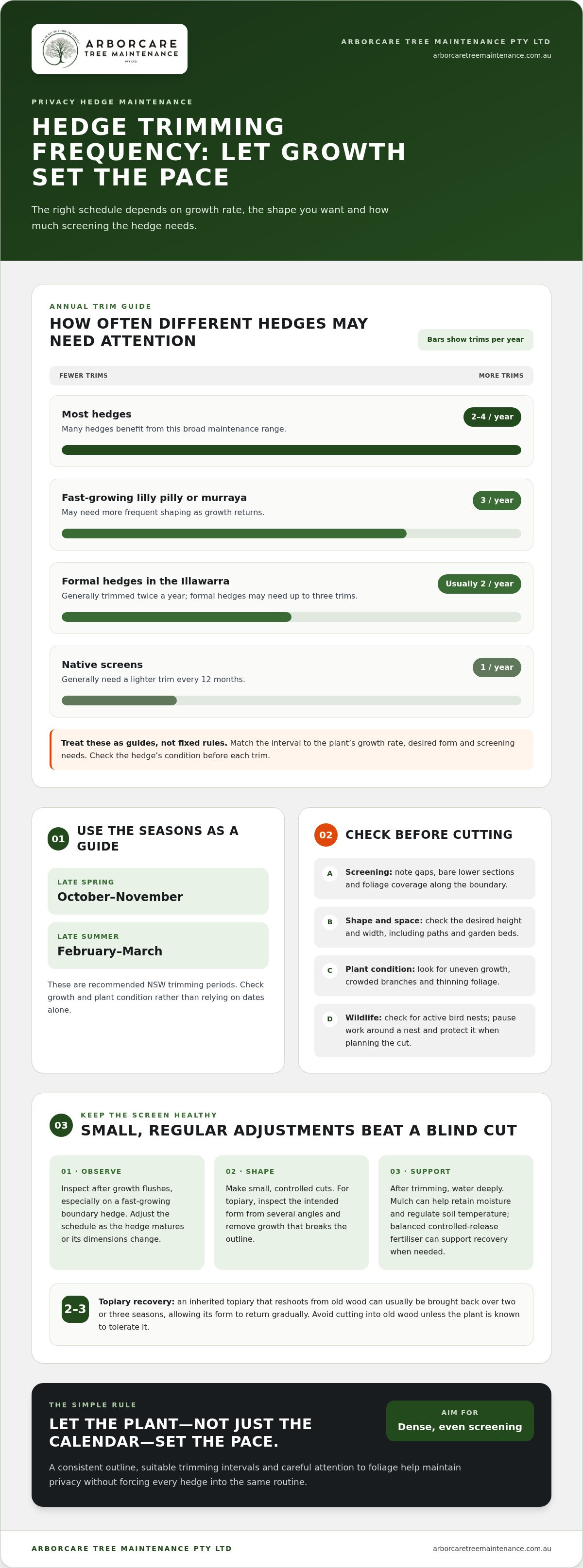
In NSW, late spring, October to November, and late summer, February to March, are recommended hedge-trimming periods. These are seasonal guides, not a substitute for checking growth and plant condition. A fast-growing lilly pilly or murraya may need more frequent shaping than a slower native screen. Most formal hedges in the Illawarra are generally trimmed twice a year; fast-growing lilly pilly and murraya may need three trims a year. Native screens generally need trimming every 12 months.
There isn’t one trimming interval that suits every species. Match the schedule to the hedge’s growth rate, desired form and screening needs. For example, inspect a fast-growing boundary hedge after each growth flush, while a slower-growing screen may need only a lighter annual trim. Consider flowering periods before setting dates. Regular, light pruning helps maintain a defined shape without relying on one severe cut.
For Dapto properties, NSW’s high-hedge pathway concerns a group of two or more trees planted as a hedge, at least 2.5 metres tall, that severely obstructs sunlight to a dwelling window or a view from a dwelling. Under Part 2A of the Trees (Disputes Between Neighbours) Act 2006, applications go to the NSW Land and Environment Court. This is a neighbour-dispute pathway, not a general hedge-trimming schedule.
Before trimming, check the hedge for active bird nests and avoid disturbing nesting wildlife. If a nest is present, pause work around that section and plan the cut to protect it. A careful inspection, suitable tools and species-aware timing help keep formal lines tidy while protecting healthy growth.
Privacy screening hedge maintenance
A privacy hedge needs enough density to screen sightlines without becoming an unmanaged wall. Assess its height, width and foliage coverage along the whole boundary. Look for gaps between branches, bare lower sections and growth leaning into paths or garden beds. These signs help determine which areas need selective pruning and which need simple surface trimming. A consistent outline also makes the screen look deliberate from both sides.
Set a maintenance schedule around the plant’s growth rate and the level of privacy required. Most hedges benefit from 2-4 trims per year, while formal hedges may need trimming up to three times per year. Quarterly, every six months or annual visits can suit different garden plans. A fast-growing screen may need closer observation than a slow-growing one. Adjust the timing as the hedge matures or its desired dimensions change.
Topiary needs a more precise routine than a broad privacy screen. First, identify the intended form, such as a sphere, cone or clean geometric block. Then inspect the outline from several angles and remove growth that breaks its shape. Small, controlled cuts help preserve the structure without stripping foliage from one area. An inherited topiary that reshoots from old wood can usually be recovered over two or three seasons, allowing its form to return gradually.
Let the plants, not just the calendar, guide maintenance. Check for uneven growth, crowded branches and thinning foliage before each trim. Avoid cutting into old wood unless the hedge plant is known to tolerate it. After trimming, water the hedge deeply; mulch around its base can help retain moisture and regulate soil temperature. A balanced controlled-release fertiliser can support recovery when the plant needs an extra boost.
Tailored garden maintenance also considers how the hedge works with nearby plants, paths and usable space. For example, a screen beside a narrow walkway needs a controlled width, while a boundary hedge may need a continuous line for privacy. Note the areas that need screening most, then maintain those sections without forcing every plant into the same schedule. For help planning hedge maintenance and shaping, choose a routine that matches your garden’s growth and desired form.
Clippings removal and clean-up
Clippings left beneath a hedge can hide the finished edge and make garden paths untidy. They can also increase the risk of pests and disease, so clear material from the hedge base after trimming. Work along the full length, including the boundary side and spaces beneath low branches. Check nearby beds, lawn edges and paving for stray leaves or cut stems.
Collect trimmings as you go, rather than letting them build into a thick layer. For a long boundary, divide the hedge into manageable sections and clear each one before moving on. This keeps cut foliage away from remaining growth and makes missed branches easier to spot. A viburnum hedge, for example, can shed leaves and woody pieces that need separate attention during the final sweep.
Use a rake on accessible ground and collect by hand around delicate plants or garden features. Keep clippings out of paths and drains, and avoid dragging heavy piles across lawn edges. Inspect the finished area from both sides of the hedge. Remove lodged leaves from branch forks, then check the ground again for pieces caught beneath shrubs or against a fence.
Tool condition affects both the cut and the clean-up. Sharp, clean pruning tools help make neat cuts and support plant health. Before starting, inspect shears and powered trimmers for dirt, sap or damaged cutting edges. Clean away residue, then sharpen blunt blades using a method suited to the tool. Follow the equipment maker’s instructions, especially for powered equipment, and switch it off while inspecting blades.
Clean tools between plants to avoid carrying sap, dirt or plant material across the garden. A clean blade also moves more predictably through stems, helping maintain a tidy outline instead of tearing growth. Store tools dry after use, with guards fitted where supplied. Check hand shears for loose fastenings and powered trimmers for visible damage before the next job.
Once the clippings are collected, separate larger woody pieces from lighter leafy material if your garden’s green-waste arrangements require it. Council collections may have different requirements for accepted material and preparation. Keep the pile contained until disposal, rather than leaving it beside a fence or on a shared path. Finish by sweeping hard surfaces and checking that no loose foliage remains around garden furniture, gates or access points.
A clear work area makes the hedge’s final shape easier to assess. Look for missed shoots and uneven sections only after removing the debris. That last inspection helps distinguish stray clippings from growth that still needs attention, leaving both the plants and surrounding garden neat.
Can you bring an overgrown hedge back?
Yes, an overgrown hedge can often be restored through selective pruning rather than removal. Check the species, woody growth and healthy foliage before deciding how much to cut.
Rejuvenating Woody Hedges
Rejuvenation addresses dense, woody growth that has lost its shape or screening value. Inspect the hedge for live shoots, bare sections and branches that still carry healthy foliage. Old wood matters: don’t cut into it unless the plant is known to tolerate that treatment. This assessment helps identify where careful thinning can open the structure and where a lighter trim will preserve useful growth.
For a woody hedge, avoid removing growth across the whole plant in one uncontrolled pass. Work section by section, removing dead or crossing branches before shaping the outer surface. Check the result from both sides, as a neat front can conceal bare growth behind it. A lilly pilly screen, for example, has its own growth pattern and shouldn’t be treated like every other hedge.
Renovating Overgrown Hedges
Renovation restores a hedge’s height, width and outline in stages. First, identify the shape you want and mark sections that obstruct paths, windows or garden space. Then remove selected growth while retaining healthy branches that support screening. A staged approach gives the remaining foliage room to maintain structure, rather than leaving a sudden bare face.
Compare the hedge’s current form with its original purpose. A boundary screen may need its lower branches retained for privacy, while a formal feature may need a straighter top and sides. Note the most uneven areas, then tackle them progressively. This makes it easier to monitor fresh growth and adjust the outline without making every cut at once.
Restoration also depends on how the plant responds to pruning. Identify whether new shoots emerge from older wood or mainly from leafy outer growth. That distinction affects where cuts can safely go. If the hedge has extensive bare wood and few live shoots, retain healthy growth while shaping the sections that can still provide cover.
After each pruning stage, inspect the hedge for gaps, exposed branches and competing shoots. Keep the intended height and width in view, and avoid cutting beyond the plant’s ability to support its form. Regular, measured attention can guide the hedge towards a more attractive outline while preserving its privacy.
Severe reshaping can leave a hedge exposed, so plan the work around its condition and function. A screen beside a neighbour’s fence, for example, may need its boundary coverage preserved throughout renovation. Remove growth selectively, reassess the shape, then continue only where healthy branches can maintain the hedge’s structure.
Formal hedge shaping and geometric forms
Geometric shaping depends on a clear outline, suitable plant growth and measured cutting. Before trimming, choose the form: a level rectangular screen, tapered panel, rounded edge or repeated topiary shape. Each form changes how the hedge meets light, space and nearby garden features. A crisp result comes from consistent lines, not simply removing more foliage.
Start by viewing the hedge from both ends and from the front. Identify dips in the top, bulges along the sides and gaps that affect the silhouette. Use a taut guide line for a long, level top, or mark a reference point at each end. For a curved form, work in short sections and compare each curve with the next. These checks help keep the design coherent along the whole hedge.
Height and width should suit the plant’s condition and the space around it. A hedge beside a path needs clearance, while a boundary screen must retain useful coverage. Don’t force a square profile if lower branches are already thin. A slight taper can help light reach the base. The final shape should balance the intended geometry with healthy foliage and the hedge’s natural growth pattern.
Use controlled passes rather than cutting deeply to correct every uneven edge at once. Trim a small area, step back, then compare it with the guide line. Remove isolated shoots that break the outline before adjusting the larger surface. For a long boundary, assess each section from the same viewing angle. Changing position repeatedly can make a straight line appear uneven.
Precision matters most at corners, curves and transitions between hedge sections. At a right-angle corner, define each face separately, then check where they meet. For a rounded end, remove growth gradually around the curve instead of flattening it. Repeated cones or spheres need consistent spacing and proportions. A simple cardboard profile can help compare matching forms without relying on memory.
Plant response sets practical limits. Inspect the outer foliage and internal branches before each shaping session. Avoid cutting into old wood unless the species tolerates it, and don’t remove active growth points indiscriminately. If one side is sparse, preserve its foliage while refining the denser side. The best geometric form is one the hedge can maintain through regular, measured trimming.
For formal hedge shaping in Dapto, plan the desired outline before cutting and keep checking the line as work progresses. A clear plan reduces uneven corrections and protects the screen’s function. Arrange precise hedge shaping to establish clean geometric edges and a practical maintenance approach.
Arborcare Tree Maintenance: Tree Removals
Arborcare Tree Maintenance Pty Ltd provides Hedging, Pruning & Trimming for Dapto properties where a hedge needs shaping, maintenance or staged restoration. It’s a practical option when uneven growth affects privacy, formal lines or access around the garden. If a hedge is too damaged or unsuitable to retain, Tree Removals may address that separate need. Palm Tree Removals and Stump Grinding are also available for related tree work.
When discussing work on a hedge that can be kept, describe its condition, desired shape and screening needs. This helps define the practical scope, from trimming the outline to managing overgrown sections. Contact Arborcare Tree Maintenance Pty Ltd to discuss hedge shaping or tree work for your property.
Plan the next step for your garden
A hedge can shape how your garden feels as well as how it looks. Before arranging work, consider what you want the boundary to do next: define a pathway, screen a window or create a strong green feature. That purpose gives the finished shape a clear role, rather than making it simply a neat edge.
For formal hedge shaping in Dapto, consider how the garden may change. New planting, a gate or an altered outdoor seating area can affect the hedge’s preferred height and width. Sharing those priorities helps guide the work towards a shape that suits your property and remains practical to maintain.
Arborcare Tree Maintenance Pty Ltd can help with hedge work and related tree needs. Contact Arborcare Tree Maintenance Pty Ltd to discuss your property and the outcome you’re aiming for. A considered plan can make the next step feel straightforward and help your garden work better for you.
Frequently Asked Questions
Do you take the clippings with you?
Clippings should be cleared from the hedge base and garden after trimming, but off-site removal is a separate disposal arrangement. Don’t assume every hedge service includes taking green waste away. If you want the area left clear, make clippings removal part of the agreed work scope. Mulching is another way to process suitable green material when that service is arranged.
When is the best time of year to trim hedges in NSW?
Late spring, October to November, and late summer, February to March, are recommended hedge-trimming periods in NSW. Choose based on the hedge’s species and current growth, rather than applying the dates automatically. For example, schedule flowering hedges after their flowers finish. Avoid trimming during extreme heat, frost or drought, when conditions can place extra stress on plants.
What formal hedge shaping services are available in Dapto, NSW?
Arborcare Tree Maintenance Pty Ltd provides Hedging, Pruning & Trimming in Dapto. This suits homeowners seeking a defined outline, a tidier boundary or help controlling uneven growth. Before work, identify the hedge’s intended shape and the areas needing attention, such as a low section beside a path. That gives the shaping work a practical purpose as well as a clear visual goal.
Which landscapers offer formal hedge trimming in Dapto?
Arborcare Tree Maintenance Pty Ltd offers hedge trimming in Dapto through its Hedging, Pruning & Trimming service. As a licensed arborist company, Arborcare is suited to work where a hedge includes substantial woody growth or sits close to trees. Consider the job itself: routine shaping differs from restoring a neglected hedge, and the scope should reflect the plant’s condition and the finish you want.
What hedge plants are best for formal hedges in Dapto’s climate?
No single plant suits every Dapto garden. Choose a species by considering its growth habit, the screening you need, available sun and the shape you want to maintain. Lilly pilly and murraya are examples of fast-growing Illawarra hedges; native screens are another option. Compare how each plant fits your space and maintenance preferences before choosing, rather than selecting on appearance alone.
How often should formal hedges be trimmed in Dapto?
Most formal hedges in the Illawarra are generally trimmed twice a year, while fast-growing lilly pilly and murraya may need three trims a year. Growth rate and the sharpness of the desired outline affect the schedule. Watch for shoots disrupting the form, then plan maintenance around the plant’s condition. A native screen may need a lighter routine than a tightly shaped feature hedge.
How do you shape a formal hedge with straight sides and a level top?
Mark the intended top line and side profile before cutting. For a long hedge, use a taut guide line as a visual reference, then trim each face in consistent sections. Check corners and ends from the same viewpoint to spot dips or bulges. Keep the base slightly wider than the top so lower branches receive sunlight and the hedge retains a balanced profile.
Do Dapto hedge trimming services remove and dispose of green waste?
Green-waste disposal arrangements can vary, so confirm what is included before work begins. The work details should make clear whether clippings will be collected, left for your own disposal or processed through a separate service. If material is mulched, check that it suits the intended use. Clearing foliage from paths and garden beds remains important after cutting.


