
A small, regular trim is often easier to manage than a major cutback. For hedge trimming in Dombarton, hiring help can be worthwhile when growth is substantial, access is awkward or the work is beyond your tools and experience. Removing 100 mm of growth is generally easier than reducing a hedge by one metre.
It’s understandable to weigh the cost of professional help against doing the job yourself. The right choice depends on the hedge’s size and condition, how much needs trimming, site access and what you’ll do with the clippings. This guide explains what can affect a quote, when professional help makes sense, which local rules may apply and how to plan around nesting birds.
You’ll also find practical ways to include hedge care in your garden maintenance plan, so you can make an informed decision before work begins.
Key Takeaways
- Plan regular hedge care before growth becomes a major cutback: removing 100 mm is generally easier than reducing a hedge by one metre.
- For a useful trimming quote, describe the hedge’s size and condition, the amount of growth to remove, site access and cuttings to be handled.
- Before work starts, consider property boundaries, shared-hedge arrangements and any council or site-specific requirements that may apply.
- Check for nesting birds and choose a suitable time to trim, rather than relying on a fixed seasonal window.
- Professional trimming can be a practical option when the hedge is overgrown, difficult to access or beyond your equipment and experience.
Hedge care as part of a garden maintenance plan
Plan hedge maintenance alongside lawn and garden care rather than treating each trim as a one-off job. In Dombarton, the hedge’s shape, growth and position help determine what needs attention.
Formal and informal hedge upkeep
A formal hedge needs a consistent outline, so inspect its sides and top before cutting. A straight edge or taut guide can help keep long sections even. Informal hedges have a looser shape: remove dead, diseased or crowded growth without forcing every branch into a flat line. Match your approach to the plant and the look you want.
Practical hedge maintenance tips
Walk the hedge first and mark branches that are dead, damaged or growing across a path. Remove a modest amount at a time: taking off 100 mm of growth is generally easier than reducing a hedge by one metre. Most hedges benefit from trimming 1-2 times per year. Check for nesting birds before starting, and keep tools clear of fences and garden features.
Pruning can improve light and air circulation around nearby plants. Removing excess growth may also support healthier blooms and fruit, depending on the plant. If a hedge shades a garden bed, note where the shadow falls before trimming. This helps you avoid cutting more than needed while making the space brighter for plants beneath it.
Coordinate hedge work with lawn care and other garden tasks. Trim branches that obstruct a mower or narrow a walkway, then clear the clippings before mowing. Check the hedge base for weeds and debris while it’s accessible. Keeping paths clear and growth within its intended space makes routine garden care easier to organise.
To dispose of hedge clippings near Dombarton, separate suitable green material for composting or mulching, and use your council’s green waste bin or collection for the remainder if accepted. Follow the local service’s rules about accepted materials and how to present them.
Regular checks make the next trim easier to plan. Note uneven growth, bare patches and branches reaching into paths or neighbouring areas. If a hedge has become heavily overgrown, avoid removing a large amount in one go. A staged approach can preserve its shape while bringing growth back under control.
Permission and council rules
Before work begins, identify who owns the land, where the hedge sits and what work is planned. In Dombarton, trimming a hedge on your property differs from cutting across a boundary or removing established vegetation. Treat each as a separate decision. Record the address, hedge position and proposed work before discussing requirements with the relevant council.
Start with the property boundary. A hedge rooted on one side may have branches extending over a fence, but that doesn’t mean you can cut every part of it. Keep planned work on your side unless you have the neighbour’s agreement. For a shared boundary hedge, discuss the intended height, width and disposal of clippings first.
Next, distinguish routine trimming from removal. Cutting back a hedge’s outer growth is different from removing plants or disturbing roots. Before removal, consider whether the property has planning controls, conservation constraints or vegetation protections. Wildlife may also affect the timing and nature of the work. Ask the relevant council about the specific site and proposed activity rather than relying on a rule heard elsewhere.
- Confirm the site: note the property address, boundary position and whether the hedge is near a protected area.
- Define the work: describe whether you plan to trim the sides, reduce the height or remove the hedge.
- Speak with affected neighbours: agree on access and the boundary line before branches are cut.
- Check tenancy responsibilities: renters can review their agreement and discuss outdoor maintenance with the property manager.
Height alone isn’t a universal test for whether work is permitted. Rules discussed for overseas locations may not apply to a Dombarton property in NSW. When seeking council guidance, describe the hedge’s height and location, and whether the work changes its form, removes the whole plant or affects nearby vegetation. Those details help identify which property controls may apply.
Keep a written record of any neighbour agreement and council advice, including the date and proposed work. If your plan changes from trimming to removal, revisit the requirements before proceeding. A clear description can help prevent a maintenance job from becoming a boundary dispute or an avoidable planning issue.
Preparing a hedge-cutting quote
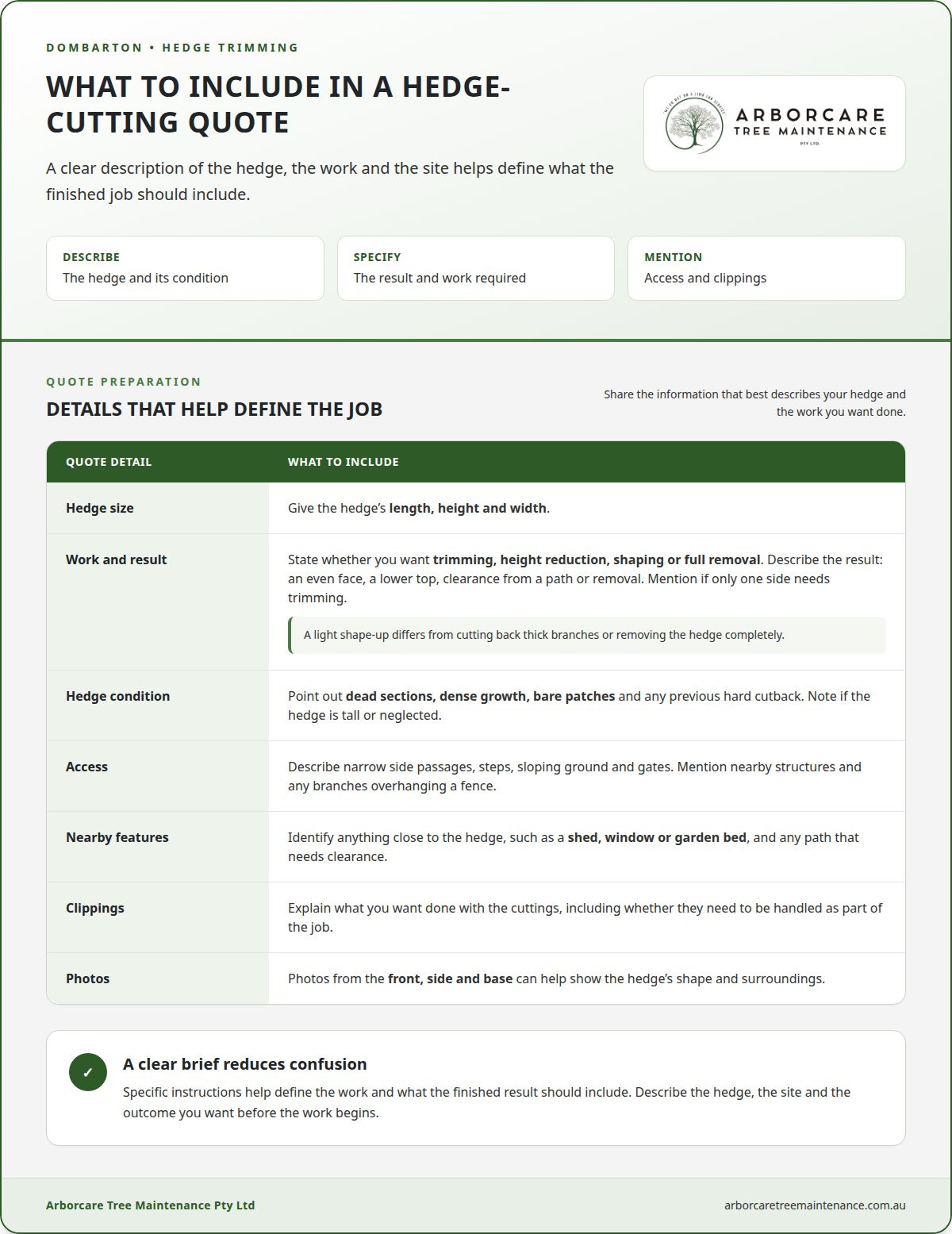
A useful quote starts with a clear description of the hedge and the work you want. For a Dombarton property, note its length, height, width, condition and access. A light shape-up differs from cutting back thick branches or removing the hedge completely.
Describe the result you want. Say whether the hedge needs an even face, a lower top, clearance from a path or removal. If only one side needs trimming, make that clear. Specific instructions define the job and reduce confusion about what the finished work should include.
Access can affect the work plan. Mention narrow side passages, steps, sloping ground, gates and nearby structures. Point out if branches overhang a fence or sit close to a shed, window or garden bed. These details help identify where careful handling or extra setup may be needed.
Give an accurate picture of the hedge’s condition. Point out dead sections, dense growth, bare patches and any previous hard cutback. A tall, neglected hedge may need a different approach from a maintained screen. Photos from the front, side and base can help show its shape and surroundings.
- State the scope: trimming, height reduction, shaping or full removal.
- Show the setting: include access routes, fences and nearby garden features.
- Explain debris handling: say whether you expect cuttings to be collected or left in a nominated area.
- Identify boundaries: mark any shared fence line or neighbouring plants near the work.
Ask for the written quote to specify the work included: which hedge sections are covered, the intended finish and how the clippings will be handled. If the quote covers only the front, for example, don’t assume the rear or top is included. A defined scope makes it easier to understand what the agreed work involves.
The price varies per job. Hedge size, growth density, access, the requested reduction and clippings handling all affect the quote. Share these details together rather than sending a request without context. If site conditions differ from your description, clarify the scope before work proceeds.
Before accepting a quote, compare its stated tasks with your original request. Check that the hedge sections, finish and debris handling match your priorities. If your plans change, such as adding removal after requesting a trim, ask for the scope to be updated first. Clear information helps set practical expectations for the job.
Residential and commercial hedge services
Residential and commercial hedges serve different purposes, so the work plan should suit the site. A backyard screen may need careful shaping around a garden bed, while a business frontage may need clear sightlines near an entrance. Identify the hedge’s function first to set priorities for its shape, access and surrounding outdoor areas.
At home, walk the hedge line and note where it affects daily use. A branch narrowing the driveway, growth brushing a window or foliage covering a path gives you a clear starting point. Mark the areas that matter most, then decide whether the aim is a neat outline, better clearance or reduced screening. This keeps the work focused on how your household uses the garden.
At a workplace, consider how staff, visitors and deliveries move through the property. A hedge beside a car park, loading area or front entry can affect visibility and access. Plan the work around those routes and identify which sections need attention first. For example, a clear entrance may matter more than a rear boundary hedge hidden from public view.
Access varies between properties. A home may have a narrow side passage or outdoor furniture close to the hedge. A commercial site may have gates, signs, parked vehicles or equipment in the work area. Walk the route from the entry point to each hedge section. Move obstacles where practical and note any areas that require careful access.
- Map each section: identify front, rear, side and boundary hedges separately.
- Set the purpose: distinguish screening, privacy, presentation and path clearance.
- Plan around use: identify household routines, customer access or delivery routes.
- Note nearby features: include fences, garden beds, signs and outdoor fixtures.
In either setting, agree on the finish before work starts. A formal business frontage may call for a consistent line, while a residential hedge can retain a softer shape. Record which faces and sections are included. A simple site sketch or clear photos can show the boundary, access points and intended finish better than a broad instruction such as “tidy the hedge”.
Organise regular care around how the property is used. A homeowner might inspect the driveway hedge during routine garden checks, while a manager could add hedge condition to a property maintenance walk-through. In either case, note overhanging branches, blocked paths and changes in shape. These observations help distinguish routine trimming from larger work that needs a different plan.
Before work starts, clear the immediate area and keep people away from the active section. At home, move toys or garden tools from beneath the hedge. At a business, arrange access so customers don’t walk through the work zone. A defined work area and clear instructions help minimise interruptions.
Seasonal timing and nesting birds
Choose trimming dates with the hedge’s growth, local weather and bird activity in mind. A calendar date alone can’t show whether a particular hedge contains an active nest. In Dombarton, inspect the foliage and branches before cutting, then reassess if work is delayed or conditions change.
Nesting activity varies between species and sites. Dense evergreen growth can conceal nests, while loose, open hedges may still provide shelter. Look for repeated bird activity, nesting material or a bird entering the same section. If you spot signs of an active nest, leave that area undisturbed and plan the trim around it.
Make a thorough bird check part of the job, rather than relying on a quick glance. Walk both sides of the hedge and look through accessible gaps before using machinery or hand tools. Check the planned cutting line, not just the outer surface. If the hedge is too dense to inspect safely, don’t force branches apart or cut blindly.
- Inspect first: look for nests, nesting material and repeated bird visits.
- Mark sensitive sections: note where activity occurs so those branches remain untouched.
- Recheck before cutting: repeat the inspection if the work date changes.
- Keep the scope flexible: trim clear sections separately if another area needs to remain undisturbed.
Seasonal pruning should suit the plant as well as the wildlife using it. Different species respond differently to cutting, flowering and fruiting. Before shaping a flowering hedge, check for buds or developing blooms. If it carries berries, consider how a heavy cut would affect its appearance and the shelter it provides.
Weather also affects the work plan. Wet foliage can make branches harder to handle, and wind can move cut material unpredictably. Where practical, choose settled conditions, especially for taller hedges or sections beside paths. If conditions worsen during the job, pause and secure the work area before continuing.
Keep seasonal notes for the next maintenance visit. Record the date, which hedge sections were trimmed and where birds were active. A simple garden diary can reveal recurring activity and growth patterns without assuming every year follows the same schedule. Use those observations to guide future timing while checking the actual hedge each time.
For a hedge that’s difficult to inspect or trim safely, arrange professional hedge trimming with bird activity and sensitive sections clearly identified before work begins.
Arborcare Tree Maintenance: Tree Removals
Arborcare Tree Maintenance can help when a hedge needs more than routine shaping or a tree affects the same outdoor space. Its Hedging, Pruning & Trimming service covers planned hedge care, while Tree Removals are available for trees that need to come down. Palm Tree Removals and Stump Grinding can also help when a palm or remaining stump is part of the property’s maintenance needs.
Consider professional help if dense growth, difficult access or overhanging branches make the work hard to manage safely. If you also need a tree removed, explain both tasks together so the scope is clear. For hedge maintenance alone, describe the hedge’s condition and the finish you want.
Contact Arborcare Tree Maintenance to discuss the work your property needs.
Make your next garden-care decision count
On your next garden walk-through, decide what needs attention first. Look beyond the hedge’s appearance: consider how the space is used, whether branches limit access and whether nearby trees also need attention. Setting a clear priority turns a general maintenance concern into a practical plan.
For hedge trimming in Dombarton, Arborcare Tree Maintenance offers Hedging, Pruning & Trimming, alongside Tree Removals and Palm Tree Removals. If several outdoor tasks affect the same area, describe them together when discussing the work. This gives you a clearer starting point for planning your property’s next maintenance step.
Contact Arborcare Tree Maintenance to discuss the work you have in mind. With a defined priority and a clear plan, you can move ahead with greater confidence and keep your outdoor space ready to use.
Frequently Asked Questions
Is it worth hiring a hedge trimming service?
Professional help can be worthwhile if the hedge is tall, dense or difficult to reach safely. It can also suit property owners who want a consistent finish across a long boundary or several garden areas. A small, accessible hedge may be manageable with routine light maintenance. Consider the equipment, access and amount of cutting involved before deciding who should do the work.
How do I find hedge cutters near me?
Choose a service that works in your suburb and handles the specific task you need, such as shaping, reducing height or removing a hedge. For hedge trimming in Dombarton, Arborcare Tree Maintenance provides Hedging, Pruning & Trimming. When enquiring, share the property location, hedge condition and access details. This helps clarify whether the work is routine trimming or a larger vegetation job.
How long does it take to trim or remove a hedge?
Work time depends on hedge length, height, density, access and whether you want trimming or full removal. A short, accessible hedge involves less cutting and handling than a long screen with thick branches. Removal may also involve roots and restricted access. Describe these details when arranging the work, and plan to prepare the area and manage the resulting green waste.
What about boundary hedges?
For a boundary hedge, first establish where the property line runs and which sections sit on either side. Don’t cut beyond your side without the neighbour’s agreement. If the line is unclear, use property records or existing boundary markers to help identify it before work starts. Agree on access and the intended finish in advance, especially where branches overhang a fence.
What time of year is best to cut hedges?
Choose timing according to the hedge species, its growth and whether birds are nesting in it. Inspect the foliage closely before cutting, as nests can be hidden among dense branches. If you find an active nest, leave that section undisturbed and adjust the work plan. Also consider flowering or fruiting: a heavy cut at the wrong stage can remove buds or developing berries.
What hedge trimming services are available in Dombarton, NSW?
Arborcare Tree Maintenance provides Hedging, Pruning & Trimming for properties in Dombarton and the Illawarra. The right work depends on whether you need light shaping, controlled reduction or broader property maintenance involving trees. Explain which hedge sections need attention and the result you want. If trees are part of the same job, describe them separately so the work can be scoped clearly.
What does hedge trimming cost per hour or metre in Dombarton?
There isn’t a single hourly or per-metre rate that fits every hedge. The job’s size, condition, access, amount of growth and clippings handling affect the quote. Arborcare Tree Maintenance provides a free, on-site quote, and the price varies per job. Describe the work you want, including whether it involves trimming, height reduction or removal, to support a clear assessment.
Which local hedge trimming and gardening businesses serve Dombarton?
Arborcare Tree Maintenance serves Dombarton as part of its Illawarra coverage, with hedge work among its arborist services. For a hedge-only job, describe its location, condition and desired finish. If you need broader garden care, specify the tasks involved. For work involving trees or palms, identify those separately when explaining your property’s needs.


