
A tree can look leafy and still be dangerous. To know if a tree is dangerous, look for a recent lean, lifted or disturbed soil around its base, exposed or decayed roots, deep trunk cracks, cavities, and hanging or broken branches. A lean that has stayed unchanged for years is usually less concerning than one that appears after strong winds or heavy rain.
It’s understandable to feel unsure: some warning signs are clear, while internal decay or root damage can be difficult to see from the ground. This guide explains which changes matter, how a tree’s position near a home, driveway or power line affects the risk, and when to call an arborist. You’ll also learn why a visual check is only an initial assessment and what to do if a tree or branch poses an immediate danger.
Key Takeaways
- A new lean, lifted soil or exposed roots can point to instability, especially after storms or nearby construction.
- Look for dead, hanging or broken branches and unusual branch unions, including tight V-shaped growth.
- Trunk cracks and cavities deserve attention, but a tree can also have hidden decay that isn’t visible from the ground.
- Arrange an arborist assessment when warning signs are near a home, driveway, power line or other area people use.
- For a life-threatening emergency involving a dangerous tree, call 000, according to the Australian Communications and Media Authority. For storm or flood assistance in NSW, contact the New South Wales State Emergency Service on 132 500.
How do you know if a tree is dangerous?
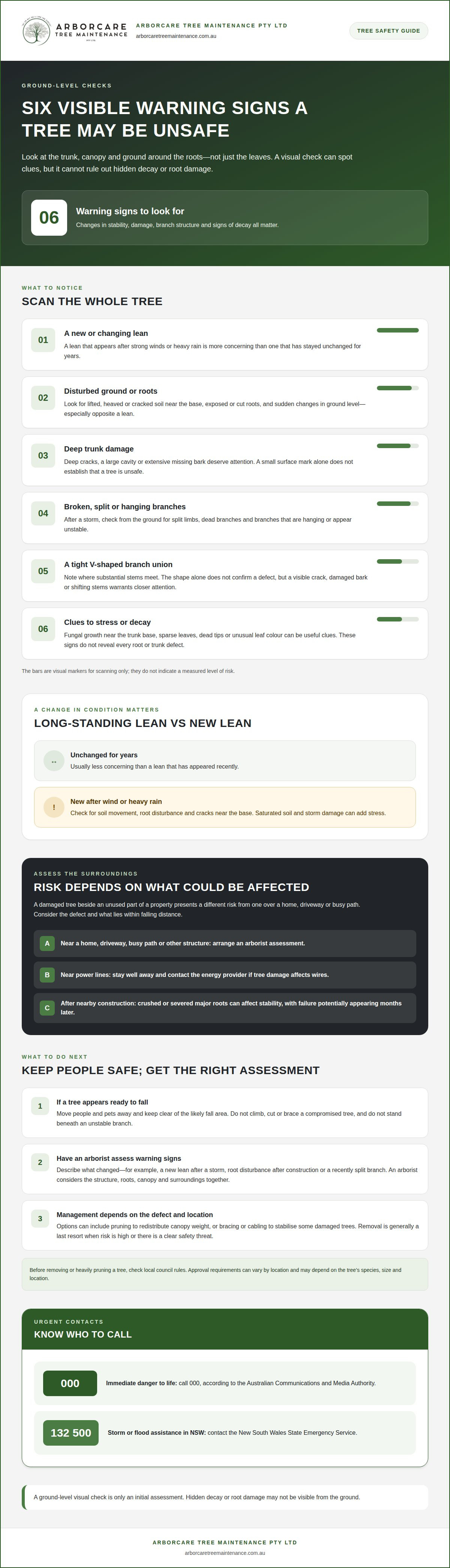
Look for changes in the trunk, canopy and ground around the roots, not just leaf colour. A recent lean, deep trunk damage or lifting soil can indicate structural weakness.
Visible Trunk and Bark Damage
Cavities, deep cracks and missing bark can be visible signs that a trunk has lost strength. A small surface mark doesn’t establish that a tree is unsafe, but a deep split, large hollow or extensive damage deserves attention, particularly if branches above it are dead or hanging.
Fungal growth around the trunk base can point to decay in the trunk or roots. Before removing or heavily pruning a protected tree, check the relevant council rules, as approval requirements can vary by location and tree.
Leaning Trees and Root Movement
A lean that has stayed unchanged for years is usually less concerning than a new lean after strong wind or heavy rain. Check for soil heaving or cracks near the base, especially on the side opposite the lean. These changes can indicate that roots have shifted or lost their hold.
Construction near a tree can crush or sever major roots, with failure potentially appearing months later. Exposed or cut roots, lifted soil and a sudden change in ground level can also affect stability. For a boundary tree, establish which property the trunk stands on and speak with the adjoining owner; responsibility depends on ownership and applicable local rules.
Storm Damage and Environmental Stress
Strong winds, heavy rain and saturated soil can add stress to a tree, while drought can leave it brittle. After a storm, check from the ground for a newly leaning trunk, split limbs, hanging branches and disturbed soil. Don’t climb to inspect damage or stand beneath a branch that appears unstable.
Pests and disease can also weaken a tree by damaging living tissue or contributing to decay. Sparse leaves, dead tips, unusual leaf colour and fungal growth are useful clues, but they don’t reveal every root or trunk defect. The NSW SES can be contacted on 132 500 for storm or flood assistance, according to the New South Wales State Emergency Service.
Responding to Immediate Falling Risk
If a tree appears ready to fall, move people and pets away and keep clear of the likely fall area. Don’t try to cut, climb or brace a compromised tree yourself. If there’s immediate danger to life, call 000, according to the Australian Communications and Media Authority.
If tree damage affects power wires, stay well away and contact the energy provider. For other urgent concerns, keep others clear and arrange an assessment by a professional arborist. A ground-level inspection can identify visible warning signs, but it cannot rule out hidden decay or root damage.
When to consult an arborist
If you’re wondering how to know if a tree is dangerous, consider both its condition and what could be affected if it failed. A damaged tree beside an unused part of a property presents a different risk from one over a home, driveway or busy path. Arrange an arborist assessment when a defect could affect people, buildings or other structures.
A ground-level check can reveal visible changes, but it can’t show every internal defect. An arborist considers the tree’s structure, roots, canopy and surroundings together. Describe what has changed, such as a new lean after a storm, root disturbance following construction, or a branch that has recently split. These details help focus the assessment.
For a life-threatening emergency involving a dangerous tree in Australia, call 000, according to the Australian Communications and Media Authority. Keep people clear while emergency help is arranged. If there’s no immediate threat to life, seek an arborist’s assessment promptly when the tree is near power lines, a building or an area people use.
An assessment can identify different management options. Pruning may redistribute canopy weight, while bracing or cabling can stabilise some damaged trees. The recommended action depends on the defect, the tree’s location and the risk of failure. Removal is generally a last resort when the risk is high or the tree presents a clear safety threat.
Tree removal isn’t decided by appearance alone. An arborist weighs the extent of decay or structural damage, whether targeted pruning can address the hazard, and what lies within falling distance. A defect over a building needs a different risk evaluation from the same defect away from structures. The assessment should explain the hazard and the recommended management action.
Before removing or heavily pruning a tree, consider local council rules. Approval requirements can vary between councils and may depend on the tree’s species, size and location. In the Illawarra, the relevant council rules depend on where the property is, so factor those requirements into the proposed work before removal proceeds.
Understanding how to know if a tree is dangerous also means knowing when not to handle the problem yourself. If assessment points to pruning or removal, professional tree pruning and removal can address the hazard without you taking on high-risk work. The tree’s condition and surroundings guide the practical next step.
Do I need to check my tree?
Yes. A ground-level check can reveal changes in branch structure and canopy condition. Look from different angles in good light, then compare photographs over time.
Branch Structure and V-Shaped Growth
Branch structure describes how limbs join the trunk or divide into larger stems. A tight V-shaped junction is worth noting, particularly where two substantial stems rise from the same point. The shape alone doesn’t confirm a defect, but it can help identify a union that may need closer attention.
From the ground, check whether either stem has a visible crack, damaged bark or a hanging limb. Look for changes at the junction across photographs taken at different times. If a split appears or the stems shift after strong winds, keep people away from the area below and arrange an arborist assessment.
Also consider the canopy above places people use. A broad, heavy branch extending over a roof or driveway has different consequences if it breaks than a limb over an unused part of the yard. Note where the branch reaches and whether it looks damaged, then include that location when describing your concern.
Dead and Hanging Branches
Dead branches have no living leaves or show brittle, dry growth, while hanging branches may be broken but remain caught in the canopy. Both can fall, and deadwood may become more brittle during storms. A single dead tip differs from a large damaged limb over a path, car or roof.
Check for snapped ends, branches resting across other limbs and sections that have changed position. Don’t stand underneath or try to pull down a hanging branch. Its weight and support can be difficult to judge from the ground, and disturbing it may cause it to fall.
Dead branches can indicate stress or declining tree health, but they don’t identify the cause by themselves. Sparse leaves, dead tips or leaves with unusual seasonal colour may accompany root problems, disease or other stress. Record which parts of the canopy are affected and whether the pattern changes in later photographs.
After strong winds or nearby construction, inspect the canopy again from a safe position. Compare the tree’s outline with earlier photographs and note newly broken limbs, fresh damage or branches now hanging lower. Regular inspection and proactive maintenance can help identify changes before they become harder to assess; routine grounds care from property maintenance specialists, such as Snappy Landscaping, plays a vital role in monitoring overall yard health and identifying outdoor hazards early.
If a large limb hangs over a driveway or roof, treat its location as part of the hazard. An arborist can assess the branch and determine whether pruning or trimming is appropriate. Keep people and pets clear of the area below until the damaged limb has been assessed.
What are the most common signs a tree might fall?
A hazardous tree often shows several changes, rather than one clue alone. Compare its canopy, trunk and ground conditions to identify warning signs that have appeared or worsened.
Signs of Tree Instability
Tree instability means the trunk, roots or major limbs may no longer support the tree reliably. Look for a recent change in lean, soil lifting around the base, exposed roots or a crack in the ground. These signs matter because movement at the base can affect stability, particularly after wind or heavy rain.
Check the whole tree from different angles in good light, without walking beneath damaged limbs. A new lean after a storm is more concerning than a longstanding lean that hasn’t changed. Take photographs from a safe position and compare them over time. New movement, fresh cracks in the soil or a trunk that now appears tilted should prompt an arborist assessment.
Canopy condition can add useful context. Sparse leaves, dead tips or leaves with unusual colour for the season may indicate stress, disease or root problems. A compact trunk supporting an expansive canopy can also signal structural weakness. These clues don’t prove failure is imminent, but they’re more concerning alongside a recent lean or disturbed ground.
Consider the tree’s surroundings as well as its visible condition. A heavy branch over a roof, driveway or regularly used path has greater consequences if it fails. Strong winds, saturated soil and heavy rain can increase the load on a tree. A warning sign near a building or busy area makes an assessment more urgent than the same defect away from people and property.
Defects Linked to Branch or Trunk Failure
Defects linked to failure include deep trunk cracks, large cavities, decayed roots, split limbs and branches that are broken or hanging. They matter because weakened wood or damaged root support can reduce the tree’s ability to carry its weight. A surface mark alone doesn’t show how much sound wood remains inside.
Look for combinations. For example, a cavity with fungal growth near the base, a crack extending along the trunk, or a large limb attached at a visibly split junction warrants attention. Decay affecting more than one-third of a trunk’s diameter severely reduces its strength. A ground-level visual check cannot reveal every internal defect, so treat visible signs as indicators, not a complete diagnosis.
One warning sign may have several possible causes, and some trees conceal internal decay. The pattern, location and change over time help distinguish a concern that needs monitoring from one requiring urgent action. Record what is visible from the ground, including the affected limb or trunk area, and note whether the tree’s condition changes after weather or nearby work.
Trunk cracks, cavities and internal decay
Cracks, cavities and fungal growth can point to weakened wood, but their appearance alone doesn’t establish a tree’s stability. The defect’s size, position and effect on the remaining sound wood all matter.
Cracks and Splits in the Trunk
A trunk crack is a visible separation in the bark or wood; a split may extend deeper through the trunk. Deep cracks or splits can affect structural strength, especially if they widen, run along the trunk or appear beside a major limb.
Some species develop superficial cracks as they grow, and these can be harmless. Look from the ground for fresh edges, exposed wood or a crack that continues into a branch junction. Don’t probe the opening or cut into the tree. Note its location and whether it changes in later photographs.
Several defects together deserve more attention than a small surface mark alone. For example, a deep split combined with a heavy canopy or a large cavity may indicate reduced strength. A professional arborist can assess how the defect relates to the tree’s overall structure and surroundings.
Hollow Trunks and Internal Decay
A hollow trunk contains a cavity where wood has decayed or been lost, while internal decay can weaken wood beneath apparently intact bark. A hollow tree isn’t automatically unsafe: the remaining sound wood and the tree’s overall condition affect its strength.
Large cavities with a thin wall of remaining wood can significantly reduce strength. Decay affecting more than one-third of a tree trunk’s diameter severely reduces its strength. Fungal growth at the base can indicate decay in the trunk or roots, although visible fungus doesn’t show the full extent.
Even a tree with healthy-looking leaves may have hidden decay, weakened roots or trunk cavities. That’s why a ground-level visual check can’t rule out internal defects. Avoid inserting tools into cavities or climbing to inspect them. Record visible changes and seek an arborist’s assessment if a cavity is large, the remaining wall appears thin, or the trunk has a deep crack.
Tree species and the location of the defect help shape the assessment. A cavity near a major branch union, for instance, can have different structural implications from one lower on the trunk. The tree’s size, canopy and nearby targets also matter. Before removing or heavily pruning a protected tree, check applicable council rules.
If an assessment identifies a tree that needs removal, arrange professional tree removal rather than attempting the work yourself. Cracked or decayed trunks can behave unpredictably during cutting, particularly when the defect affects how the tree carries its weight.
Arborcare Tree Maintenance
Arborcare Tree Maintenance Pty Ltd can assess concerning tree damage and identify practical next steps. If you’ve noticed a new lean, cracked trunk, dead branches or visible decay, an arborist can consider the tree’s condition alongside nearby homes, driveways and other areas people use.
Depending on the findings, appropriate work may include pruning or trimming to address hazardous branches, or tree removal where a tree presents a clear safety risk. The right response depends on the tree and its surroundings, not on one warning sign alone.
If you’re concerned about a tree on your property, contact Arborcare Tree Maintenance Pty Ltd to discuss the signs you’ve observed.
Make a safe plan for your property
Working out how to know if a tree is dangerous can feel difficult when its condition is changing or the warning signs are unclear. Your next step doesn’t need to be a decision to remove it. A professional assessment can help clarify whether the tree needs attention and what work suits its condition and surroundings.
Arborcare Tree Maintenance provides tree removals, hedging, pruning and trimming, including palm tree removals. The right service depends on what the tree needs, whether that’s managing hazardous growth or addressing a tree that presents a safety concern. Avoid climbing or cutting a tree you suspect is unstable.
If you’re concerned about a tree on your property, contact Arborcare Tree Maintenance to discuss the situation and a practical next step. Taking action thoughtfully can help you protect people and property while making a clear plan for the tree.
Frequently Asked Questions
Can a healthy-looking tree still be unsafe?
Yes. A full canopy and green leaves don’t rule out defects inside the trunk or beneath the ground. For example, a tree may look vigorous while a cavity weakens its trunk or construction has damaged its roots. If its appearance seems reassuring but there’s a new change in the tree’s position or structure, keep people clear of nearby hazards and arrange a professional assessment.
Does a leaning tree need to be removed?
No. A lean alone doesn’t mean removal is necessary. An arborist considers whether it’s longstanding or new, whether the ground or roots show movement, and what could be hit if the tree failed. For example, a stable lean away from a building presents a different situation from a tree that has shifted towards a regularly used path. Management may involve monitoring or other work.
Does fungus mean my tree will fall?
No. Fungal growth can indicate decay in a tree’s trunk or roots, but it doesn’t prove the tree will fall. The location of the growth, the surrounding wood and the tree’s overall structure all matter. Fungus at the base combined with a cavity or trunk crack deserves closer attention. Don’t scrape it away to inspect underneath, as that won’t establish how extensive any decay is.
How serious is the risk?
Risk depends on the chance of a tree or limb failing and the consequences if it does. A damaged branch over a frequently used entrance needs more urgent attention than the same defect over an area people rarely enter. Consider the tree’s condition, recent changes and nearby targets together. If it appears likely to fall or threatens people, move away and treat it as an emergency.
How can I tell if a tree is completely dead?
No single ground-level clue confirms that an entire tree is dead. Check whether living leaves appear across the canopy during the appropriate season, and look for dead tips or brittle branches. A bare tree may be dormant or affected by seasonal conditions, rather than dead. Avoid cutting into the trunk to test it. An arborist can assess the canopy and structure to distinguish decline from dormancy.
How can you identify a hazardous tree?
Look for changes across the whole tree, rather than relying on one symptom. Examples include new trunk damage, unusual canopy decline, broken limbs or ground changes near the base. Note where the tree stands and what lies beneath it, such as a shed, driveway or footpath. Those details help an arborist judge both the visible defect and its potential consequences.
What are the warning signs that a tree may be dangerous?
Warning signs include a newly changed lean, lifting ground, exposed roots, deep trunk splits, large cavities, fungal growth or damaged branches. A combination of changes can be more concerning than one isolated feature. From a safe position, photograph the tree and note what has changed after storms or nearby work. Don’t climb, cut branches or disturb the soil to investigate.
How can I assess a leaning tree or exposed roots for risk?
Stay on stable ground and compare the tree with earlier photographs, if available. Note whether the lean appears new, soil has lifted, roots are exposed or the ground has changed after weather or nearby work. Keep people away if the trunk seems to be shifting. Don’t dig around roots or push against the tree. An arborist can assess the visible signs alongside the tree’s location and condition.


