
A thoughtful trim can make a small yard look more open and cared for, improving the first impression your home makes. Knowing how to improve curb appeal with tree trimming means shaping branches to frame the house, clear useful sightlines and keep a balanced canopy, not cutting back as much as possible. A well-presented frontage may support perceived property value, though trimming alone does not determine a home’s sale price.
It’s understandable to want a neater front yard without leaving trees bare or stressed. In a compact space, each branch affects the view of the home, the light reaching the garden and how easily you can move around outdoors.
This guide explains how to assess trees and hedges, choose cuts that suit your property and recognise when over-trimming could cause problems. You’ll learn how to create a tidy, welcoming look while keeping the trees’ shape and condition in mind.
Key Takeaways
- Thoughtful tree trimming can improve a home’s first impression and support perceived property value, but it should preserve a balanced, healthy canopy.
- Late winter or early spring is generally a suitable time to trim most trees; the right timing also depends on the tree and the goal of the work.
- Assess each tree’s species, growth pattern and condition to guide trimming frequency rather than relying on a fixed schedule.
- Remove only what the tree and the space need. Over-trimming can stress trees and make them more vulnerable to disease.
- Use careful cuts to frame views, create a sense of privacy and help a small yard feel more open and welcoming.
Can Tree Trimming Increase Property Value?
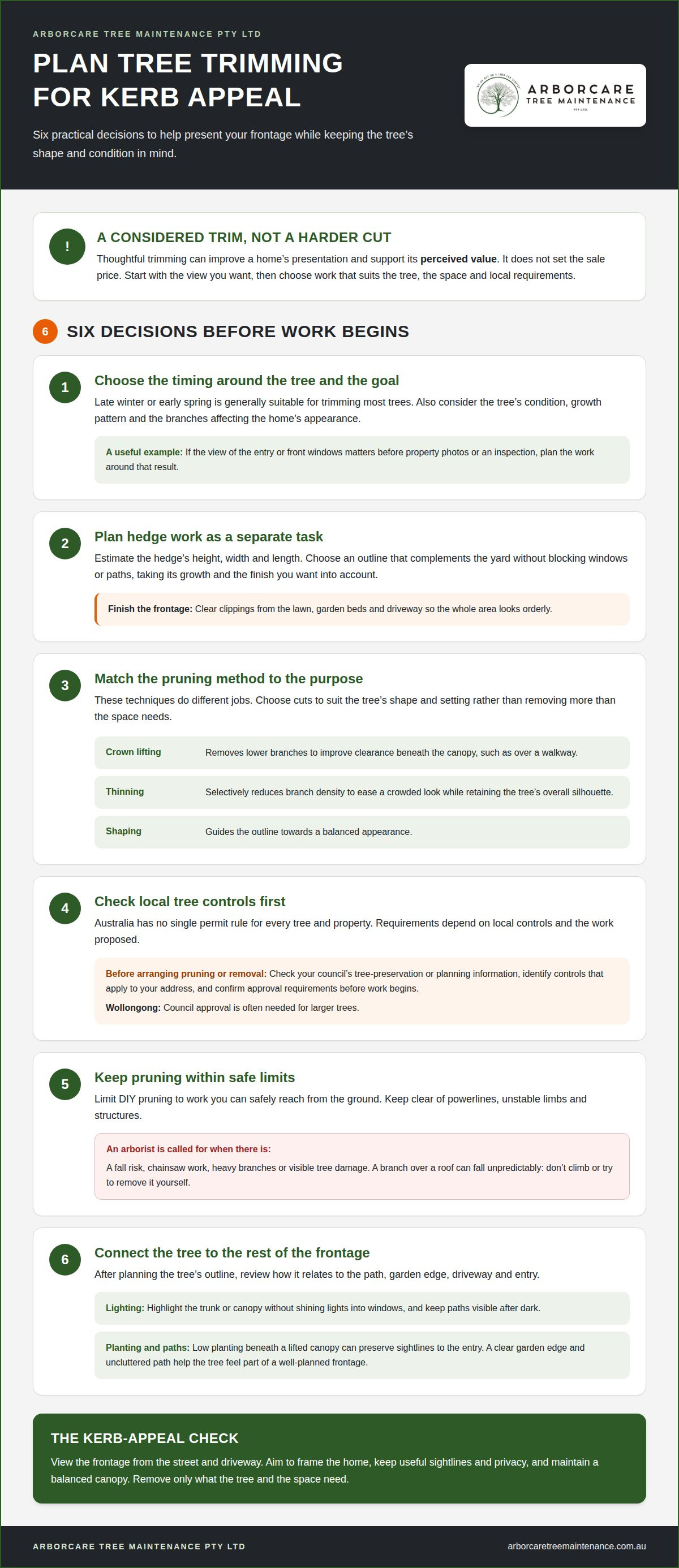
Well-planned trimming can improve a home’s presentation and support its perceived value, but it cannot set a sale price. Use these steps to plan work around appearance, tree condition and local requirements.
- Time tree work to suit the season and the result you want. Late winter or early spring is generally suitable for trimming most trees. Before scheduling, consider the tree’s condition, growth pattern and the branches affecting your home’s appearance. For instance, improving the view of the entry or front windows may matter before property photos or an inspection.
- Treat hedge trimming as a separate task. Estimate the hedge’s height, width and length, then choose an outline that complements the yard without blocking windows or paths. Consider its growth and the finish you want when planning the work. Afterwards, clear clippings from the lawn, garden beds and driveway so the whole frontage looks orderly.
- Choose a pruning method that suits the tree’s shape and setting. Crown lifting removes lower branches to improve clearance beneath the canopy; thinning selectively reduces branch density; shaping guides the outline towards a balanced appearance. These methods serve different purposes. Lifting may open a walkway, for example, while careful thinning can reduce a crowded look without changing the tree’s overall silhouette.
- Check local council tree controls before arranging pruning or removal. Australia has no single permit rule that applies to every tree and property; requirements depend on local controls and the work proposed. Look up your council’s tree-preservation or planning information and identify any controls that apply to your address. Confirm the relevant approval requirements before work begins. In Wollongong, council approval is often needed for larger trees.
-
Plan safe pruning or hire an arborist
Limit DIY pruning to work you can safely reach from the ground. Keep clear of powerlines, unstable limbs and structures. A fall risk, chainsaw work, heavy branches or visible tree damage calls for an arborist. A branch over a roof can fall unpredictably, so don’t climb or try to remove it yourself. For property owners across Greater Sydney requiring qualified help, kjktreeservices.com.au provides professional tree-care services to manage complex work safely.
-
Pair trimmed trees with landscaping
Use lighting and landscaping to draw attention to the tree’s improved form. Position garden lights to highlight the trunk or canopy without shining into windows, and keep paths visible after dark. Low planting beneath a lifted canopy can preserve sightlines to the entry; a clear garden edge and uncluttered path help the tree feel part of a well-planned frontage.
Kerb appeal and first impressions
Plan the view from the street before deciding which branches need attention. In a small yard, the canopy, front windows, path and entry all compete for visual space.
- Stand at the street and identify your home’s main focal point. It might be the front door, a veranda or a distinctive window. Notice whether branches obscure it or frame it naturally. A tree that partly screens the façade may provide privacy, while a dense canopy across the entry can make the frontage feel crowded. Use this street-level view to decide what you want to achieve.
- Trace the eye-level view from the footpath to the front door. Look for branches that interrupt the sightline, overlap house numbers or hide the path entrance. A low branch hanging over the approach, for example, can make a narrow entry feel tighter. Selectively clearing the obstruction can make the route easier to see without removing the tree’s character.
- Match the canopy outline to your home’s architecture. A broad, uneven silhouette can compete with a compact façade, while a balanced outline can help the building remain the focus. View the tree from both the footpath and driveway, as each angle shows a different relationship between branches, roofline and entry. Aim for a shape that looks considered from both viewpoints, not just tidy from beneath the tree.
- Use branches to manage views and privacy rather than cutting for openness alone. A tree beside a front window may screen an overlooking angle, while branches across the whole façade can conceal the home. Decide which view matters most, then preserve foliage that provides useful screening. This helps a small yard feel welcoming without making street-facing rooms unnecessarily exposed.
- Review the frontage as a whole after planning the tree’s outline. Check how the canopy relates to the path, garden edge, driveway and visible entry. An attractive tree can still look out of place if its branches hide the path or crowd a narrow garden bed. To improve kerb appeal with tree trimming, define the view first, then choose cuts that support it.
- For a frontage where the tree’s position or canopy makes the right cuts difficult to judge, consider a professional tree assessment. A planned approach can keep the tree’s contribution to the street view in focus.
How tree species and growth patterns affect trimming frequency
Australian native trees don’t all need the same trimming schedule. Native species benefit from targeted pruning when dead, broken or crowded branches affect their structure or the space around them.
- Identify the tree before planning repeat work. Eucalypts, paperbarks and banksias have different growth habits, so a routine that suits one may not suit another. Record the tree’s name if known, its current shape and any branches causing concern. If you’re unsure of the species, describe its leaves, bark and growth pattern for an arborist to assess.
- Base trimming frequency on visible changes, not just a calendar reminder. A fast-growing tree near a driveway may need closer observation than a slow-growing tree with clear space around it. Note when branches begin to obscure a window, touch a structure or narrow a path. These changes help show when growth is affecting your property.
- Look for growth that changes the canopy’s density or balance. A dense crown can limit light and airflow within the tree, while a long branch extending over a roof can alter its shape. Compare the canopy from the street and from beneath the tree. A change in one area doesn’t automatically mean the whole crown needs cutting.
- Distinguish seasonal growth from a genuine need to prune. New shoots can make a tree look less tidy, but trimming every flush may remove more foliage than the property requires. A young tree putting on growth, for example, may need guidance to develop a suitable shape, while an established tree may only need attention to damaged or obstructive branches.
- Inspect trees after strong winds or noticeable branch failure. Broken limbs, hanging branches and fresh damage can change a tree’s appearance and warrant an assessment. Note too if the same branch repeatedly interferes with a path or building. A recurring problem may call for a considered structural solution rather than repeated cuts to its tip.
- Keep a simple record of each tree’s condition and previous work. Note when work was done, which branches were removed and any new growth or damage. If a canopy becomes crowded again soon after trimming, for instance, the species, site conditions and earlier cuts may all affect the result. This record helps guide future decisions without imposing the same schedule on every tree.
Eucalypts, paperbarks and banksias may benefit from targeted pruning when dead, broken or crowded branches affect their structure or the space around them.
When arranging pruning, a pruning and trimming quote can specify that the work will be done by a licensed, insured crew with proper equipment, liability coverage, and workers’ compensation. Keep that information with the tree’s condition and previous work when considering future attention.
Mulching suppresses weed growth, reduces soil erosion, promotes plant growth and helps soil retain moisture. Where mulching is included after trimming, regard those effects as benefits of the ground treatment, distinct from the tree’s growth pattern and the timing of its next pruning.
Risks of over-trimming
Removing too much canopy can undermine the appearance and condition you’re trying to improve. Use these steps to keep the work proportionate to the tree and its setting.
- Set a clear purpose before removing any branches. Choose a specific issue, such as a branch blocking the house number or crowding a path. If your goal is simply to make the tree look smaller, pause and reconsider. Removing large amounts for a quick visual change can stress a tree, increase its vulnerability to disease and stunt its growth.
- Preserve the tree’s natural outline instead of forcing it into an artificial shape. A rounded canopy cut into a flat-sided block can look stark against a home and require repeated trimming to maintain. Keep the tree’s character in view from the street. Make only the cuts needed to address a defined obstruction or improve its balance.
- Avoid removing foliage evenly just to let more light into a small yard. A sparse, uneven canopy can look stripped rather than carefully maintained. Before cutting, identify which branches create the problem and which contribute to shade, screening or the overall silhouette. Clearing one visual gap may be preferable to thinning every part of the crown.
- Don’t respond to one inconvenient branch by cutting back the entire side of the tree. This can leave an unbalanced crown and change how the tree frames your home. Compare the branch with the rest of the canopy, then consider how removing it would affect the outline from the footpath and driveway. Keep the work focused on the specific interference.
- Assess the result before making additional cuts. Step back to the street-facing view and check whether the entry, windows or path are now clearer. If the original concern is resolved, stop. Another round of cuts for minor symmetry can remove useful foliage without meaningfully improving the frontage.
- Observe changes after trimming rather than automatically scheduling more work. Record where the canopy was reduced and how the tree grows afterwards. If growth appears stunted or the tree shows signs of stress, further cutting may compound the problem. Significant damage or an awkward structure calls for careful assessment, not aggressive reshaping for an immediate cosmetic result.
Which tree-trimming techniques improve a home's kerb appeal?
Choose cuts that make your home easier to see while preserving the tree’s natural character. Use these steps to connect the canopy with the frontage and usable yard.
- Start with the view you want to reveal. From the footpath, note whether branches obscure the entry, windows, house numbers or architectural details. Then identify the smallest area that needs opening. Creating a clear view towards the front door, for example, can make the approach feel more welcoming without stripping foliage from the whole canopy.
- Remove dead or broken branches that distract from the tree’s outline. Damaged limbs can make a canopy look untidy and may affect nearby growth. Focus on branches that are clearly dead, broken or awkwardly crossing, rather than cutting healthy growth simply to make the tree smaller. A cleaner outline helps the tree look maintained while retaining its shape.
- Thin dense growth selectively to improve light and air movement through the canopy. Avoid creating large gaps or leaving foliage concentrated on one side. Removing a few crowded interior branches, for instance, can open a view towards the façade while keeping the tree balanced. The aim is a clearer canopy, not a bare one.
- Keep useful screening where privacy matters. A tree beside a bedroom window may soften views from the street, while branches across a porch can hide the entrance. Identify which areas need screening and which need a clearer sightline. Selective cuts can frame a view through the canopy without removing foliage that provides privacy around your home.
- Shape the tree in relation to paths and outdoor spaces. A clear route beneath or beside the canopy can make a small yard easier to use. Where branches allow, thoughtful trimming can help define a shaded seating area or make a garden path feel more open. Check the result from both the house and street, as each angle shows how the canopy relates to the yard.
- Finish by assessing the whole frontage, not just the cut branches. Look at how the tree’s outline sits beside the roofline, garden beds and entry. If the canopy remains crowded, uneven or difficult to shape, arrange professional tree trimming to plan cuts around the tree and the property.
Arborcare Tree Maintenance: Hedging, Pruning & Trimming
Arborcare Tree Maintenance provides Hedging, Pruning & Trimming to shape trees and hedges around your home. Turn to the team when branches obscure an entry, crowd a path or need careful attention to preserve the tree’s natural form. Work near roofs, structures or hard-to-reach branches calls for a safety-conscious approach. If a tree needs removal rather than trimming, Tree Removals and Complex Tree Removals are also available.
Tell Arborcare Tree Maintenance which areas of your frontage you want to open up, protect or define. This helps focus the work on your home’s appearance and the trees’ condition. Contact the team to discuss your tree-trimming needs.
Plan the next step for your yard
A useful next step is to decide how you want the frontage to feel, not just what you want removed. Perhaps you want the entry to feel more visible, the yard more private or the garden easier to move through. If you’re considering how to improve curb appeal with tree trimming, use that goal to guide a discussion about the work and its intended result.
Before arranging work, note which part of your property matters most and what you want to change. A clear priority gives an arborist assessment a practical starting point and helps keep the plan focused on your home’s needs.
For help with the next step, contact Arborcare Tree Maintenance to discuss your trees and the result you’re aiming for. A considered plan can help you move towards a frontage that feels welcoming and well cared for.
Frequently Asked Questions
Does pruning improve a tree’s appearance?
Yes. Selective pruning can give a tree a cleaner, more balanced appearance by removing dead or broken limbs and addressing growth that makes the canopy look uneven. A branch extending well beyond the rest of the crown, for example, may disrupt its outline. The aim is to improve the tree’s form while retaining its natural character, not to cut healthy growth simply to make it smaller.
How Often Should Trees Be Trimmed?
There’s no single trimming interval that suits every tree. Species, growth pattern, condition and the surrounding space all affect when work is needed. A tree beside a driveway may need attention when growth begins to obstruct access, while one with clear space may need less frequent intervention. Keep notes on changes and previous work, then base the next assessment on the tree’s condition.
How can trees make a house look more attractive?
Trees can add structure and scale to a frontage, making a home feel connected to its garden. A well-positioned canopy can soften a hard roofline, provide shade near an outdoor seating area or naturally frame the façade. In a compact yard, consider how the tree looks beside the building and garden beds, not just as a standalone feature.
How should trees be pruned to frame a house and keep paths clear?
Start by viewing the house from the street and identifying features you want to reveal, such as a veranda or front window. Then consider which branches interrupt the view or obstruct a path. Make targeted cuts to improve the sightline while keeping the crown balanced. Avoid removing branches solely to create symmetry, as this can change the tree’s character without improving the frontage.
What is the best season to trim trees in Australia?
Late winter or early spring is generally suitable for trimming most trees, but the best timing depends on the species, the tree’s condition and the reason for pruning. A damaged branch, for example, may need attention outside the ideal seasonal window. Consider the intended work first, then plan routine, appearance-focused trimming for a suitable period rather than applying the same timing to every tree.
What are the risks of over-pruning or topping trees?
Over-pruning can stress a tree, increase its vulnerability to disease and stunt growth. Topping, which cuts back the upper crown, can also leave a harsh, unnatural outline. Removing large sections to quickly reduce a tree’s height, for example, may create a sparse appearance rather than a tidy one. Focus on specific concerns and avoid extensive cuts made only for dramatic change.


