

While many gardeners assume the first cold snap is the signal to grab the shears, pruning your roses too early in the Illawarra can actually jeopardise their health. It’s natural to feel a sense of urgency when your garden looks overgrown or those large rose hedges become a physical strain to maintain. However, rushing the process often leads to tender new growth being caught in a late frost, particularly if you're situated near the escarpment. Finding the best time to prune roses Illawarra wide requires a balance between local climate knowledge and technical horticultural timing.
We understand the confusion that comes with managing different varieties, from vigorous climbers to delicate bush roses. This guide provides the clarity you need to protect your garden and ensure vibrant, disease-free blooms. You'll discover the ideal winter window for Wollongong’s coastal strip versus the cooler foothills, along with professional insights to achieve expert results without the DIY stress. We'll explain how proper timing and specialised technique can transform an unruly garden into a healthy, structured landscape that's safer and easier to manage year-round.
Key Takeaways
- Identify the specific winter window between late June and late July to ensure your roses enter the spring growing season with maximum vigour.
- Learn why the best time to prune roses Illawarra gardeners follow varies between coastal suburbs and frost-prone areas near the escarpment.
- Master the "3 Ds" of pruning to effectively remove dead, damaged, and diseased wood using sharp, arborist-grade tools for faster healing.
- Discover the role of winter mulching and soil conditioning in regulating root temperatures and retaining moisture through the harsh NSW summer.
- Understand the safety and health benefits of professional hedging and pruning for managing large estates or complex, overgrown rose varieties.
When is the Best Time to Prune Roses in the Illawarra?
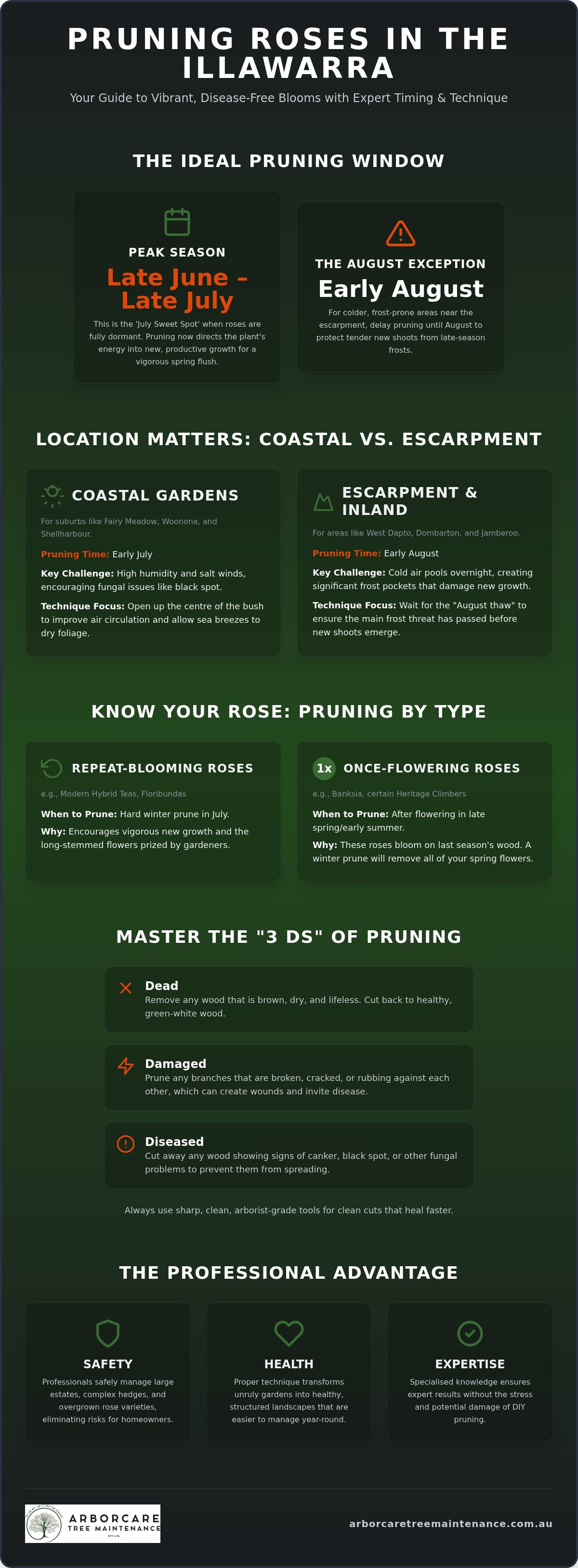
Determining the best time to prune roses Illawarra residents should target requires a balance between the calendar and local weather patterns. For most properties across Wollongong and Shellharbour, the peak window falls between late June and late July. This period ensures the plant is fully dormant, allowing it to rest and reset for a vigorous spring flush. Pruning is a health necessity; it removes old wood that can harbour pests and diseases, ensuring the plant's energy is directed into new, productive growth.
You'll know it's time when the last of the autumn flowers have faded and the plant takes on a tired, sparse appearance. However, residents in the hinterland or escarpment foothills must exercise more caution. In these areas, the "August Exception" applies. Delaying your prune until early August protects new, tender shoots from being decimated by late-season frosts that often roll off the mountain. Rushing this process in colder zones can lead to significant dieback, which compromises the plant's structural integrity.
The July Sweet Spot
July is the most popular month for local gardeners to pick up their secateurs, and for good reason. The weeks following the winter solstice represent the deepest point of dormancy for roses in our region. This timing allows for heavy structural cuts without the risk of the plant "bleeding" sap. It's also a strategy to avoid the "false spring" effect. Pruning in early June can often encourage premature growth during a warm spell, which then leaves the plant vulnerable when the true winter chill arrives in July. Waiting for the July peak ensures the plant remains safely dormant until the weather consistently warms up.
Pruning Once-Flowering vs. Repeat-Blooming Roses
Understanding your rose variety is critical for maintaining its health and aesthetic value. Rose pruning techniques differ significantly between once-flowering and repeat-blooming types. Modern Hybrid Teas and Floribundas, which bloom from October through to May, thrive with a hard winter prune. This encourages the long-stemmed flowers many gardeners prize.
In contrast, once-flowering roses, such as the yellow Banksia or certain heritage climbers, should never be pruned in winter. These plants produce their flowers on the previous season's wood. If you prune them in July, you'll effectively cut away all of your spring display. For these varieties, wait until the flowering season concludes in late spring or early summer before tidying them up. This ensures you enjoy the full colour of the season while keeping the plant's structure organised and manageable.
Coastal vs. Escarpment: Adjusting Your Pruning Calendar
The Illawarra’s unique geography, stretching from the Pacific Ocean to the sandstone cliffs of the escarpment, creates a series of distinct micro-climates. These variations mean the best time to prune roses Illawarra gardeners should follow depends heavily on their specific suburb. While coastal areas enjoy the moderating influence of the sea, inland pockets face harsher temperature swings that can catch an unprepared gardener off guard. Understanding these local nuances is the first step toward a healthy spring display.
Gardening on the Coast
Suburbs such as Fairy Meadow, Woonona, and Shellharbour experience milder winter nights and higher humidity levels. Salt-laden winds are a constant factor here, which can stress rose foliage and lead to dieback if the plant isn't structurally sound. In these frost-free zones, you can safely begin your pruning in early July. The primary concern on the coast isn't the cold, but rather air circulation. High humidity encourages fungal issues like black spot and powdery mildew. Opening up the centre of the bush during your winter prune is vital to allow sea breezes to dry the foliage quickly, reducing the need for chemical interventions later in the season.
The Escarpment and Inland Suburbs
As you move toward the foothills in areas like West Dapto, Dombarton, and Jamberoo, the pruning strategy must shift. These suburbs sit in the shadow of the escarpment, where cold air pools overnight, creating significant frost pockets. If you prune too early here, you risk stimulating "water shoots," which are the thick, succulent green stems that emerge from the base. These are highly susceptible to frost damage. For these inland gardens, waiting for the "August thaw" is a safer strategy. It ensures that when the plant begins its spring push, the threat of a late-season cold snap has largely passed.
Protecting freshly pruned canes is essential in these cooler zones. Keeping a thick layer of organic mulch around the base helps regulate soil temperature, providing a buffer for the root system during those final winter frosts. If you're managing a large property with extensive boundaries or overgrown specimens, our team provides professional hedging and pruning services to ensure your landscape remains healthy and resilient against these local temperature drops. This professional intervention prevents the structural damage that often occurs when heavy frosts hit poorly timed new growth.
Essential Tools and Techniques for a Healthy Rose Prune
Achieving professional results in your rose garden requires more than just knowing the best time to prune roses Illawarra experts recommend; it requires precision tools and a methodical approach to plant health. Arborists insist on using bypass secateurs and loppers that are sharp enough to make clean cuts without crushing the delicate vascular tissue of the stem. A crushed stem is a slow-healing wound that invites disease. Before you begin, identify the "3 Ds": Dead, Damaged, and Diseased wood. Removing these first allows you to see the true structure of the plant and prevents the spread of pathogens throughout your garden.
Structural pruning aims to create an open, vase-like shape. This configuration ensures that sunlight can reach the centre of the plant and air can circulate freely, which is especially important in the humid coastal suburbs of Wollongong. Safety is also a primary concern. Always wear thick, gauntlet-style gloves to protect against thorns and soil-borne pathogens. If a task involves high-reaching climbers or extensive hedging, it's often safer to engage a professional team equipped with specialised safety gear and high-level technical authority.
Step-by-Step Rose Pruning Guide
Step 1: Clear away debris and old mulch from the base to expose the graft union. This helps you identify and remove "suckers" growing from below the graft that can sap the plant's energy.
Step 2: Strip away spindly growth. Any stem thinner than a pencil won't support a heavy bloom and only drains the plant's resources. Focus on keeping the strongest, healthiest canes.
Step 3: Make your cuts at a 45-degree angle, sloping away from the bud. Aim for a spot roughly 5mm above an outward-facing bud to encourage growth away from the centre of the plant.
Step 4: For larger canes, consider applying a pruning sealer. This acts as a physical barrier against borer infestations, which are a potential hazard in older Illawarra gardens.
Sanitisation and Disease Prevention
Maintaining tool hygiene is a non-negotiable standard for healthy gardens. We recommend wiping your blades with a disinfectant solution between every plant. This simple step prevents the cross-contamination of fungal spores like black spot. When you've finished, dispose of your rose clippings correctly. Because they are thorny and often carry disease, they shouldn't be added to your home compost heap. Check your local council’s green waste rules; most Illawarra councils accept thorny waste in the green-lidded bin, but it's best to verify their specific requirements for rose waste to ensure compliance with local standards.
Post-Pruning Care: Mulching and Soil Health for Illawarra Gardens
The best time to prune roses Illawarra gardeners choose is also the ideal period to focus on soil rejuvenation. Once the structural work is complete, the focus shifts to replenishing the organic matter that roses deplete during their long flowering season. Applying a high-quality soil conditioner or organic fertiliser in winter allows these nutrients to break down slowly, becoming available just as the plant wakes up in spring. This proactive approach ensures your roses have the energy required for a healthy, vibrant flush without the stress of nutrient deficiency.
Winter mulching is a critical safety measure for your garden's root systems. A well-applied layer of mulch acts as an insulator, protecting roots from the sharp frosts found near the escarpment while retaining vital moisture as we transition into the warmer months. Managing the resulting green waste is often the biggest challenge for property owners. Large rose hedges can produce significant volumes of thorny trimmings that are difficult to handle safely without professional equipment. Disposing of this waste correctly prevents the return of pests and diseases to your soil.
The Benefits of Professional Mulching
Recycled tree mulch offers superior nutrient density compared to standard store-bought bags. It contains a mix of wood and leaf matter that mimics the natural forest floor, providing a diverse range of minerals to your soil as it decomposes. For Illawarra rose beds, we recommend a consistent 75mm layer. This thickness is the "magic number" that effectively suppresses weeds and regulates temperature without suffocating the plant's root zone. For larger properties requiring bulk delivery or site-wide solutions, our Arborcare Mulching Services provide a streamlined resolution for managing garden health and waste.
General Garden Maintenance in Winter
While you are attending to your roses, it is a prudent time to assess the rest of your property for potential hazards. Winter storms in the Illawarra can be unpredictable, making it essential to check your larger trees for deadwood or structural weaknesses. Integrating your rose care with professional hedging and trimming ensures that your entire landscape remains organised and safe. This holistic approach to maintenance identifies property requirements before they become expensive emergencies.
Clear fence lines and boundary maintenance are also vital during the dormant season. Overgrown vegetation along boundaries can create safety risks and provide cover for pests. Addressing these issues now, before the spring growth spurt begins, saves time and physical strain later in the year. If the volume of waste from your winter pruning becomes unmanageable, our team can assist with efficient mulching and green waste removal to keep your property in peak condition throughout the year.
Why Professional Pruning and Hedging Makes the Difference
Managing a few rose bushes is a manageable task for most. Large estates or high-reaching climbers present a different set of risks. While we have identified the best time to prune roses Illawarra properties require, the physical reality of the work often demands professional intervention. Large-scale hedging and the maintenance of overgrown rose gardens can be physically exhausting. It is often dangerous without the right equipment. Professional loppers and powered hedge trimmers ensure clean, surgical cuts. These promote rapid healing, unlike dull home tools that can crush the plant's vascular system and invite decay.
Hiring a licensed arborist provides a layer of legal and physical protection for your property. We operate under strict safety protocols to manage the risks associated with sharp thorns, heavy trimmings, and uneven terrain. Our service is a comprehensive property resolution. Whether you require delicate rose maintenance or specialised stump grinding to clear a new planting site, we provide the technical authority needed for high-quality results. This professional approach ensures your garden remains a safe, healthy environment for your family.
Expert Hedging for Illawarra Properties
Formal rose hedges require a disciplined hand to maintain their geometric precision and ensure uniform flowering. We specialise in large-scale garden boundaries across Wollongong and Dapto, ensuring that every cut supports the plant's long-term health and aesthetic excellence. For a truly safe property, we can combine your winter pruning with a professional tree risk assessment. This process identifies potential hazards like overhanging deadwood before the spring storm season arrives, providing total peace of mind for the months ahead.
Reclaim Your Garden with Arborcare
One of the most stressful aspects of rose maintenance is the disposal of thorny waste. Our "no-mess" guarantee means we take every clipping with us, leaving your garden clean and ready for the spring flush. We help residents across the Illawarra reclaim their outdoor spaces from overgrown vegetation, providing the professional finish that DIY attempts often lack. Our local team understands the specific environmental needs of your suburb, ensuring your plants are perfectly positioned for the growing season. If you want to ensure your garden is in peak condition, Contact Arborcare Tree Maintenance for a professional pruning and hedging quote today.
Prepare Your Illawarra Garden for a Spectacular Spring
Mastering the best time to prune roses Illawarra wide ensures your garden remains a healthy and vibrant asset. By aligning your maintenance schedule with the local micro-climate, whether you're facing coastal humidity or escarpment frosts, you protect your plants from unnecessary stress. Structural pruning combined with high-quality mulching establishes a foundation for disease resistance and prolific blooming throughout the warmer months. While DIY maintenance is possible for small bushes, managing large-scale hedging and complex rose varieties requires technical expertise and specialised equipment to ensure safety and precision.
Arborcare Tree Maintenance is a locally owned Dapto business dedicated to property safety and horticultural excellence. Our team of licensed and insured arborists utilises specialist hedging and pruning equipment to deliver professional results without the physical strain or risk of handling thorny waste. We provide a disciplined approach to garden health, ensuring every cut is made with arborist-level authority. Get a Professional Pruning & Hedging Quote today to secure your property's health for the upcoming season. Your roses will thank you with a stunning display come October.
Frequently Asked Questions
Can I prune my roses in May in the Illawarra?
Pruning in May is generally considered too early for most Illawarra gardens. Our local climate remains relatively warm through late autumn; pruning now can stimulate fresh growth that won't survive the winter cold. It's better to wait until the plants are fully dormant in late June or July. This ensures the best time to prune roses Illawarra residents should follow is respected, protecting the plant's energy for a stronger spring display.
How far back should I cut my rose bushes during winter?
For most repeat-flowering bush roses, you should aim to reduce the overall height by about one third to a half. Begin by removing any dead, damaged, or diseased wood entirely. Then, cut back the remaining healthy canes to a height of roughly 30 to 50 centimetres from the ground. Always ensure you are cutting above an outward-facing bud to maintain an open, vase-like structure that promotes air circulation and sunlight penetration.
What is the best mulch for roses in Wollongong?
Recycled organic tree mulch is the superior choice for rose beds in Wollongong and Shellharbour. Unlike store-bought pine bark, high-quality arborist mulch breaks down to provide essential nutrients while effectively regulating soil temperature. We recommend a 75mm layer to suppress weeds and retain moisture during the hot NSW summer. Our team provides professional mulching services across the Illawarra, utilising local garden waste to create nutrient-dense ground cover that supports vigorous plant health.
Do I need to spray my roses after pruning?
Applying a winter wash or lime sulphur spray immediately after pruning is a highly effective safety measure for your plants. This treatment kills dormant fungal spores and pests that hide in the bark or soil over winter. Given the high humidity in coastal areas like Fairy Meadow and Woonona, this step is vital for preventing black spot and powdery mildew. It provides a clean slate for the upcoming growing season and reduces maintenance later.
How do I prune a climbing rose that has grown too high?
Pruning a high-climbing rose requires specialised equipment and a focus on structural safety. You should first secure the main structural canes horizontally to encourage more flowering side shoots. If the plant has become unmanageable or reached dangerous heights near power lines or gutters, it is a professional requirement to engage a licensed arborist. We provide expert hedging, pruning, and trimming services in Dapto and Jamberoo to safely reclaim overgrown gardens and restore aesthetic balance.
Should I prune my roses if they still have leaves on them?
You should still proceed with pruning in July even if your roses haven't naturally dropped all their leaves. In our mild Illawarra climate, some varieties don't go fully dormant on their own. Strip the remaining leaves by hand during your prune to force the plant into a rest period. This also removes any lingering fungal spores that might be attached to the old foliage, ensuring your new spring growth starts in a disease-free environment.
Is it better to prune roses in the morning or afternoon?
It is better to prune your roses in the morning to allow the fresh cuts time to dry out during the day. This reduces the risk of moisture-loving fungal pathogens entering the plant through the open wounds. If you prune late in the afternoon, the damp evening air can settle on the cuts, increasing the likelihood of rot or infection. Always use sharp, clean tools to ensure the fastest possible healing for your plants.
What happens if I forget to prune my roses this year?
If you forget to prune, your roses will likely become leggy, unproductive, and prone to disease. Over time, the centre of the plant becomes congested with old wood, which restricts airflow and sunlight. This creates a potential hazard by encouraging pests and fungal outbreaks that can spread to the rest of your property. Regular maintenance is a health necessity that ensures your roses remain a safe and beautiful feature of your landscape.


