
That towering palm tree in your backyard is often more than just a tropical aesthetic; it's a high-risk structural liability that grows more dangerous with every passing season. You might have initially enjoyed the coastal vibe, but now you're likely facing the reality of messy fruit clogging your pool filters, spiky fronds causing painful injuries, or the constant presence of bats and vermin. When trunks begin to lean or roots threaten your house foundations, the need for professional palm tree removal becomes a matter of property safety rather than just garden maintenance.
We understand that dealing with these stubborn species is a source of significant stress for many Illawarra property owners. This guide will show you why removing palms requires specific technical expertise and how you can safely reclaim your garden space without the typical mess left behind. We'll also preview the current permit rules for Wollongong, Shellharbour, and Kiama councils to ensure your project remains fully compliant with local regulations and environmental standards.
Key Takeaways
- Understand why the Illawarra's unique coastal conditions and high winds make palms a structural liability that requires specialised arborist intervention.
- Identify the technical risks involved in palm extraction, including the complications of fibrous trunks and the lack of stable climbing points.
- Compare the recurring maintenance costs of skinning or trimming against the one-off investment of a professional palm tree removal to reclaim your yard.
- Navigate local council regulations and Tree Preservation Orders in Wollongong and Shellharbour to determine if your palm species requires a permit.
- Learn how a professional "Zero Impact" cleanup ensures your property remains safe and tidy after a complex removal near house foundations.
Why Professional Palm Tree Removal is Essential in the Illawarra
Palm tree removal isn't just a standard gardening task; it's a high-risk operation that requires specialised arboricultural methods and heavy-duty equipment. Unlike deciduous trees, palms have fibrous trunks that can dull standard chainsaw blades quickly. In the Illawarra, our unique coastal climate adds extra layers of risk. High winds coming off the Tasman Sea, combined with corrosive salt air, can weaken the structural integrity of certain species over time. This makes an unstable palm a significant hazard during storm season. Professional intervention is necessary to ensure these tall, heavy specimens are dismantled safely without damaging your home or overhead power lines.
Common Problem Palms in Wollongong and Shellharbour
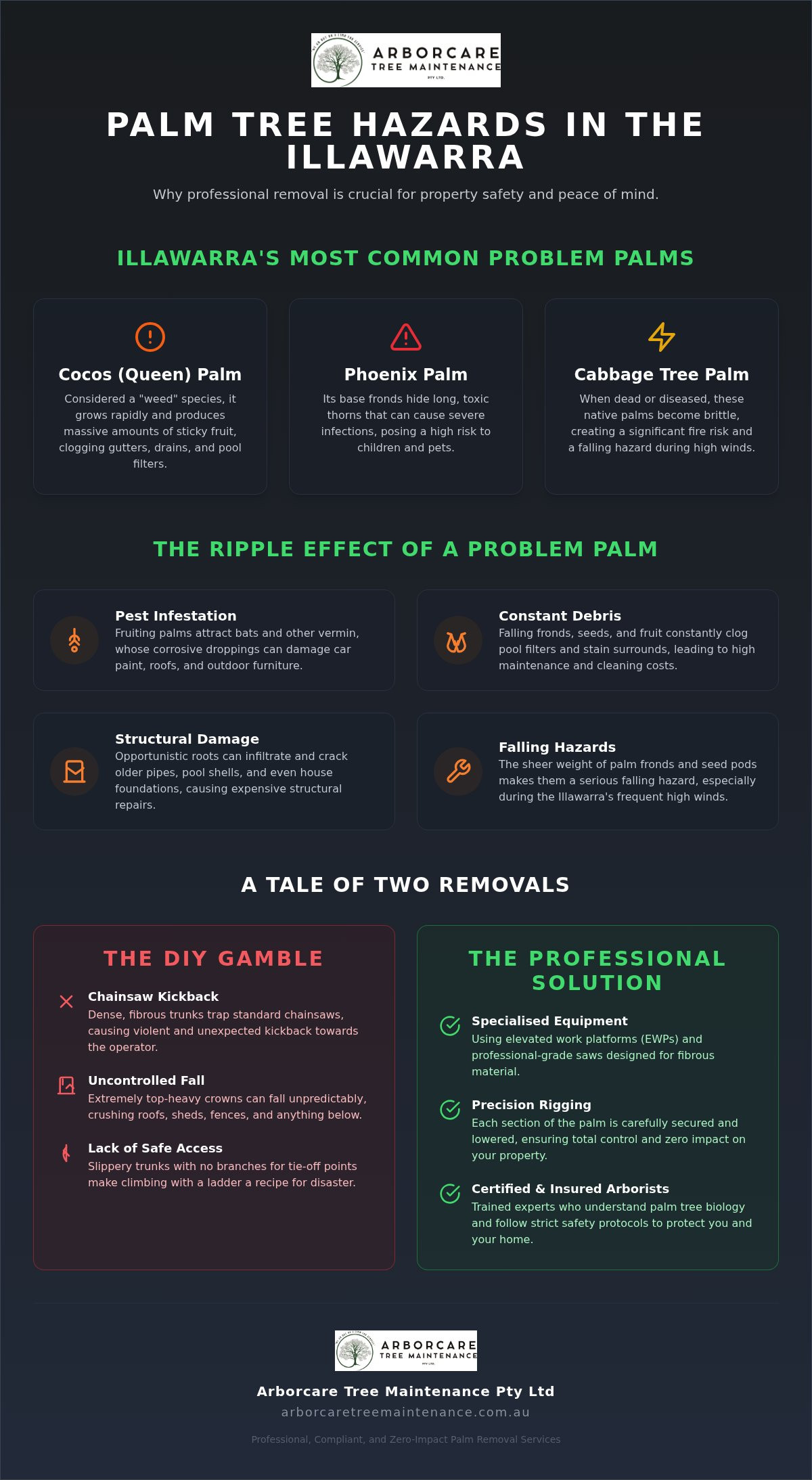
Many property owners in suburbs like Dapto or Shell Cove find themselves overwhelmed by specific species. Cocos Palms (Queen Palms) are frequently targeted for removal because they're considered a "weed" species across many parts of New South Wales. They grow rapidly and produce massive amounts of sticky fruit that clogs gutters and drains. Phoenix Palms present a different danger. Their base fronds have long, toxic thorns that can cause severe infections if they puncture skin, making them a high risk for households with curious pets or young children. While Cabbage Tree Palms are a beautiful native part of our local landscape, dead or diseased specimens become brittle and pose a fire risk or a falling hazard that necessitates professional palm tree removal.
The "Mess Factor": Fruit, Bats, and Maintenance Fatigue
The ongoing upkeep of a large palm often leads to maintenance fatigue. When palms fruit, they become a magnet for grey-headed flying foxes. These bats don't just create noise; their droppings are highly corrosive to roof paint and car finishes. If your palm is near a swimming pool, the constant drop of fronds and seed pods can destroy expensive filtration systems and stain pool surrounds. Beyond the surface mess, palm roots are notoriously opportunistic. They can infiltrate older terracotta pipes or exert pressure on swimming pool shells, leading to costly structural repairs. A one-off professional removal often proves more cost-effective than decades of annual cleaning and repair bills.
The Technical Challenges of Removing Palms Safely
Removing a palm tree is fundamentally different from felling a standard hardwood tree. While a gum tree has rings of solid wood, a palm is a monocot, meaning its trunk is composed of dense, bundled vascular fibres. This biological structure is incredibly tough on standard equipment. The fibrous nature of the trunk acts like a sponge, absorbing vibration and often trapping chainsaw blades. This is why following safe work practices for tree removal is vital; without the right tensioning and professional-grade chains, a routine cut can quickly turn into a dangerous equipment failure. Furthermore, because palms lack stable branches, arborists cannot use traditional tie-off points for climbing. We must rely on specialised pole-climbing techniques or elevated work platforms to reach the crown safely.
Weight distribution is another critical factor that property owners often underestimate. A mature palm is extremely top-heavy. The crown, consisting of saturated fronds and heavy seed pods, can weigh several hundred kilograms. If this weight isn't managed through precision rigging, the impact of a falling crown can crush garden sheds, crack concrete driveways, or even compromise the structural integrity of a house. In the tight side-access blocks common across the Illawarra, there's no margin for error. We use controlled descent rigging to lower sections of the tree piece by piece, ensuring total control over every kilogram of debris.
Why DIY Palm Removal is a High-Risk Gamble
Attempting a DIY job with a hardware store ladder is a recipe for disaster. Palm trunks are notoriously slippery and offer no natural handholds or branch support. When a DIYer attempts to cut the crown, they often don't account for the "frond release" effect, where the sudden removal of weight causes the trunk to spring back violently. Cutting into dense palm fibres creates significant chain resistance that can cause the saw to kick back toward the operator without warning. If you're concerned about a tall specimen overhanging your roof, seeking a professional assessment for palm tree removal is the safest way to protect your property and your physical well-being.
Access and Proximity: Protecting Your Illawarra Home
Residential blocks in suburbs like Fairy Meadow or Wonoona often feature narrow driveways and palms positioned dangerously close to glass pool fences or neighbouring fences. Our team uses specialised narrow-access equipment to navigate these tight spaces without damaging your turf or landscaping. Ground crews play a vital role here, managing the "arisings" or debris as it reaches the ground to prevent any impact damage to your garden. By using a "Zero Impact" philosophy, we ensure that even the most complex extraction leaves your outdoor living area cleaner than when we arrived.
Palm Tree Removal vs. Skinning and Trimming
Deciding whether to invest in ongoing maintenance or opt for full palm tree removal is a common dilemma for local homeowners. While some palms can be salvaged and turned into landscape features through professional grooming, others represent a growing financial and safety burden. Understanding the difference between skinning, trimming, and total extraction helps you make an informed choice for your property's long-term health and value. Trimming involves the removal of dead fronds and seed pods to keep the tree tidy and safe. For native species like the Cabbage Tree Palm, regular professional pruning can actually extend the specimen's life by reducing wind resistance and removing unnecessary weight from the crown. However, if you're paying for this service every year just to manage falling debris, the cumulative cost will eventually exceed the one-off investment of a professional removal.
The Aesthetic Benefits of Palm Skinning
Palm skinning, also known as shaving, is the process of removing the rough, hairy "husk" left behind by old fronds to reveal the smooth trunk underneath. This technique offers more than just a clean, tropical look for your Illawarra garden. By removing the fibrous layers where cockroaches, spiders, and rodents typically nest, you significantly reduce the pest population around your outdoor living areas. If you're interested in the long-term care of your trees, you might find our article on Palm Tree Removal Illawarra: The Essential Guide for Homeowners helpful for understanding property maintenance.
When Full Removal is the Only Logical Choice
There are specific biological signals that indicate a palm is past the point of pruning. "Pencil-topping," where the trunk narrows significantly toward the crown, is a sign of terminal decline that can't be reversed. Similarly, if you notice a foul odour or a complete lack of new growth in the centre of the crown, the tree likely has crown rot. A dead or structurally compromised palm tree becomes a dangerous standing hazard during the heavy storm seasons common across the Illawarra.
Beyond biological death, structural interference is a major reason for palm tree removal. Because palms have opportunistic root systems, they often expand under driveways or against retaining walls. When a trunk begins to tilt toward your house or the roots start cracking your concrete, the risk to your home's foundation outweighs any aesthetic benefit the tree provides. In these cases, extraction is the only responsible way to protect your property and ensure your family's safety.
Council Regulations and Preparing for Your Removal
Navigating the legal requirements for palm tree removal in the Illawarra is a critical first step for any property owner. Local councils have strict Tree Preservation Orders (TPOs) designed to maintain the urban canopy, and failing to comply can result in significant financial penalties. Under the Biodiversity Conservation Act 2016 (NSW), unauthorised clearing of native vegetation can lead to fines of up to $1.1 million for individuals. To ensure your project is lawful and stress-free, we recommend a methodical approach to preparation. Following these steps will protect your property and ensure a smooth workflow for our crew.
- Identify your species: Determine if your palm is a native specimen or an exempt "weed" species like the Cocos palm.
- Review local TPOs: Check the specific height and diameter thresholds for Wollongong, Shellharbour, or Kiama councils.
- Secure professional quotes: Always hire a licensed and insured arborist to ensure you are covered for public liability and professional indemnity.
- Notify your neighbours: It is common courtesy to inform those next door, especially if the palm is on a boundary or requires temporary access near their fence line.
- Clear the work zone: Remove garden furniture, potted plants, and pet waste from the area surrounding the base of the palm.
Wollongong Council Permit Requirements for Palms
In the Wollongong City Council area, you generally require a permit for any tree that is more than 5 metres in height or has a trunk diameter of 30cm or more at ground level. However, specific species are exempt from these rules unless they are listed as heritage items. Both the Cocos Palm (Syagrus romanzoffiana) and the Canary Island Date Palm (Phoenix canariensis) are currently exempt, meaning you can often proceed with removal without a formal application. For protected native species, the application fee for 1 to 2 trees is currently $114.00, and processing typically takes around 28 working days. If you are unsure about your specific property requirements, you can find more detailed information in our guide to Tree Removal Wollongong: The Complete Professional Arborist Guide.
Property Preparation and Safety Zones
Safe palm tree removal requires ample space for specialised machinery. Our team needs clear access for wood chippers and stump grinders to ensure we can process the debris efficiently and leave your yard tidy. Before we arrive, please identify any underground services or overhead hazards like powerlines and service cables that may interfere with the rigging process. Managing these risks early prevents delays and ensures the safety of both our crew and your home. If you are ready to secure your property and remove a hazardous palm, you can contact our Dapto-based team for a professional assessment and quote.
The Arborcare Approach: Professional Palm Extraction and Remediation
Based in Dapto, Arborcare Tree Maintenance is deeply rooted in the local community. We understand the specific challenges of the Illawarra landscape, from the coastal winds of Shellharbour to the tight residential blocks of Wollongong's northern suburbs. Our approach to palm tree removal is built on a "Zero Impact" philosophy. We recognise that the job isn't finished until your garden is cleaner than we found it. Our team meticulously clears all arisings, ensuring that the messy fruit and fibrous debris typical of palm extractions are completely removed from your site. This commitment to a full site clean-up addresses one of the most common frustrations property owners face when hiring trade services.
Stump grinding is a non-negotiable part of our remediation process. Unlike many hardwood trees, palm stumps are essentially giant sponges for moisture and don't rot away naturally. Leaving a stump behind creates an ideal habitat for termites and other pests, which can eventually threaten your home's structural timber. By grinding the stump below ground level, we eliminate this risk and allow you to immediately reclaim your garden space for new landscaping projects. We also ensure that the organic waste generated during the process is recycled into high-quality mulch, supporting a sustainable cycle for local gardens across the region.
Advanced Equipment for Complex Palm Removals
Navigating narrow side-access blocks in Dapto or Shellharbour requires more than just a standard chainsaw. We utilise specialised narrow-access machinery that allows us to reach palms positioned close to fences or house foundations without causing damage to your turf or existing gardens. Our high-capacity chippers are specifically designed to process the tough, stringy fibres of palm trunks efficiently, preventing the equipment clogs that often delay less-equipped teams. This technical capability, combined with our status as licensed arborists, ensures that every project is handled with high-level technical authority. Our comprehensive insurance coverage provides residential clients with total peace of mind, knowing that their property is protected by professionals who prioritise safety protocols.
Beyond Removal: Stump Grinding and Replanting
Once the palm is gone and the stump is ground down, you have a blank canvas to work with. Removing a problematic palm often restores sunlight to your garden and stops the competition for nutrients in the soil. You might choose to plant native Illawarra species like the Grevillea or even a small fruit tree to add value to your outdoor living area. Reclaiming this space is about more than just aesthetics; it's about making your yard safer and more functional for your family. If you're ready to transform your garden and eliminate the risks associated with hazardous trees, Contact Arborcare for a Professional Palm Removal Quote and experience our expert, local service firsthand.
Secure Your Property and Reclaim Your Outdoor Space
Managing a hazardous palm is a specialised task that goes far beyond simple garden maintenance. By understanding the technical risks of fibrous trunks and navigating the specific permit requirements of Illawarra councils, you've taken the first step toward a safer home. Professional palm tree removal ensures that your foundations and underground pipes remain protected from opportunistic root systems. It also eliminates the ongoing mess and pest issues associated with neglected crowns, leaving your yard functional and tidy.
As a local Dapto family business, we provide the technical authority and safety protocols your property deserves. Our team consists of fully insured and licensed arborists who prioritise a meticulous cleanup on every site. Whether you need a planned extraction or a rapid 24/7 emergency storm response, we're here to help you restore your garden. Get a Free, No-Obligation Palm Removal Quote from Our Illawarra Experts and take the stress out of your property maintenance. We look forward to helping you create a cleaner, safer outdoor environment for your family to enjoy.
Frequently Asked Questions
Do I need council permission to remove a palm tree in Wollongong?
Permission is required from Wollongong City Council if the tree exceeds 5 metres in height or has a trunk diameter of 30cm or more at ground level. However, specific species like the Cocos Palm and Canary Island Date Palm are currently exempt from these permit requirements unless they are heritage listed. It's vital to identify your species correctly before commencing any work to avoid potential fines.
How much does palm tree removal cost in the Illawarra?
The cost of palm tree removal is determined by several technical factors including the tree's height, its species, and the complexity of access. A tall palm positioned over a glass pool fence requires more advanced rigging and time than a smaller specimen in an open paddock. We provide tailored quotes based on the specific safety requirements and equipment needed for your unique site.
Can I keep the mulch from my removed palm tree?
You are welcome to keep the mulch, though it's important to note that palm mulch is quite fibrous compared to standard hardwood chips. It is excellent for moisture retention and weed suppression in garden beds. If you prefer a completely clear site, our team will remove all arisings and debris as part of our "Zero Impact" cleanup philosophy.
What is the difference between palm tree trimming and skinning?
Trimming is a maintenance task that involves removing dead fronds and heavy seed pods to prevent mess and safety hazards. Skinning, also known as shaving, is a more intensive aesthetic process where the rough "husk" of the trunk is removed to reveal a smooth finish. Skinning is particularly effective at removing nesting sites for common pests like rodents and cockroaches.
How long does it take to remove a large palm tree?
Most palm removals are completed within 2 to 4 hours from the time our crew arrives on-site. The duration depends on the height of the tree and the amount of rigging required to lower sections safely. If the job includes stump grinding, we typically allow extra time to ensure the root ball is thoroughly processed below ground level.
Will palm tree roots damage my house foundations or pipes?
Palm roots are opportunistic and can certainly cause structural issues if left unchecked. They often exert significant pressure on concrete driveways and retaining walls as they expand. In many older Illawarra properties, these roots are known to infiltrate terracotta pipes in search of water, which can lead to major plumbing failures and blockages.
Is it cheaper to remove multiple palms at once?
Consolidating multiple removals into a single booking is a more efficient and cost-effective strategy. This allows us to spread the mobilisation costs of our heavy machinery and specialised crew across several tasks. If you have multiple palms that are reaching their end of life, removing them in one session is the most practical way to manage your property maintenance.
Do you provide emergency palm removal after a storm?
We offer a rapid 24/7 emergency response for palms that have been damaged or uprooted during severe weather. High winds can make top-heavy palms extremely dangerous if their structural integrity is compromised. Our team prioritises these high-risk situations to secure your property and remove any immediate threats to your home or family.


