
If you believe your property is safe just because a hazardous trunk has been felled, you might be overlooking a silent threat waiting beneath the surface. Many property owners focus solely on the canopy, but leaving a stump behind often invites termites and creates persistent trip hazards for children and mowers. Whether you are managing a private backyard or coordinating a large-scale commercial tree removal Illawarra project, understanding the full scope of the work is the only way to ensure long-term safety and site stability.
We understand that navigating Wollongong City Council's tree preservation orders or Shellharbour's shifting permit requirements can feel overwhelming. This guide clarifies the essential differences between tree removal and stump grinding to help you reclaim your garden without risking local fines. You'll discover how to identify when a permit is legally required for trees over five metres in height, the practical benefits of professional grinding for a flat lawn, and how to maintain full compliance with NSW environmental laws through methodical, expert intervention.
Key Takeaways
- Understand why felling a tree is only half the task and how leftover stumps can attract termites or create persistent safety hazards.
- Learn how specialised equipment handles everything from residential tight-access jobs to large-scale commercial tree removal Illawarra projects.
- Navigate the specific permit thresholds for Wollongong and Shellharbour councils to ensure your property maintenance remains fully compliant.
- Identify the primary factors that influence removal costs, including tree species, site access, and the depth of stump grinding required.
- Discover the importance of engaging licensed arborists who prioritise safety protocols and carry comprehensive public liability insurance.
The Tree and Stump Dilemma: Why 'Just Cutting it Down' Isn't Enough
In the Illawarra, property maintenance often involves more than just lopping a branch or felling a trunk. While many believe the task ends once the timber is on the ground, true site clearance requires a deeper approach. The practice of arboriculture dictates that a tree's lifecycle on your property hasn't truly concluded until the root system is addressed. For businesses requiring commercial tree removal Illawarra services, the priority is often safety and site utility. Leaving a stump behind is a half-measure that creates long-term liabilities for both residential and commercial landowners.
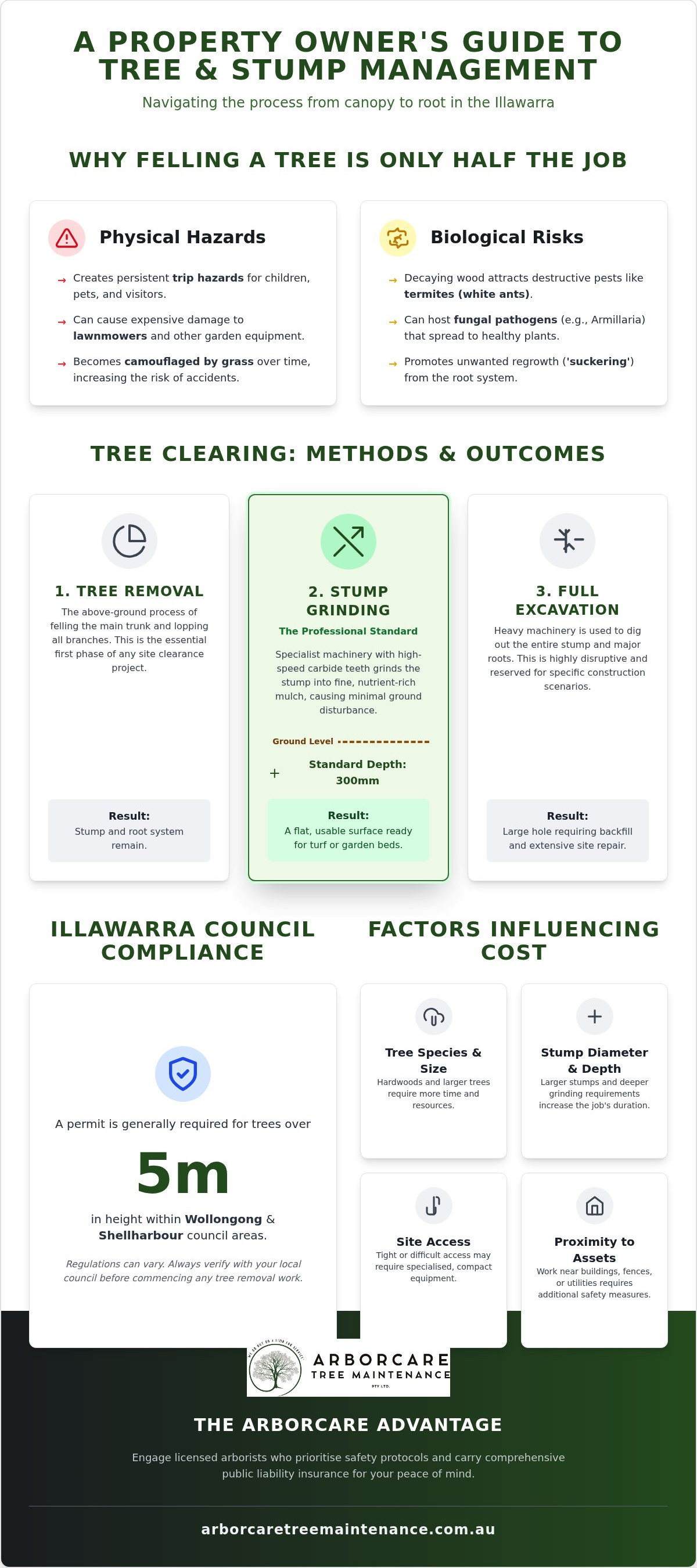
A leftover stump is essentially a ticking time bomb. It isn't just a matter of aesthetics; it's a physical hazard. Protruding wood can easily trip a running child or catch the blade of a lawnmower, leading to expensive equipment repairs or personal injury claims. In our local region, from the coastal suburbs of Wollongong down to the hills of Jamberoo, these neglected remains often become camouflaged by grass, making them even more dangerous over time. For those coordinating a large commercial tree removal Illawarra project, the risk of a workplace injury on a site with hidden stumps is a liability that simply isn't worth the shortcut.
Biological Risks of Decaying Stumps
When a tree is cut down but the stump remains, the biological activity doesn't stop immediately. Many Australian species are prone to 'suckering', where the root system continues to send up new, weak growth in a desperate attempt to survive. This creates a never-ending cycle of maintenance that drains your time and resources. More worryingly, decaying wood is the primary food source for subterranean termites, often called white ants. A stump provides a direct highway from the soil into your home's foundations. Once a colony establishes itself in a dead stump, it's only a matter of time before they scout for the structural timber in nearby buildings. Additionally, fungal pathogens like Armillaria can thrive in old root systems, spreading through the soil to infect and eventually kill the healthy trees and shrubs you actually want to keep.
Property Value and Aesthetics
A garden with a prominent stump often signals a lack of professional care to potential buyers or tenants. In the competitive Illawarra real estate market, first impressions are vital. Removing a stump allows you to reclaim valuable square metreage that can be repurposed for a flat lawn, a new garden bed, or even a paved entertaining area. Instead of working your landscaping around an obstacle, stump grinding provides a clean slate. This ensures your turf can grow evenly without the patchy, yellowing appearance often caused by a buried, rotting root ball competing for nitrogen in the soil. A clear, flat site is always more valuable and easier to maintain than one littered with the remnants of past removals.
Tree Removal vs Stump Removal vs Stump Grinding: Knowing the Difference
Clearing a property involves distinct technical stages that are often misunderstood. Tree removal refers specifically to the above-ground process of lopping branches and felling the main trunk. For those managing a large-scale project involving commercial tree removal Illawarra, this is merely the first phase of site preparation. Adhering to the national standards for managing risks of tree work ensures that this high-risk stage is completed without damaging nearby assets or utility lines. However, once the canopy is gone, you are left with the choice of how to handle the remaining wood below the surface.
Stump grinding is the professional standard for most Illawarra properties. Unlike full excavation, which involves heavy machinery and significant soil displacement, grinding is precise and minimally invasive. This method is particularly effective in the Illawarra's varied terrain, where rocky escarpment soils or heavy clays can make large-scale digging difficult and expensive. By choosing the right approach for your specific landscape, you can ensure a clean finish without the need for extensive turf repairs or structural reinforcement.
The Stump Grinding Process Explained
Our specialist equipment uses high-speed carbide teeth to chew through solid timber, turning the stump into nutrient-rich mulch. We typically grind to a depth of 300mm below the surface. This depth is the industry sweet spot; it's deep enough to allow for the installation of new turf or a garden bed while avoiding most deep-set underground utilities. Once the main body of the stump is gone, the remaining lateral roots are left to decompose naturally in the soil. This biological breakdown adds organic matter back into the earth without the need for chemical intervention or disruptive digging.
When Full Excavation is Necessary
While grinding suits 95% of residential and commercial needs, full excavation is sometimes required for specific construction goals. If you are preparing for new foundations, installing a swimming pool, or clearing a commercial site for heavy infrastructure, every trace of the root system must be removed. This process requires excavators and often results in a large void that must be backfilled with structural soil. It's a more costly and labour-intensive route, usually reserved for aggressive root systems that are actively threatening plumbing lines or structural footings. If you aren't sure which path fits your project, our team can provide a professional assessment of your stump grinding requirements to help you avoid unnecessary excavation costs.
Calculating the Cost: What Influences Tree and Stump Removal Prices?
Professional tree management is an investment in property safety and liability reduction. When providing a quote for commercial tree removal Illawarra, we evaluate several distinct variables that dictate the total project cost. No two jobs are identical. A massive Spotted Gum, for example, presents a significantly different challenge compared to a small Bottlebrush. The hardwood density and sheer volume of a mature Spotted Gum require more labour, heavier equipment, and longer grinding times to clear the root ball effectively. We prioritise transparency so property managers can budget accurately for their maintenance cycles.
The proximity to hazards also plays a vital role in the final figure. Working near powerlines, boundary fences, or a neighbour's roof requires meticulous planning and slower, controlled movements. Safety is our primary concern. If a tree is situated in a high-risk area, we must implement more rigorous exclusion zones and specialised equipment to protect your assets. To maximise value, we recommend the "Bundle and Save" approach. It is always more cost-effective to perform stump grinding at the same time as the tree removal. Mobilising our crew and heavy machinery once, rather than twice, reduces the overall overheads for your project.
Access and Equipment Factors
Site access is often the deciding factor between a standard job and a difficult one. We utilise different machinery depending on the entry points of your property. While large, tow-behind grinders are efficient for open land clearing, we also maintain narrow-access walk-behind machines for residential backyards with standard side gates. The terrain in suburbs like Dombarton or the steep slopes of Jamberoo can also influence the pace of work. We must factor in the time required to secure equipment on uneven ground. Finally, you have the choice of waste disposal. We can chip the timber into mulch for you to use in your garden beds, or we can transport the green waste off-site for professional processing.
Hidden Cost Drivers
Before any ground is broken, we conduct a thorough safety assessment. This includes checking with Before You Dig Australia (BYDA) to locate underground services like water, gas, and telecommunications. Striking a main line is an expensive mistake that we avoid through careful preparation. Timing also affects the price. Scheduled maintenance is generally more affordable than emergency call-outs following an Illawarra storm, where hazardous conditions and urgent response times increase the operational risk. Complex tree removal is a specialised service that involves advanced rigging and climbing techniques to dismantle trees in confined or high-risk areas. This methodical approach ensures that even the most difficult removals are completed without incident.
Council Permits and Regulations in the Illawarra
Navigating local government requirements is a critical step for any property manager or business owner in the Illawarra. Within this region, three distinct councils govern tree management, each with its own set of thresholds and fees. For instance, the local council governing the Wollongong area requires a permit for any tree exceeding five metres in height or having a trunk diameter of 30cm or more at ground level. Failing to secure this before starting a commercial tree removal Illawarra project can result in significant fines. As of August 2026, the application fee for one to two trees in the Wollongong area is $109.00, with a processing time of approximately 28 working days.
Shellharbour City Council, also situated within the Illawarra, follows similar height and diameter thresholds but also protects hollow-bearing trees that provide essential habitat for local wildlife. If you are operating near the Illawarra escarpment, the 10/50 Vegetation Clearing Entitlement Area might apply. This Rural Fire Service code allows for specific clearing to reduce bushfire risk, but it is vital to verify your property's status on the RFS website before acting. In the Kiama local government area of the Illawarra, the regulations are even more specific; a permit is necessary if a tree has a branch spread of three metres or more, or a diameter of 200mm at one metre above the ground.
The Importance of Arborist Reports
A professional report from a Level 3 or Level 5 arborist serves as your legal protection. It provides an objective assessment of a tree's health and structural integrity, which is often required by councils for any removal application involving protected species. These documents are also essential for insurance purposes, proving that you have exercised due diligence in managing property risks. Our team at Arborcare Tree Maintenance Pty Ltd assists clients by providing the technical data needed to satisfy council planners and streamline the approval process.
Protected Species in Our Region
The Illawarra is home to several protected native species that require specific permission to prune or remove. Indiscriminate lopping is often illegal and can lead to permanent tree stress or death. We adhere strictly to Australian Standards for pruning to ensure your trees remain healthy and compliant. DIY removal or hiring uncertified contractors puts your business at risk of litigation and environmental penalties. If you need assistance navigating these local laws, you can request a professional compliance assessment from Arborcare Tree Maintenance Pty Ltd to ensure your site meets all current NSW regulations.
The Arborcare Advantage: Professionalism from Canopy to Root
Choosing a local partner for commercial tree removal Illawarra ensures your property is managed by specialists who live and work in your community. Based in Dapto, our team understands the unique environmental conditions of the region, from the salt-heavy air of the coast to the dense growth along the escarpment. Arborcare Tree Maintenance Pty Ltd doesn't just fell trees; we provide a disciplined, end-to-end service that includes canopy lopping, wood chipping, and precision stump grinding. This comprehensive approach eliminates the need for multiple contractors and ensures your site is left clean, safe, and ready for its next purpose.
Safety is our non-negotiable priority. Every project we undertake is backed by $20 million in public liability insurance, providing essential peace of mind for property managers and business owners. This level of coverage reflects our commitment to high-level technical authority and rigorous industry standards. Beyond scheduled maintenance, we provide a reliable emergency tree service in the Illawarra. When severe weather hits, our rapid response team is available 24/7 to clear hazardous debris and secure your property against further damage.
Our Specialised Equipment
We invest in the latest arboricultural technology to deliver superior results on every site. Our high-performance grinders are designed to reach depths that allow for immediate replanting or turfing, ensuring no unsightly mounds or root remnants are left behind. For modern blocks in suburbs like Shellharbour and Fairy Meadow where space is at a premium, we maintain specialised tight-access equipment that fits through standard side gates. Additionally, our industrial wood chippers turn your green waste into premium garden mulch on-site, offering a sustainable way to suppress weeds and retain moisture in your remaining garden beds.
Your Next Steps for a Safer Property
The process begins with a thorough, no-obligation on-site assessment. We visit your property to evaluate tree health, identify potential hazards, and determine the most efficient removal method. On the day of the job, our crew establishes clear safety zones and executes the work with methodical precision. We handle the heavy lifting, the technical rigging, and the final cleanup so you can focus on your daily operations. Contact Arborcare Tree Maintenance Pty Ltd today for your free Illawarra tree removal quote and secure the professional intervention your property requires.
Secure Your Property with Expert Tree Care
Managing trees on your Illawarra property requires a balance of safety, aesthetics, and legal compliance. Felling a tree is only the first step. Addressing the stump through precision grinding is essential to prevent termite infestations and eliminate trip hazards. By understanding the specific permit requirements of your local council and choosing the right equipment for your terrain, you protect both your landscape and your legal liability.
Whether you are coordinating a residential garden refresh or a significant commercial tree removal Illawarra project, the standard of professional care remains the same. Our locally owned Dapto business provides the technical expertise and high-performance machinery needed to handle even the most complex removals. As fully licensed and insured arborists, we prioritise safety in every task, from routine maintenance to our 24/7 emergency storm response.
Take the first step toward a clearer, safer garden today. Get a Free Tree and Stump Removal Quote in the Illawarra and enjoy the peace of mind that comes with professional arboricultural care.
Frequently Asked Questions
Do I really need to remove the stump after the tree is cut down?
Removing the stump is the only way to ensure the site is truly safe and clear. While felling the trunk removes the immediate overhead risk, a leftover stump becomes a breeding ground for termites and other wood-boring pests that can eventually migrate to your home's foundations. For those managing a commercial tree removal Illawarra project, leaving a stump creates a permanent trip hazard and a liability that can complicate future land use or property sales.
How much does stump grinding cost in Wollongong?
The cost of stump grinding depends on several variables, including the diameter of the stump, the tree species, and the ease of access to the site. Hardwood species like Spotted Gum take longer to grind than softer palms, which influences the time required on-site. Because every property has different soil conditions and root spreads, we provide specific quotes after an on-site assessment to ensure you only pay for the work required for your particular landscape.
Will stump grinding damage my underground pipes or cables?
Professional grinding is a controlled process designed to avoid damaging essential infrastructure. We utilise Before You Dig Australia (BYDA) reports to identify the location of water, gas, and telecommunications lines before we begin. Since our standard grinding depth is approximately 300mm, we typically operate well above most deep-set utility lines, but conducting these checks is a mandatory part of our safety protocol to protect your property.
Can I replant a new tree in the same spot after stump grinding?
You can replant in the same area, but it requires some soil preparation first. The grinding process leaves behind a large volume of wood chips and sawdust which can deplete nitrogen from the soil as they decompose. To give a new tree the best start, you should remove as much of the old woody debris as possible and backfill the hole with high-quality organic soil and fertiliser to restore the necessary nutrients.
Do I need a council permit for stump removal in the Illawarra?
In most cases, once you have secured a permit for the initial tree removal, the stump grinding is considered a standard part of the clearing process. Councils like Wollongong and Shellharbour focus their regulations on the removal of the living canopy and trunk. However, if you are clearing a large area for a commercial tree removal Illawarra development, it's vital to ensure your original permit covers the total removal of all vegetation, including the root systems.
How long does it take to grind a standard-sized tree stump?
A standard suburban stump usually takes between 30 minutes and two hours to clear completely. A medium-sized stump of around 50cm in diameter might be finished in 45 minutes, while larger or more complex root systems will require additional time. Factors such as the presence of rocks in the soil or the steepness of the terrain in suburbs like Dombarton can also influence the speed of the machinery.
Is stump grinding environmentally friendly compared to chemical removal?
Grinding is the most environmentally responsible method for clearing a stump. Chemical removal involves drilling holes and pouring in toxins that can leach into the surrounding soil and affect the health of nearby plants or groundwater. Grinding is a mechanical process that produces organic mulch. This mulch eventually breaks down and returns nutrients to the earth naturally without the use of harsh or persistent poisons.
What happens to the wood chips after the stump is ground down?
The resulting wood chips are typically used to backfill the hole left by the stump to prevent it from becoming a trip hazard. These chips make excellent garden mulch and can be spread over your garden beds to help retain moisture and suppress weeds. If you prefer a completely clear site for immediate turfing, we can discuss options for removing the excess mulch as part of our end-to-end service.


