
Imagine standing in your garden as a southerly buster rolls over the Illawarra Escarpment, watching a heavy branch sway inches from your gutters. It's a stressful sight that many local homeowners face, especially when you're caught between the need for urgent tree pruning and the confusion of local council protection orders. You want a safe, tidy property, but the risk of a DIY accident or an accidental $1.1 million fine for unauthorised work feels like a massive burden.
We believe that maintaining your outdoor space should provide peace of mind, not a legal or physical headache. This guide will help you master the essentials of professional tree maintenance to ensure your trees remain healthy, your views stay clear, and your home stays protected during the NSW storm season. We'll preview the specific 2026 permit triggers for Wollongong and Shellharbour, explain how to navigate the 10/50 vegetation clearing code, and show you why expert intervention is the most reliable way to safeguard your property's value.
Key Takeaways
- Identify the "Three Ds" (Dead, Damaged, and Diseased wood) to immediately improve your garden's health and structural safety.
- Determine the ideal timing for tree pruning in the Illawarra, focusing on late winter for deciduous species to avoid the risks of the spring flush.
- Understand the critical difference between professional pruning and harmful lopping to ensure your trees remain resilient rather than vulnerable to decay.
- Navigate local council regulations in Wollongong and Shellharbour to ensure your property maintenance remains compliant and avoids heavy fines.
- Prepare your property for the NSW storm season by identifying high-risk branches before they threaten your home or power lines.
What is Tree Pruning and Why is it Vital for Your Property?
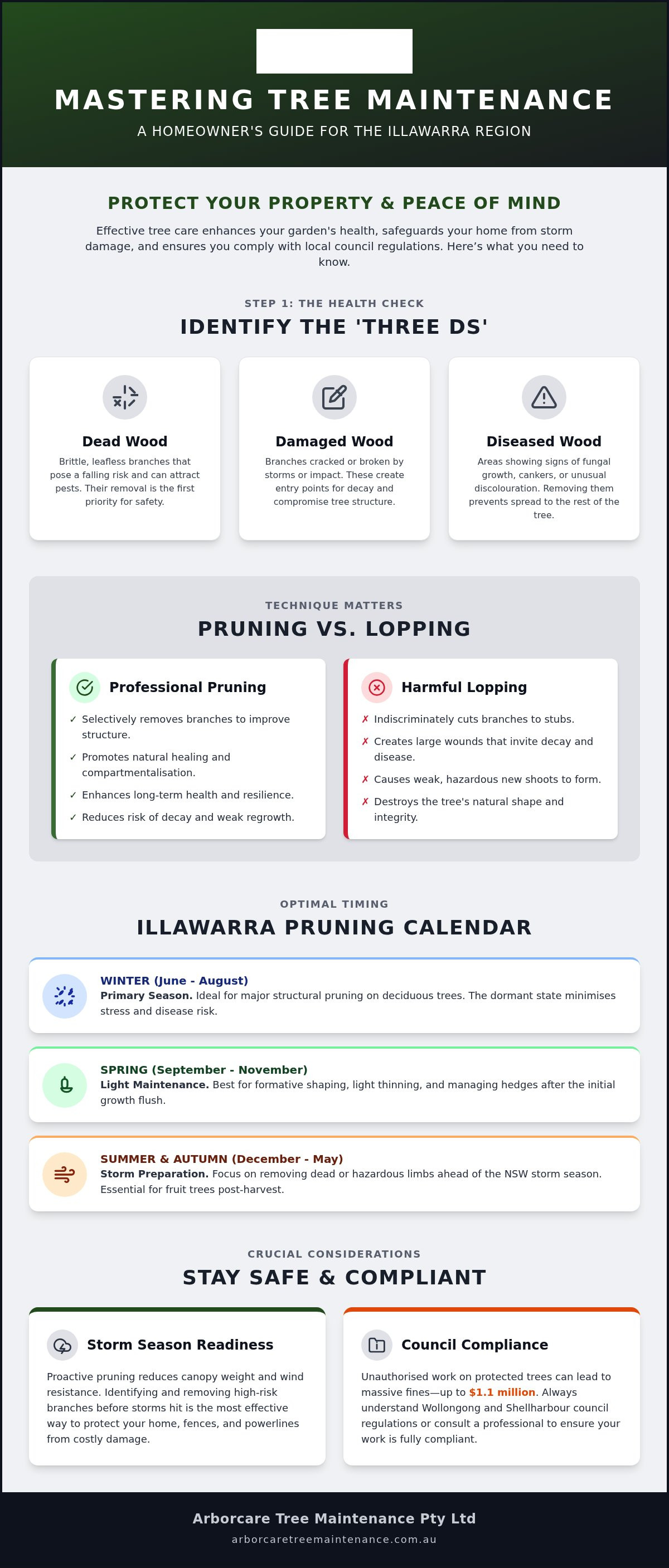
Understanding What is Tree Pruning involves more than just removing unwanted branches. It is the methodical, selective removal of specific plant parts, such as branches, buds, or roots, to improve the tree's structural integrity and biological health. While many homeowners view tree pruning as a simple cosmetic garden chore, it's actually a technical discipline that requires a deep understanding of arboriculture. By focusing on the 'Three Ds'—removing Dead, Damaged, or Diseased wood—we ensure that your trees remain assets rather than liabilities.
There's a critical distinction between aesthetic trimming and structural pruning. Trimming often focuses on the outer foliage to maintain a specific shape, which is common in hedging. Structural pruning, however, addresses the internal architecture of the tree. It involves thinning the canopy to reduce wind resistance and weight, which prevents the trunk from splitting during a storm. For Illawarra homes located near powerlines, shared fences, or driveways, this type of maintenance is essential. A single overhanging limb can cause significant damage to infrastructure or lead to dangerous electrical faults if left unmanaged.
The Biological Benefits of Professional Pruning
Professional intervention triggers a positive biological response in your garden. For many native Australian species, precise cuts stimulate new, healthy growth by redirecting the tree's energy away from failing limbs toward vigorous new shoots. By thinning out a congested canopy, we improve air circulation and sunlight penetration throughout the entire plant. This reduces the internal humidity that often leads to fungal infections. When you maintain these conditions, you effectively prevent the spread of pests and diseases that can quickly devastate a local ecosystem.
Property Value and Kerb Appeal
A well-maintained landscape significantly boosts the market value of Wollongong and Shellharbour homes. Strategic tree pruning enhances kerb appeal by clearing sightlines and restoring coastal views that have been obscured by years of unchecked growth. This process isn't about clearing the land; it's about refining the existing greenery to frame your home beautifully. In high-end Illawarra estates, professional hedging and topiary work provide a polished, formal finish that suggests a high level of property care. This attention to detail reassures potential buyers that the land has been managed with safety and longevity in mind, making the property far more attractive during a sale.
When to Prune: Timing Your Maintenance for NSW Conditions
Timing is everything when it comes to the health of your garden. In the Illawarra, the maritime influence and the shelter of the Escarpment create unique microclimates that dictate when you should pick up the shears. Late winter, specifically from June to August, is the gold standard for tree pruning deciduous species. During this dormant phase, the absence of leaves allows for a clear view of the tree's structure, making it easier to identify crossing branches or weak unions. Pruning now ensures the tree can seal its wounds quickly once the warmer weather arrives.
You should avoid heavy intervention during the early spring flush. This is the period between September and November when trees direct vast amounts of energy into new foliage and shoot development. Cutting too much during this high-growth phase can lead to excessive sap loss and leave the tree vulnerable to fungal infections. For those managing high-risk species, consulting a professional tree work safety guide is a vital step in understanding the physical hazards of working during different seasons. If you're concerned about the stability of your canopy before the winds pick up, our team provides expert professional tree maintenance services to help you prepare.
The Illawarra Seasonal Pruning Calendar
- Winter (June to August): This is the primary window for structural work and deadwooding. Deciduous trees are dormant, and the risk of spreading disease is at its lowest.
- Spring (September to November): Focus shifts to hedging and light thinning. This is the time to manage the shape of your privacy screens before they become overgrown.
- Summer and Autumn: These months are dedicated to managing fruit trees and preparing for the peak of the NSW storm season. Clearing dead or overhanging limbs now prevents property damage during high-wind events.
Species-Specific Timing for the South Coast
The timing requirements vary significantly between native Eucalypts and exotic garden varieties. While many exotics prefer winter maintenance, certain Australian natives respond better to pruning in late spring or summer when they are actively growing and can quickly recover. Tropical and sub-tropical species also have specific needs. For instance, scheduling palm tree trimming Wollongong is best done in late spring to remove spent flower stalks and old fronds before they become a hazard. For flowering trees, the rule is simple: prune immediately after their bloom cycle finishes to avoid cutting off next year's flower buds.
Pruning vs Lopping: Why Professional Techniques Matter
Many homeowners mistakenly believe that cutting a tree back to its main trunk or large stubs is an efficient way to manage growth. In the arboriculture industry, this practice is known as lopping, and it is widely considered a form of tree abuse. Unlike tree pruning, which involves making precise cuts to enhance a tree's natural structure, lopping is the indiscriminate removal of branches. This leaves the tree with gaping wounds that it cannot easily seal, inviting decay and pest infestations into the heart of the timber.
The biological consequences of lopping are severe. When a large portion of the leaf-bearing canopy is removed, the tree enters a state of starvation. It loses its primary source of energy production and responds by rapidly producing epicormic shoots. These are the thin, vertical suckers you often see sprouting from lopped stubs. While they look like healthy new growth, they are structurally compromised. Epicormic shoots are only attached to the outer layer of the wood, making them highly prone to snapping during high winds or heavy rain. By choosing lopping over professional pruning, you are effectively creating a more dangerous tree for the future.
The Dangers of DIY Tree Lopping
Attempting to manage large trees without the proper training is a high-risk activity. Using a chainsaw while balanced on a ladder is one of the most frequent causes of serious garden accidents in the Illawarra. The risk of 'kickback', where the saw blade hits a hard knot and jerks violently toward the operator, is significantly higher when working at height or in awkward positions. Falling debris can also take unpredictable paths, threatening your home's roof, fences, or anyone standing below. For a deeper look at these risks, read our guide on The Dangers of DIY Tree Lopping Without an Arborist before you reach for the tools.
Professional Standards: AS 4373-2007
Qualified arborists operate under strict guidelines known as AS 4373-2007. This is the Australian Standard for Pruning of Amenity Trees. This standard ensures that every cut is made with the tree's long-term health in mind. We utilise 'target pruning' techniques, which involve cutting just outside the branch collar. This specific method allows the tree to activate its natural defence systems and seal the wound effectively. We also maintain our equipment to the highest standards. Using sterilised, professional-grade tools prevents the cross-contamination of pathogens between different trees in your garden, ensuring your landscape remains vibrant and resilient.
Navigating Council Regulations and Storm Season Readiness
Living between the mountains and the sea means local trees face intense environmental pressures. Wollongong City Council and Shellharbour City Council enforce strict Tree Protection Orders (TPOs) to preserve the region's canopy. In Wollongong, you generally need a permit for tree pruning if the branches are thicker than 10cm or if the tree stands taller than 5 metres. Shellharbour has similar thresholds for trees over 5 metres in height or 30cm in diameter. Ignoring these regulations is a high-risk gamble; unauthorised work can lead to fines reaching up to $1.1 million under the NSW Biodiversity Conservation Act 2016.
If your property is in a designated bushfire-prone area, the 10/50 Vegetation Clearing Scheme might apply. This NSW state-wide regulation allows homeowners to clear specific vegetation to reduce fire risk without a council permit. You must verify your eligibility using the NSW Rural Fire Service online tool before starting any work. For those outside these zones, preparing for the Illawarra's famous 'Southerly Busters' is a priority. These sudden, violent wind shifts can easily snap unmaintained limbs, making proactive maintenance essential for home safety.
Council Permits and Significant Trees
The permit application process typically takes between 28 and 30 working days. If your tree is heritage-listed or considered 'significant' due to its age or species, the requirements are even more stringent. Providing a comprehensive arborist report with your application can speed up the approval time. As licensed professionals based in Dapto, we understand the specific pruning exemptions for 2026 and can guide you through the paperwork to ensure your project remains fully compliant with local laws. This professional oversight prevents the stress of legal disputes with neighbours or local authorities.
Emergency Prevention and Storm Prep
Before the peak of the storm season, you should inspect your canopy for 'v-forks'. These tight junctions between branches are structural weak points that often split under the pressure of high winds. Crown thinning is a professional technique we use to reduce the 'wind sail' effect. By selectively removing internal branches, we allow wind to pass through the canopy rather than pushing against it like a solid wall. This reduces the leverage exerted on the trunk and root system. If a storm has already caused damage, you can access our Emergency Tree Service Illawarra for rapid response to make your property safe again.
To ensure your garden is ready for whatever the NSW coast throws at it, book a professional safety assessment with our expert arborists today.
Arborcare: Your Local Specialists for Tree Pruning in Illawarra
Arborcare Tree Maintenance Pty Ltd is a Dapto-based firm with deep roots in the local community. We serve the entire region, from Wollongong down to Shellharbour, providing a level of reliability that only a local expert can offer. Our team of licenced and insured arborists brings years of technical authority to every project, whether it's a routine garden tidy-up or complex tree pruning in high-access areas. We've invested in specialised, professional-grade equipment designed to handle the unique challenges of the Illawarra landscape, ensuring that every task is completed with a focus on safety and precision.
Our methodology is built on a full-service approach. We believe that professional property maintenance should be a stress-free experience for the homeowner. This means Arborcare Tree Maintenance Pty Ltd manages the entire lifecycle of the job, from the initial structural assessment through to the final cleanup. We don't just remove limbs; we offer comprehensive mulching and land clearing to ensure your property remains functional and tidy. By adhering to the highest arborist standards and safety protocols, we provide the steady, disciplined intervention required for high-risk tasks, protecting both your family and your home.
Why Wollongong Homeowners Choose Arborcare Tree Maintenance Pty Ltd
Working with a local specialist provides distinct advantages. We possess a deep understanding of the coastal species and specific soil conditions found across the Illawarra Escarpment and coastal plains. This local knowledge allows us to predict how your trees will respond to maintenance in our specific climate. We offer personalised service for everything from small residential blocks to expansive commercial estates. Every job comes with our "no-mess" guarantee. Our crews are methodical and thorough, ensuring that Arborcare Tree Maintenance Pty Ltd leaves your garden in a better condition than we found it, with all debris cleared and repurposed as high-quality mulch where requested.
Get a Professional Quote Today
Starting your garden's transformation is a straightforward process. We've designed our site assessment to be thorough and informative, providing you with a clear roadmap for your property's health. Arborcare Tree Maintenance Pty Ltd offers transparent, competitive pricing across our entire range of services, including hedging, tree pruning, and stump grinding. You won't have to worry about hidden costs or vague estimates. If you want to ensure your trees are prepared for the next storm season while boosting your home's kerb appeal, Contact Arborcare Tree Maintenance Pty Ltd for a professional pruning quote. Our team is ready to provide the expert care your landscape needs to thrive.
Securing Your Property’s Future and Landscape Health
Investing in professional maintenance ensures your garden remains a safe asset rather than a liability. We've explored how precise tree pruning protects your home from storm damage while keeping you compliant with local Wollongong and Shellharbour council regulations. By choosing certified techniques over harmful lopping, you're prioritising the long-term vitality of your trees and the structural safety of your property. This proactive approach is the most effective way to safeguard your investment against the unpredictable NSW weather.
As a local Dapto family business, we bring technical authority and a deep commitment to our community. Our licensed and insured arborists are always ready to assist, whether it's through routine maintenance or our 24/7 emergency storm response. We understand the unique environmental pressures of the Illawarra and provide the disciplined care necessary to manage high-risk tasks safely. This professional oversight allows you to enjoy your outdoor space without the stress of potential accidents or legal complications.
Ready to enhance your garden’s safety and aesthetic appeal? Request a Free Tree Pruning Quote in the Illawarra today. Your landscape deserves the highest standard of professional care; we look forward to helping your garden thrive in every season.
Frequently Asked Questions
Do I need a council permit to prune a tree in Wollongong?
Yes, you generally require a permit from Wollongong City Council if the tree is over 5 metres in height or has a trunk diameter exceeding 30cm at ground level. You also need approval if you intend to prune branches with a diameter of more than 10cm. It's vital to verify exemptions for specific species or bushfire-prone zones before starting any work to avoid significant fines.
What is the difference between tree pruning and tree lopping?
Tree pruning is a professional, scientific method of removing specific branches to improve the tree's health and structure according to Australian Standards. In contrast, lopping is the indiscriminate cutting of branches to stubs. Lopping often causes tree stress and leads to the growth of weak, dangerous epicormic shoots, whereas professional pruning helps the tree seal wounds and remain resilient.
How much does professional tree pruning cost in the Illawarra?
The cost of professional maintenance depends on the tree's size, its location on your property, and the complexity of the task. Factors such as proximity to powerlines or the need for specialised high-access equipment will influence the final quote. We provide transparent, site-specific assessments to ensure you receive an accurate price based on the unique requirements of your landscape and safety needs.
Can I prune my own trees if they are overhanging powerlines?
No, you should never attempt to prune trees that are in close proximity to or overhanging powerlines. This is a high-risk task that requires specialised training and equipment to prevent electrocution or grid damage. Only qualified arborists with specific electrical hazard certification are permitted to work within certain distances of live wires to ensure the safety of the operator and the property.
When is the best time of year to prune my garden trees?
Late winter is typically the ideal time for tree pruning deciduous species while they are dormant and before the spring growth begins. This timing allows for better visibility of the tree's structure and faster wound recovery. However, some Australian natives and flowering varieties have different requirements. We recommend a seasonal assessment to determine the best schedule for your specific garden species and coastal conditions.
What happens if a tree on my property is heritage-listed?
Heritage-listed or significant trees are subject to much stricter protection orders and require formal council consent for any maintenance. You will likely need a comprehensive report from a qualified arborist to justify the pruning work. We can help identify these trees and manage the complex application process to ensure your property maintenance remains fully compliant with Illawarra heritage regulations.
How often should I have my trees professionally inspected and pruned?
We recommend a professional safety inspection every 12 to 24 months to identify potential hazards before they become emergencies. Faster-growing species or those located near buildings may require more frequent attention. Regular tree pruning prevents the buildup of deadwood and ensures your canopy remains thinned and balanced, which is particularly important ahead of the annual NSW storm season.
Do you provide mulching services for the branches you prune?
Yes, we provide full-service mulching for all branches and debris generated during the pruning process. As part of our clean and tidy promise, we use professional-grade woodchippers to process the waste on-site. You can choose to have the nutrient-rich mulch left for use in your garden beds or have us remove it entirely, leaving your property clear and well-maintained.


