That "cheap" tree lopping quote sitting in your inbox might be the most expensive mistake you ever make for your property. While it's tempting to hire the first person with a chainsaw to clear your view, the reality is that indiscriminate cutting often leaves trees unstable and prone to failure during intense Illawarra storms. You want a tidy garden and peace of mind, but the difference between a quick "lop" and professional tree pruning Wollongong residents can trust is the difference between a healthy canopy and a $3,000 council fine.
It's understandable to feel overwhelmed by Wollongong City Council's strict vegetation rules or worried about "cowboy" operators damaging your landscape. This guide will show you why traditional lopping is a dangerous practice that can destroy your property's value and how strategic, compliant pruning keeps your garden safe. We're debunking five common myths that lead homeowners into legal and financial trouble, ensuring you know exactly how to manage your trees without the stress of unexpected structural failures or council intervention.
Key Takeaways
- Understand how indiscriminate tree lopping creates structural hazards and why targeted pruning is the only way to maintain a safe property.
- Save money by avoiding the rapid, weak regrowth and frequent maintenance cycles typically caused by poor cutting techniques.
- Prepare your garden for the Illawarra storm season by scheduling tree pruning Wollongong experts recommend for high-wind resistance.
- Stay compliant with Wollongong City Council's tree management policies to protect yourself from significant penalties and legal trouble.
- Learn which professional safety standards and insurance documents you must verify before any high-risk work begins on your land.
Understanding the Difference: Is It Tree Lopping or Tree Pruning?
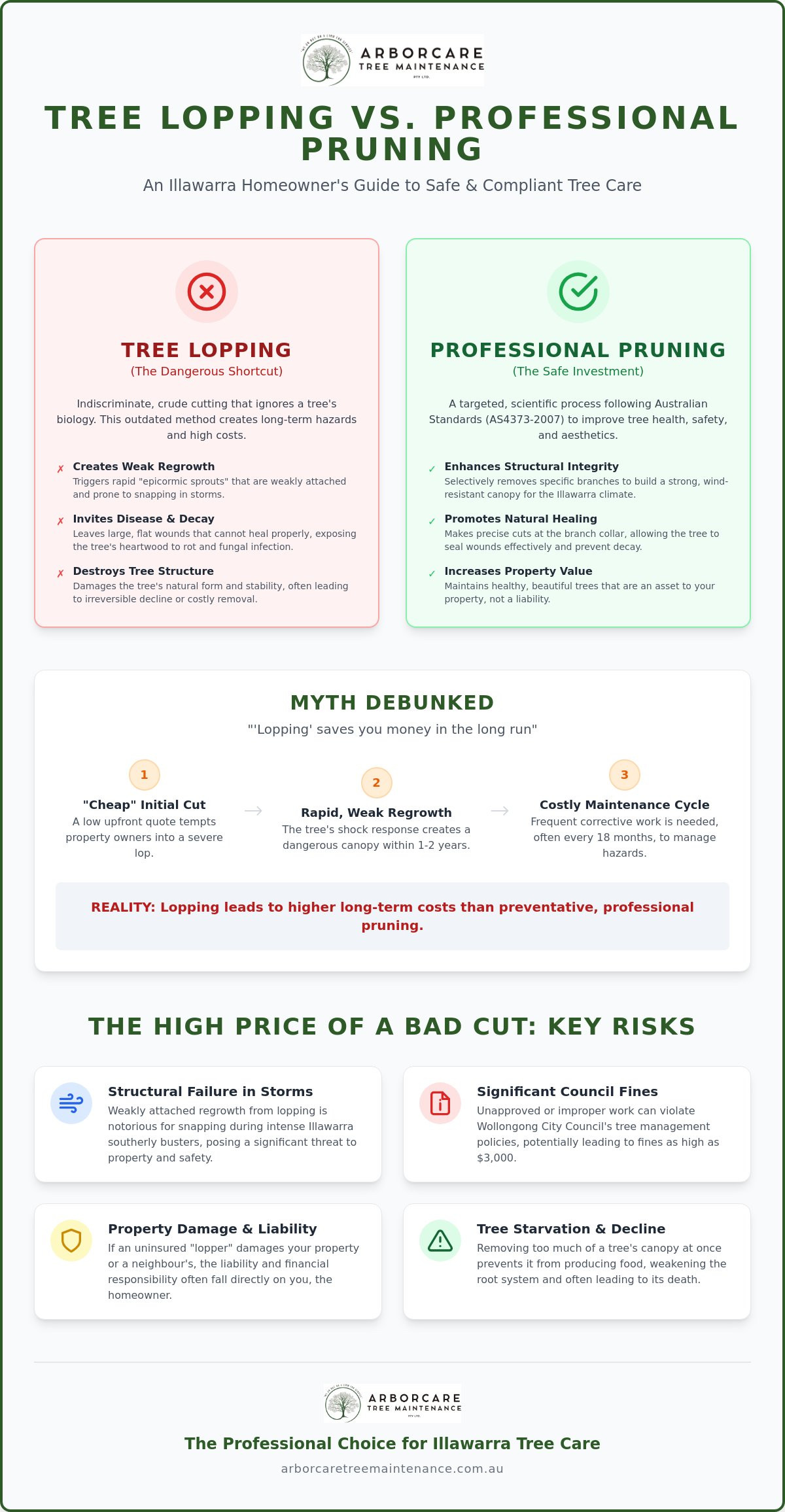
Many property owners in the Illawarra use the terms "lopping" and "pruning" interchangeably, but in the world of professional arboriculture, they represent two very different outcomes. Tree lopping describes the indiscriminate cutting of branches to stubs or lateral branches that are not large enough to assume the terminal role. It is a crude, outdated method that ignores the biological needs of the tree. In contrast, tree pruning Wollongong residents should look for is a targeted, scientific process. It involves the selective removal of specific branches to improve the tree's health, structural integrity, and aesthetic value.
Qualified arborists generally avoid the term "lopping" because it carries a negative reputation for poor workmanship. Instead, we adhere to the Australian Standard AS4373-2007, Pruning of Amenity Trees. This document is the gold standard for our industry; it dictates exactly how and where cuts should be made to ensure the tree can recover. Utilising proper pruning techniques ensures that each cut is made at the branch collar, which allows the tree to naturally seal the wound and prevent decay from entering the main trunk.
The Hidden Dangers of Traditional Lopping
When a tree is lopped, it enters a state of shock. To survive, it rapidly produces "epicormic growth," which are those clusters of thin, vertical sprouts you often see after a heavy cut. While these sprouts look like the tree is recovering, they are actually a major safety risk. These new limbs are only attached to the outer layer of the wood rather than being integrated into the core structure. As they grow larger, they become incredibly prone to snapping during the high-wind events common in the Illawarra. Within just two years, a lopped tree often becomes a far greater hazard than it was before the work began. Furthermore, the large, flat wounds left by lopping rarely heal correctly, leaving the heartwood exposed to fungal infections and internal rot.
Why Terminology Matters for Wollongong Homeowners
Choosing the right words when searching for service providers can protect your property and your wallet. "Cowboy" operators often use the word lopping to market cheap, fast, and destructive services. These individuals rarely have the formal education required to understand tree biology or the complex rigging systems needed for safe work. Hiring a "Qualified Arborist" ensures you are working with a professional who understands that professional tree pruning is a science-based discipline. At Arborcare Tree Maintenance, we prioritise the long-term safety of your garden by following strict industry protocols that prevent the need for expensive, emergency removals later down the track.
Myth #1: 'Lopping' Saves You Money in the Long Run
The logic seems sound at first glance: if you cut a tree back as hard as possible, it will take longer to grow back. Many property owners choose a severe "lop" thinking they won't need to call a professional again for a decade. This is a costly misconception. In reality, the shock of lopping triggers a survival mechanism that forces the tree to produce rapid, weak growth. Instead of saving money, you've actually started a cycle of frequent, expensive maintenance. While tree pruning Wollongong specialists perform ensures long-term stability, a lopped tree often requires corrective work every 18 months just to manage the dangerous new sprouts.
Preventative maintenance is always more budget-friendly than emergency intervention. A healthy, well-structured tree is an asset that appreciates over time. When you neglect proper care in favour of a "quick fix," you risk the structural integrity of the entire plant. This eventually leads to higher costs when the tree becomes too hazardous to remain. Investing in a regular tree health assessment can identify these issues before they turn into financial burdens.
The High Cost of 'Cheap' Tree Work
Hiring an uninsured "lopper" because they offered the lowest price carries massive hidden risks. If a poorly cut branch fails during a southerly buster and crushes a neighbour's ute or damages a fence, the liability falls on the property owner. Beyond the legal risks, there is the biological "starvation" effect. Leaves are a tree's energy source; removing too much canopy at once prevents the tree from feeding itself. This weakens the root system and often makes the tree so unstable that a complex tree removal Illawarra property owners want to avoid becomes the only safe option left.
How Professional Pruning Boosts Property Value
A garden filled with healthy, crown-lifted trees and neatly maintained hedges significantly increases the market appeal of your home. It suggests a property that has been cared for with a high level of detail. Buyers today are wary of large, neglected trees that look like a future liability. Providing a history of professional care, or even an arborist report, offers peace of mind during a sale. For those managing smaller greenery, checking the hedge trimming cost Wollongong residents typically pay can help you budget for a complete garden overhaul that adds thousands to your property's value.
Myth #2: Wollongong Trees Don't Need Seasonal Pruning
The "set and forget" approach to garden maintenance is a gamble many homeowners in our region lose every summer. Our local climate is uniquely challenging for large vegetation; we balance corrosive salt spray in coastal suburbs like Fairy Meadow with the high-velocity winds that roll off the Escarpment. Without regular intervention, trees become structurally compromised by the very environment they live in. Professional tree pruning Wollongong services are specifically designed to address these environmental stressors before they lead to a catastrophic failure during a storm.
One of the most overlooked risks is the "Wind Sail" effect. A dense, unpruned canopy acts exactly like a sail on a boat. During a powerful southerly buster, the wind cannot pass through the thick foliage, putting immense pressure on the trunk and root system. This is how seemingly healthy trees end up on roofs or power lines. Thinning the crown allows the air to move through the branches safely, significantly reducing the risk of the entire tree uprooting when the weather turns sour.
Preparing for the Illawarra Storm Season
Preparing your property for the storm season involves more than just clearing your gutters. We focus on "deadwooding," which is the removal of dead or dying branches often referred to in the industry as "widow-makers." These are the first to fall when the wind picks up. We also utilise weight reduction techniques to remove heavy growth from the ends of long limbs. This reduces the leverage on the main trunk and prevents split trunks when the ground becomes saturated and soft during heavy NSW rainfall events.
Species-Specific Timing: Eucalypts vs. Palms
Timing your maintenance is just as critical as the technique itself. While many Australian natives like Eucalypts respond best to late winter or early spring pruning when they are dormant, other species have vastly different requirements. Deciduous trees are best handled while their structure is visible in winter, whereas palms require year-round monitoring for heavy seed pods and dead fronds. For those dealing with overgrown or hazardous palms, understanding the process for palm tree removal Illawarra homeowners often require is the first step in maintaining a safe and tidy yard. Every species in your garden has a specific biological window where pruning will promote health rather than cause stress.
Myth #3: You Can Prune Your Own Trees Without Council Approval
Thinking you can simply "tidy up" a large tree on your property without checking local regulations is a common mistake that leads to heavy financial penalties. In the Illawarra, tree management is governed by the Wollongong City Council Development Control Plan (DCP). This plan exists to protect the local canopy and ensure that tree pruning Wollongong residents perform does not compromise the health of the urban forest. Many homeowners believe they are safe as long as they only remove 10% of the canopy, but this "10% rule" is often misinterpreted. If your measurements are off, or if you prune a protected species, you are technically in breach of the law.
The risk of DIY work extends beyond the physical danger of falling branches. Hiring an uncertified worker or a "handyman" to perform lopping on a protected tree makes you legally liable for the damage. Council rangers often respond to reports from neighbours who notice significant changes to a local skyline. To ensure you stay on the right side of the law, it is essential to book a professional arborist assessment before any major work begins.
Navigating the Wollongong Tree DCP
The council's permit triggers are very specific. You generally require a formal permit if the tree is more than 5 metres in height, has a trunk diameter of 30cm or more at ground level, or if you intend to prune branches with a diameter of more than 10cm. While these rules apply broadly in suburbs like Dapto and Shellharbour, there are variations based on species. The "Exempt Tree Species" list for Wollongong Council identifies specific varieties, such as certain fruit trees or environmental weeds, that can be managed without a formal permit. However, identifying these species correctly requires technical expertise; misidentifying a protected native as an exempt species will not protect you from a fine.
The Risks of Non-Compliance Fines
As of July 2026, the cost of ignoring these regulations has never been higher. Individuals found breaching tree management permits face fines of $3,000 per offence, while corporations can be fined up to $6,000. These are not empty threats; Wollongong City Council actively monitors tree removals and significant pruning activities across the region. Beyond the immediate fine, any approved tree removal now typically comes with a mandatory requirement to plant a replacement tree on the property. A certified arborist's report, which usually costs between $350 and $600, provides the legal protection you need. It serves as professional evidence that your pruning work was necessary for safety or tree health, effectively insulating you from legal trouble.
Why Professional Arborist Pruning is the Only Safe Choice
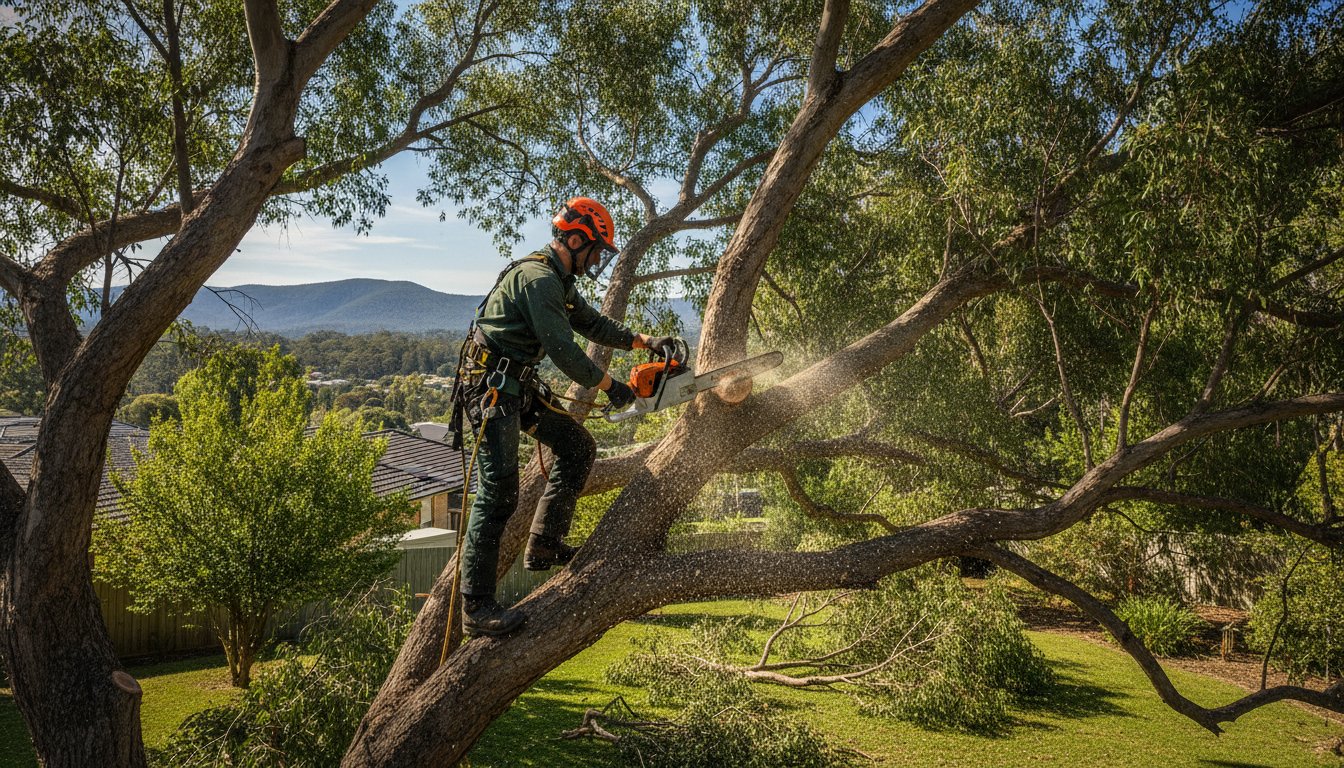
Professional tree work is a high-risk discipline that requires more than just a chainsaw and a ladder. It demands specialized equipment to ensure the safety of both the operators and your property. At Arborcare Tree Maintenance, we utilise Elevated Work Platforms (EWPs), commonly known as cherry pickers, and heavy-duty rigging to manage large canopies without the need for invasive climbing spikes that damage the tree's bark. This specialized equipment, combined with high-capacity wood chippers, ensures that tree pruning Wollongong properties require is completed efficiently and safely. Beyond the machinery, we carry comprehensive public liability insurance. This is a non-negotiable protection that shields you from the financial risks associated with complex aerial work. You should never allow an uninsured operator onto your land, as the legal and financial consequences of an accident can be life-changing for a property owner.
Following Australian Standards (AS4373)
The technical foundation of our work is the Australian Standard AS4373-2007. This standard dictates that we use "target pruning" to protect the tree’s natural defence zone. By cutting just outside the branch collar, we allow the tree to seal itself against pathogens and decay. We strictly avoid "topping" or "flush cuts" because these outdated and harmful methods create entry points for rot and weaken the tree's structure over time. Flush cuts remove the collar where the tree's natural healing chemicals are concentrated, while topping leaves large open wounds that a tree cannot easily close. Correct structural pruning doesn't just look better; it actively extends the lifespan of your trees and reduces the need for constant, expensive maintenance in the future.
The Arborcare Difference in Wollongong
Being based in Dapto gives us a deep understanding of the Illawarra's unique environmental challenges, from the salt spray of the coast to the heavy rainfall of the escarpment. We aren't just a service provider; we are local experts who live and work in your community. This local presence allows us to offer a 24/7 emergency response for fallen trees and storm damage, providing immediate reassurance when the weather turns dangerous. We also believe in sustainable property management, which is why we recycle our pruning waste into high-quality mulch for local gardens. This keeps organic matter out of landfill and helps Illawarra gardens thrive during dry spells. Whether you need help with large-scale removals or expert hedge trimming Wollongong residents trust, our team combines technical authority with a safety-first approach. We take the stress out of property maintenance by delivering steady, reliable results every time.
Protect Your Property with Expert Tree Care
Maintaining a safe and compliant garden in the Illawarra requires moving beyond the destructive habit of tree lopping. You've learned that indiscriminate cutting only invites structural instability and potential legal trouble with local authorities. By choosing a scientific approach to tree pruning Wollongong properties stay resilient against storm season while avoiding the rapid, weak regrowth that leads to higher maintenance costs.
As a locally owned business based in Dapto, Arborcare Tree Maintenance provides the technical authority and safety-conscious service your landscape deserves. Our team consists of fully licensed and insured arborists who understand the unique environmental needs of our region. We offer 24/7 emergency tree services to ensure your property remains secure regardless of the weather. Don't leave your safety to chance with uncertified operators who risk your home's value and your legal standing.
Get a Professional Pruning Quote from Arborcare Today and give your trees the expert care they need to thrive for years to come.
Frequently Asked Questions
Is tree lopping illegal in Wollongong?
Tree lopping itself isn't a criminal act, but performing unapproved work on protected trees is a serious breach of the Wollongong City Council Development Control Plan. Most council permits mandate that all work must follow Australian Standard AS4373-2007, which effectively prohibits lopping due to the damage it causes. If you lop a protected tree without a permit or in violation of permit conditions, you risk fines of $3,000 for individuals and $6,000 for corporations.
How much does tree pruning cost in the Illawarra?
The cost of pruning varies significantly based on the size of the tree, its species, and its location on your property. Large trees requiring specialized rigging, climbing, or an Elevated Work Platform will naturally require more resources than small ornamental species. We recommend a site-specific assessment to understand the exact safety requirements for your garden. Every tree presents unique access challenges that influence the time and equipment needed to complete the task safely.
Do I need council permission to prune a tree overhanging my house?
You generally need permission if the tree meets specific size thresholds regardless of its proximity to your roof. In Wollongong, a permit is required for trees over 5 metres in height or those with a trunk diameter of 30cm or more at ground level. Even if branches are overhanging your home, you cannot prune limbs thicker than 10cm without council approval. It's essential to check the exempt species list before starting any work to avoid accidental non-compliance.
What is the best time of year for tree pruning in Wollongong?
Late winter to early spring is typically the ideal window for tree pruning Wollongong homeowners should target. During this dormant period, trees experience less stress and can seal pruning wounds more effectively before the spring growth surge. However, evergreens and certain flowering species have different biological requirements. Pruning before the peak of the NSW storm season is also a strategic move to reduce wind resistance and prevent property damage during high-wind events.
Can I prune a neighbour's tree if the branches are over my fence?
You have a common law right to prune overhanging branches back to your property boundary, but you must still comply with local council regulations. You cannot prune more than the allowed percentage of the canopy or cut branches thicker than 10cm without a permit if the tree is protected. We strongly advise discussing the matter with your neighbour first to maintain good relations. If the tree requires significant work, you may still need to lodge a formal permit application.
How do I know if my tree is a hazard before a storm?
Look for visible signs of decay such as fungal growth at the base, hollow trunks, or large dead branches in the canopy. Cracks in the ground near the root ball or a sudden lean can indicate that the tree's root system is unstable. If you notice "widow-makers" hanging loosely or see significant dieback in the upper crown, the tree is a high-risk asset. A professional arborist can conduct a structural assessment to identify hidden internal rot before the winds pick up.
What is the difference between an arborist and a tree lopper?
An arborist is a qualified professional who understands tree biology and adheres to the Australian Standard for pruning to ensure long-term health. A lopper typically uses indiscriminate cutting techniques that damage the tree's structure and trigger dangerous, weak regrowth. While a lopper might offer a cheaper initial price, an arborist provides the technical expertise and insurance coverage necessary to protect your property. Choosing a specialist ensures the work is compliant with council rules and safe for your home.
Does Arborcare provide mulch after pruning services?
Yes, we provide mulching services as part of our comprehensive tree care packages. We use high-capacity wood chippers to process pruning waste directly on-site during the job. You can choose to have the nutrient-rich mulch left on your property for use in your garden beds, which helps retain soil moisture and suppress weeds. Alternatively, we can haul the material away for you. This sustainable approach ensures that organic matter from your property is recycled back into the local environment.


